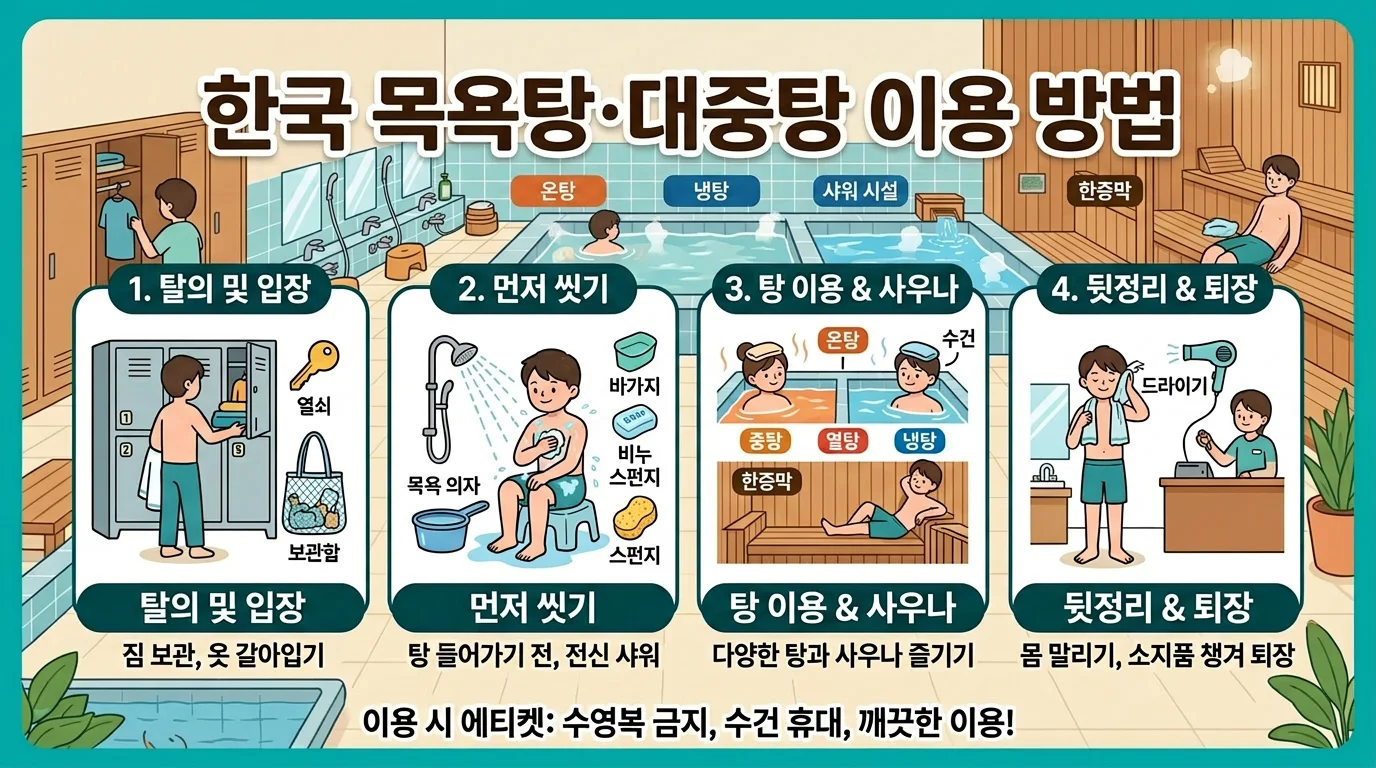
🛁 韓国の銭湯(テジュンタン)の利用方法
영어·일본어 두 버전 모두 만들었어요. 세신 설명, 건식·습식 온도, '흔히 볼 수 있는 모습', '피해야 할 행동' 등 최신 내용 그대로 반영했어요. 👇
🇬🇧 English Version
🛁 How to Use a Korean Bathhouse (Daejungtang)
A Korean bathhouse (daejungtang) is a traditional public bathing space found in every neighborhood. Unlike the flashy jjimjilbang, it's a quiet culture focused on soaking in the tubs and washing slowly. The rules can feel unfamiliar at first, but once you know the order, you can enjoy a Korean-style bath comfortably and cheaply. 🔖
⏱️ 30-Second Summary — The Order of a Bathhouse Visit
If it's your first time, just remember this flow.
① Enter & pay (counter)
↓
② Store shoes → store clothes in the changing room
↓
③ Shower to wash your body & hair
↓
④ Alternate hot tub → cold tub → sauna
↓
⑤ (Optional) Sesin / body scrub
↓
⑥ A light shower, change clothes, and head home
1. What Is a Bathhouse (Daejungtang)?
A gender-separated space where you soak in tubs and wash without wearing clothes.
Unlike a jjimjilbang, there's no mixed-gender sauna area or jjimjilbang clothing. It's a space focused purely on bathing.
Found in every neighborhood, it's cheap and easy to access. It's the closest you can get to Korea's everyday bathing culture.
💡 It's similar to the bathhouse inside a large jjimjilbang, but neighborhood bathhouses are often smaller, quieter, and more locals-oriented.
2. Step by Step
STEP 1. Enter & Pay
Pay at the counter (roughly ₩7,000–12,000, varies by area and facility; usually cheaper than a jjimjilbang).
Many neighborhood bathhouses don't have the wristband system, so you often pay by cash or card at entry.
Some places give you a towel at the counter; others require you to buy or bring your own. It's good to ask ahead.
STEP 2. Store Shoes & Clothes
Put your shoes in the shoe locker at the entrance, then enter the changing room (locker room) for your gender.
Depending on the facility, the shoe-locker key and the changing-room locker key may be the same, or given out separately.
Take off all your clothes and store them in the locker. No clothing or swimsuits are worn inside the bathhouse.
Always keep valuables in your locker.
Bring your towel and any toiletries you need into the bathing area.
STEP 3. Shower to Wash Your Body & Hair
It's basic etiquette to shower and wash your body first before entering the tubs. If your hair is long, it's normal to wash your hair too.
There are usually seated washing stations. Some have basins and bowls provided, but these days many have only showerheads.
Soap and shampoo are provided at some places, but not at many others, so it's safe to bring your own toiletries.
STEP 4. Enjoy the Tubs & Sauna
It's common to alternate hot tub → cold tub → sauna.
Tub types vary by facility: hot, extra-hot, cold, event tubs (herbal, green-tea, etc.), open-air tubs, and more.
Many places have a sauna or steam room. A dry sauna is usually 80–100℃, and a wet sauna 40–60℃. Don't overdo it — enjoy in 5–15 minute sessions.
STEP 5. (Optional) Sesin / Body Scrub
What is sesin (body scrub)? After soaking your body thoroughly in warm water, a scrub attendant uses a rough Italy towel to rub off the dead skin (ttae) from your whole body — a traditional Korean bath service, and an icon of Korean bathing culture!
It's an optional service you can get if you'd like. There's a separate fee, and you usually take a number and wait on-site. Some places require a reservation.
Some places prefer cash, so having a little cash on hand is convenient.
For the process: you lie down on the attendant's dedicated table, and they scrub every part of your body. It may feel a bit prickly or ticklish at first, but afterward your skin feels smooth and refreshed.
STEP 6. Wrap Up
After finishing the tubs and sauna, take a light shower, then dry off and change in the changing room.
If you got an additional service (like sesin), settle it at the counter on your way out or pay separately on-site.
3. Etiquette & Manners Worth Knowing
No clothing or swimsuits. Being fully undressed is the norm — it feels awkward at first, but it's natural here.
Always shower to wash your body before entering the tubs.
A towel is for wiping your body or resting on your head, and keeping it out of the tub water is basic etiquette. (Putting a towel on your head while in the tub is a common sight in Korean bathhouses.)
No scrubbing or soaping inside the tub; no swimming or diving.
No photography! Absolutely no photos — not in the tub area, and not in the changing room either. Many places restrict phone use entirely. (Privacy and legal issues.)
Keep your voice down and enjoy quietly.
When you're done with a washing station or bowl, it's nice to tidy up the water for the next person.
Tattoos: Some bathhouses restrict entry for guests with tattoos, or only allow it if the tattoo can be covered. Areas with many foreign tourists tend to be more relaxed, but standards vary by facility, so check before visiting if you're concerned.
4. 🇰🇷 Common Sights in a Korean Bathhouse
These scenes might surprise you on your first visit. Knowing them makes things easier!
Older folks often sit in the tubs for a long time, chatting.
Many people get into the tub with a small towel on their head.
It's normal to sit on a shower stool while washing.
After bathing, many people drink banana milk or sikhye. (The classic bathhouse drink!)
5. 🚫 Avoid These Behaviors
Doing laundry in the tub
Talking loudly on the phone
Jumping into the tub
Leaving a washing station empty for a long time
Leaving your belongings on a shower stool for a long time
6. Common Questions from Foreigners ❓
Can I go alone? → Yes! Lots of people come on their own, so feel free to enjoy it solo.
Do they provide soap & shampoo? → Some places do, but many don't. It's safer to bring your own.
Do they provide towels? → Some give them at the counter; others require you to buy or bring your own. Check ahead.
Is there a hair dryer? → Most have free dryers, but some facilities have coin-operated ones.
Can children go? → They can, but must enter with a guardian, and age restrictions vary by facility.
Do I have to get a sesin? → No, it's optional. Just request it when you want it.
7. Where Should I Go First?
A neighborhood bathhouse can feel a little intimidating at first.
For your first time, it's a good idea to start at a hotel sauna or large spa popular with tourists. Once you're used to the atmosphere and the order of things, using a neighborhood bathhouse lets you feel Korea's everyday culture even more closely.
8. Packing Checklist
Personal toiletries (soap, shampoo, toothpaste, toothbrush — many places don't provide them)
Basic skincare (toner, lotion), comb — often not provided
Contact-lens supplies (lenses can dry out in hot areas)
Towel (bring your own depending on the facility)
Cash & card (for entry + extra services like sesin; some sesin spots prefer cash)
(Optional) Shower slippers — some people bring their own
9. Practical Tips for Foreigners
💧 Stay hydrated: You sweat a lot. Drink water often.
⏱️ Don't overdo it: Stay in hot tubs/saunas for 5–15 minutes at a time, and step out immediately if you feel dizzy.
👓 Glasses & lenses: Glasses get hot and lenses may dry out in hot areas, so be careful.
🧖 Your first sesin: It's more refreshing than you'd expect. If it hurts too much, you can ask the attendant to go gently.
🕐 Timing: Early mornings and late afternoons are relatively quiet. Weekend mornings can be crowded.
🟦 A guide put together by the CultureHub team.
📅 As of 2026 · ⚠️ Rules on prices, hours, towel/toiletry provision, hair dryers, tattoos, etc. vary by facility and may change. Please check with the facility before visiting.
🇯🇵 日本語版
🛁 韓国の銭湯(テジュンタン)の利用方法
韓国の 銭湯(대중탕 テジュンタン) は、町ごとにある伝統的な公衆浴場です。華やかなチムジルバンとは違い、湯に浸かってゆっくり洗うことに集中する静かな文化 です。最初はルールが分かりにくいかもしれませんが、順番さえ分かれば、本当に快適でお手頃に韓国式の入浴を楽しめます。🔖
⏱️ 30秒まとめ — 銭湯利用の順番
初めてなら、この流れだけ覚えればOKです。
① 入場 & 支払い(カウンター)
↓
② 靴を預ける → 脱衣室で服を預ける
↓
③ シャワーで体・髪を洗う
↓
④ 温湯 → 冷湯 → サウナを交互に
↓
⑤ (任意)セシン/垢すり
↓
⑥ 軽くシャワーをして着替えて帰宅
1. 銭湯(テジュンタン)って何?
男女が分かれた空間 で、服を着ずに 湯に浸かって洗う場所です。
チムジルバンのような男女共用の温熱スペースやチムジルバン着は ありません。 ひたすら 入浴に集中 する空間です。
町ごとにあるので お手頃でアクセスが良い です。韓国の日常的な入浴文化を最も身近に感じられる場所です。
💡 大きなチムジルバン内の浴場と似ていますが、町の銭湯はより小さく静かで、地元の人が中心 の場合が多いです。
2. 利用の順番(ステップ・バイ・ステップ)
STEP 1. 入場 & 支払い
カウンターで料金を払います(おおよそ ₩7,000〜12,000、地域・施設により異なる。チムジルバンより普通は安いです)。
町の銭湯はリストバンドのシステムがない所が多く、入場時に現金・カードで支払う場合が多いです。
カウンターでタオルをくれる所もあれば、別途購入・準備が必要な所もあります。先に聞いておくと良いです。
STEP 2. 靴 & 服を預ける
入口で靴を下駄箱に入れ、性別ごとの 脱衣室(ロッカールーム) に入ります。
施設によって、下駄箱の鍵と脱衣室のロッカーキーが同じ場合もあれば、別々に渡される所もあります。
ロッカーに服をすべて脱いで保管します。浴場内では服・水着は着ません。
貴重品は必ずロッカーに保管 してください。
タオルと必要な洗面用具を持って浴室スペースに入ります。
STEP 3. シャワーで体・髪を洗う
湯に入る前に 必ずシャワーで体を先に洗う のが基本マナーです。髪が長ければ 髪も一緒に洗う のが一般的です。
普通は座って洗う場所(シャワー席)があります。洗面器・手桶が備えられた所もありますが、最近は シャワーのみ の所も多いです。
石けん・シャンプーが備えられた所もありますが、ない所も多い ので、個人の洗面用具を持参すると安心です。
STEP 4. 湯 & サウナを楽しむ
温湯 → 冷湯 → サウナ を交互に楽しむのが一般的です。
湯の種類は施設ごとに異なります:温湯・熱湯・冷湯・イベント湯(薬湯・緑茶湯など)・露天湯など。
サウナ・汗蒸幕(ハンジュンマク)がある所も多いです。乾式サウナはたいてい80〜100℃、湿式サウナは40〜60℃ ほどです。無理せず5〜15分ずつ楽しみましょう。
STEP 5. (任意)セシン/垢すり
セシン(垢すり)って何? 体を温かい湯で十分にふやかした後、垢すり師がザラザラのイタリアタオルで全身の古い角質(垢)をこすり落とす 韓国伝統の入浴サービスです。韓国の入浴文化の象徴ですね!
希望すれば受けられる 任意のサービス です。別料金 で、普通は現場で 番号札を受け取って待ちます。 予約が必要な所もあります。
現金払いを好む所もある ので、現金を少し用意しておくと便利です。
流れとしては、垢すり師がいる 専用ベッドに横になると 体の隅々までこすってくれます。最初は少しチクチク・くすぐったく感じることもありますが、終わると肌がすべすべで さっぱりした感覚 になります。
STEP 6. 仕上げ
湯とサウナを終えたら 軽くシャワー をして、脱衣室で体を乾かし着替えます。
追加サービス(セシンなど)を受けた場合は、退場時にカウンターで精算するか、現場で別途支払います。
3. 知っておくと良いマナー
服・水着は着ません。 全裸が基本なので、最初は気まずくても自然な文化です。
湯に入る前は必ず シャワー で体を洗います。
タオルは 体を拭いたり頭にのせたりする用途 で使い、湯船に浸けない のが基本マナーです。(タオルを頭にのせて湯に入るのは、韓国の銭湯でよく見られる光景です。)
湯の中で垢をこすったり石けんを使うのは禁止、泳いだり飛び込んだりも禁止 です。
写真撮影は禁止! 浴場内はもちろん、脱衣室でも撮影は絶対禁止 です。携帯の使用自体を制限する所も多いです。(プライバシー・法的問題)
大声で騒がず、静かに楽しみます。
シャワー席・手桶を使い終えたら、次の人のために 水気を整えて おくと良いです。
タトゥー(入れ墨): 一部の銭湯はタトゥーのある客の入場を制限したり、隠せる場合のみ 許可したりします。外国人観光客が多い地域は比較的寛容な所もありますが、施設ごとに基準が異なるので、気になる場合は訪問前に確認するのがおすすめです。
4. 🇰🇷 韓国の銭湯でよく見られる光景
初めて行くと、こんな光景が新鮮かもしれません。知っておくとより快適です!
お年寄りが 長く湯に浸かっておしゃべり することもあります。
頭の上に 小さなタオルをのせて 湯に入る人が多いです。
シャワー椅子に座って 洗うのが一般的です。
入浴後には バナナ牛乳やシッケ を飲む人も多いです。(銭湯の定番ドリンク!)
5. 🚫 こんな行動は避けましょう
湯の中で 洗濯 すること
大声で電話 すること
湯に 飛び込む こと
長時間シャワー席を空ける こと
シャワー椅子に荷物を長く置いておくこと
6. 外国人がよくする質問 ❓
一人で行ってもいい? → はい!一人で来る人もとても多いので、気軽に楽しんでください。
石けん・シャンプーはもらえる? → 備えられた所もありますが、ない所も多い です。個人の洗面用具を持参すると安心です。
タオルはもらえる? → カウンターでくれる所も、別途購入・準備が必要な所もあります。先に確認しましょう。
ドライヤーはある? → ほとんど無料ドライヤーがありますが、一部の施設は コイン式 の所もあります。
子どもも行ける? → 利用できますが、保護者と一緒に入場する必要があり、年齢制限は施設ごとに異なります。
セシンは必ず受けないといけない? → いいえ、任意です。受けたいときだけ申し込めばOKです。
7. 初めてならどこへ行こう?
町の銭湯は、最初は少し緊張するかもしれません。
初めてなら、観光客がよく訪れるホテルサウナや大型スパ でまず体験してみるのも良い方法です。雰囲気と順番に慣れた後で町の銭湯を利用すると、韓国の 日常文化 をより身近に感じられます。
8. 持ち物チェックリスト
個人の洗面用具(石けん・シャンプー・歯磨き粉・歯ブラシ — ない所が多い)
基礎化粧品(化粧水・乳液)、くし — 備え付けがない所が多い
コンタクト保存用品(熱い所でレンズが乾燥することがあります)
タオル(施設によって別途準備)
現金・カード(入場料 + セシンなど追加サービス用、セシンは現金を好む所も)
(任意)シャワー用スリッパ — 持参する人もいます
9. 外国人向け実践のコツ
💧 水分補給: 汗をたくさんかきます。水をこまめに飲みましょう。
⏱️ 無理しない: 熱い湯・サウナは5〜15分ずつ、めまいがしたらすぐ出ましょう。
👓 メガネ・レンズ: 熱い所ではメガネが熱くなり、レンズが乾燥することがあるので注意。
🧖 初めてのセシン: 思ったよりさっぱり爽快です。痛すぎる場合は垢すり師に優しくしてほしいと伝えてもOKです。
🕐 時間帯: 早朝・夕方が比較的空いています。週末の午前は混むことがあります。
🟦 CultureHub運営チームがまとめたガイドです。
📅 作成基準: 2026年 · ⚠️ 料金・営業時間・タオル/洗面用具の提供・ドライヤー・タトゥーなどの利用規定は施設ごとに異なり、変更されることがあります。訪問前に各施設へご確認ください。