🎬 My Liberation Notes — Spoiler-Free Story Guide for Foreign Viewers
⚠️ A quick note
This is not a documentary about real events, but a purely fictional drama set in modern Korea. The characters and story are all imagined, and place names like "Sanpo City" are fictional locations. That said, the fatigue and emotions the characters feel are grounded in the reality of Korea today, so knowing the background helps you connect more deeply. Also, where you can watch this show varies by country and by time, so please check the streaming services available in your region.
⏱️ 30-Second Summary
Title — My Liberation Notes (2022, JTBC, 16 episodes)
Setting — Present-day Korea, a town far outside Seoul
Heart — The wish to break free (liberation) from a tiring routine
Story — Three siblings who commute long hours into Seoul
Mood — Quiet and slow, yet it echoes in you for a long time
Unfamiliar words — "liberation," "chuang," life on the metro fringe
Charm — A drama where every line lands right in your heart
1. 🎬 About the Show
My Liberation Notes aired on Korea's JTBC network from April 9 to May 29, 2022, running 16 episodes. It was written by screenwriter Park Hae-young, known for My Mister, and directed by Kim Seok-yoon. The Yeom siblings are played by Lee El, Lee Min-ki, and Kim Ji-won, and the mysterious man "Mr. Gu" who enters their lives is played by Son Suk-ku. The father is played by veteran actor Cheon Ho-jin.
The genre is often called a "healing drama." Rather than fast pacing or dramatic conflict, its charm lies in slowly looking into the characters' hearts. The streaming platforms where it's available vary by country and by time, so please check what's offered in your region.
2. 📖 A Look at the Story — No Spoilers
At the center of the story are the three Yeom siblings, who live in a small town outside Seoul. The eldest, Gi-jeong; the middle child, Chang-hee; and the youngest, Mi-jeong — every morning, while it's still dark, they leave home, squeeze onto crowded transit for a long ride into Seoul, and only late at night make the tiring trip back, switching between train and village bus. Once the city has used up their whole day, their own neighborhood offers little — hardly anyone to share dinner with, nowhere to go. Nothing terribly unfortunate has happened, yet nothing fills their hearts either — and this subtle emptiness is the feeling that wraps the whole drama.
The three set out from slightly different places. The youngest, Mi-jeong, is quiet at work and at home, always keeping one step back; she seems unbothered on the surface but holds down a frustration that says, "I don't want to live like this." The middle child, Chang-hee, is the liveliest and most sociable of the three, but keeps running into a reality that won't go his way, and longs to escape this town, this life somehow. The eldest, Gi-jeong, is spirited and honest about her feelings, never hiding her wish for love and excitement. They aren't a chatty, affectionate bunch, but the air of these siblings — each carrying their own fatigue under one roof — feels strikingly real.
Then one day, a quiet, mysterious man called "Mr. Gu," who comes to help with the father's work, slips into their lives. No one knows where he's from or what his story is; he keeps a bottle close and barely speaks. One day the youngest, Mi-jeong, makes him an unexpected offer, and something between them — a bond hard to put into words — begins.
That's where the story sets off. How these people's hearts slowly shift, what they come to mean to each other, and what each finds their own "liberation" from — I'll leave that for you to enjoy firsthand. The real flavor of this drama isn't in big events, but in the way ordinary people's feelings slowly come to the surface, and in the lines tossed out in between. So even if the first few episodes feel slow, let yourself sink into the characters' faces and silences and follow along.
3. 🕰️ Background — Worth Knowing About Korea Today
To fully enjoy this drama, it helps to understand the long-distance commute of people in Gyeonggi Province, the area ringing Seoul. Jobs and amenities are concentrated in Seoul, while housing costs there are high, so many people live in the outer metro area and endure a long commute into the city each day — often one to two hours each way. The town the siblings live in is connected to Seoul by train, yet still has a rural feel and can seem far from city life. The long daily travel, and the weariness of home being so far away, come straight from this reality.
One more thing: some Korean companies have in-house clubs where employees share hobbies or interests. Most run on a voluntary basis, but at Mi-jeong's company in the show, joining a club is effectively required, which turns it into a burden instead. Small social pressures like these pile up and become the backdrop for the characters' wish to break free from something.
4. 🗝️ Key Words Worth Knowing
Two words always come up when people talk about this drama.
Haebang (liberation, 解放) — Originally it means "being released from oppression into freedom." In this show it doesn't mean some grand freedom, but finding just a little room to breathe amid a wearying routine and the weight pressing on your heart. The "liberation notes" of the title are a record of writing down that feeling.
Chuang (推仰) — Originally it means "to hold someone in high regard, to look up to them." It's a rather strong, unfamiliar word that people almost never use in daily life. When Mi-jeong brings it up in the show, it became a talking point and was hugely popular during the broadcast. Within the story it's closer to a feeling of cherishing someone just as they are — without judging or trying to fix them — and supporting them wholeheartedly. In English, it helps to unpack it as admiration or wholehearted acceptance.
5. 👥 The Central Characters
Yeom Mi-jeong (Kim Ji-won) — The youngest sibling. A contract worker at a credit card company, quiet but clear about her own mind. She looks unruffled, but inside she carries a longing that says, "this can't go on."
Yeom Chang-hee (Lee Min-ki) — The middle child. A sales worker who manages franchise stores for a convenience-store chain's head office; the most lively and talkative of the three. He badly wants to escape his stuck reality and make it big.
Yeom Gi-jeong (Lee El) — The eldest. Spirited and honest with her feelings, she doesn't hide her wish for love and romance.
Mr. Gu (Son Suk-ku) — A man of unknown identity who comes to help with the father's work. He says little and always keeps a drink nearby, someone who clearly carries a story. When Mi-jeong makes him an unexpected offer, a bond that's hard to put into words begins between them.
Yeom Je-ho & Gwak Hye-suk (Cheon Ho-jin & Lee Kyoung-sung) — The siblings' parents. Father Je-ho has quietly held the household together through his sink-making work and farming, while mother Hye-suk has taken care of the housekeeping and the family's meals. They aren't parents who talk much or show great affection, but this older generation, steadily supporting their children's lives, is a solid pillar of the story too.
These relationships aren't a simple romance structure; they branch into several stories, each about how a person might break free from what confines them.
6. ✨ What Makes It Special
The biggest charm is the dialogue. There are no flashy events, but the lines the characters casually toss out feel like they're speaking your own heart, offering deep comfort. During its run, countless viewers copied down and shared the lines — that's how powerful each sentence is.
The second is relatability. Rather than a special hero, it portrays the tiring day of an ordinary office worker, so anyone who works day to day will nod along, regardless of nationality.
The third is the beauty of a slow pace. Without rushing, it lingers on the characters' expressions and silences and on the changing seasons of an outer-metro town, leaving you calm and gently healed by the end.
❓ Frequently Asked Questions (FAQ)
Q. Is it based on a true story? No. It's a purely fictional drama set in modern Korea. That said, the emotions the characters feel are very much connected to the reality of Korea today.
Q. Can I understand it without knowing Korean culture? Yes, absolutely. The weariness the characters feel and their wish to be comforted are universal emotions that resonate anywhere. Just knowing this guide's "Background" and "Key Words" will let you enjoy it far more deeply.
Q. I like intense scenes and fast pacing — will this suit me? This work has a quiet, slow texture, so if you expect action or strong conflict it may feel a bit plain. On the other hand, if you love calm, reflective stories, it's a wonderful fit.
Q. Is it a romance drama? There are romantic elements, but they don't fully define the work. Several relationships sit inside a larger theme: breaking free from what weighs you down.
Q. It's called a "healing drama" — is the mood bright and easy? It does offer quiet comfort, but it isn't all bright. Mr. Gu is a character who gets through the day leaning on alcohol, so drinking scenes appear often, and emotionally heavy themes — listlessness, loneliness, workplace stress — run quietly throughout. Knowing this texture in advance actually helps it land more deeply.
Q. How many episodes are there, and where can I watch it? There are 16 episodes in total. The platforms where it's available vary by country and by time, so we recommend checking the streaming services in your region.
Q. What does "chuang" mean? It means "to hold someone in high regard and look up to them." It's an expression this drama made popular, carrying a heart of wholehearted, unconditional support.
✅ Quick Checklist
Just knowing these before you watch will help.
It's a work of fiction, not based on real events
The setting is everyday Korea today, with long commutes from outside Seoul
It's closer to quiet, slow healing than fast-paced drama
Knowing the two words "liberation" and "chuang" deepens the experience
Drinking scenes are frequent, and emotionally heavy themes run quietly throughout
Where to watch varies by country and time — please check for yourself
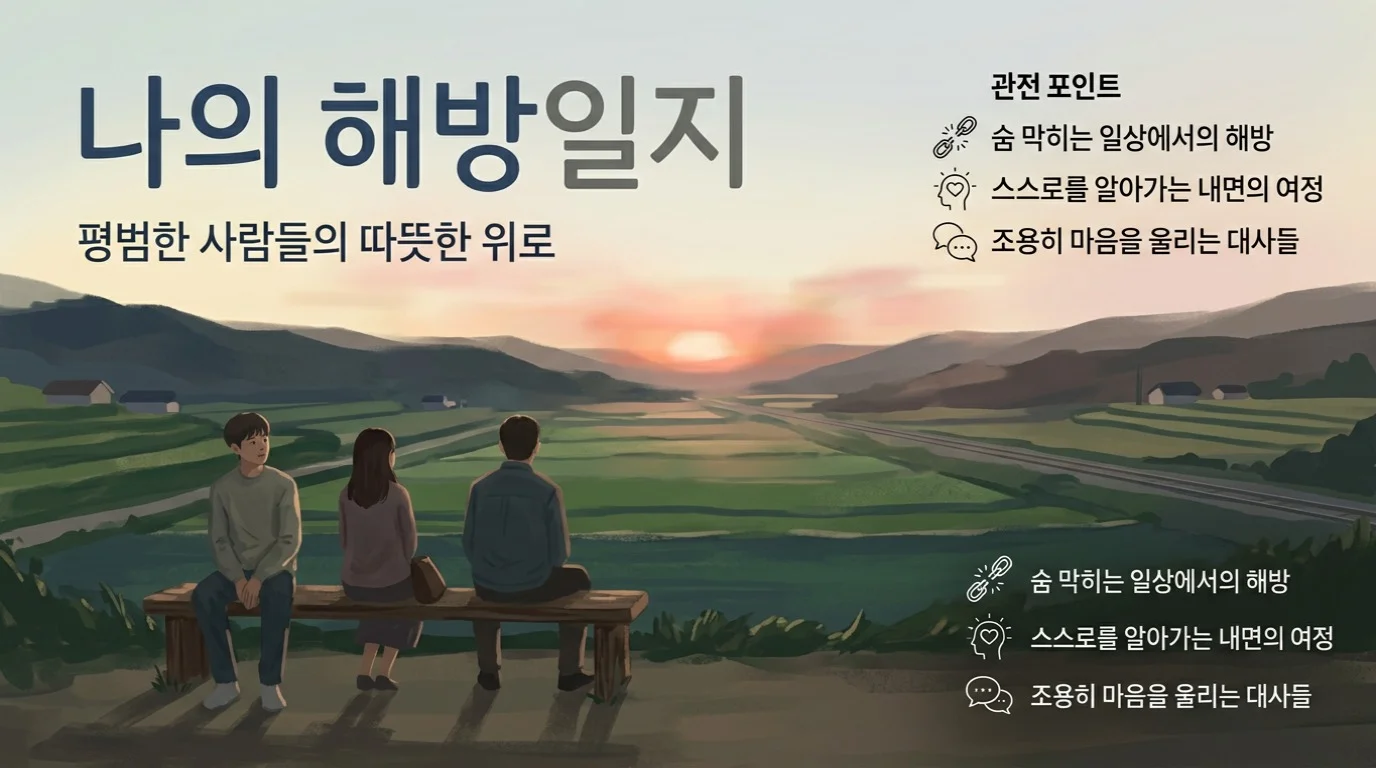
ⓘ This is an unofficial introduction written by an individual creator using JoyStoria, to help with appreciating the work and understanding its culture. All copyrights, trademarks, and other rights related to 〈My Liberation Notes〉 belong to their respective holders, and there is no official relationship with the broadcaster or production company. The main image does not use or recreate any real actor's likeness or scenes from the drama; it is an unofficial creative image made independently.
🟦 JoyStoria
JoyStoria — where we share the story beyond the story
Discover viewing guides that make dramas even more enjoyable.