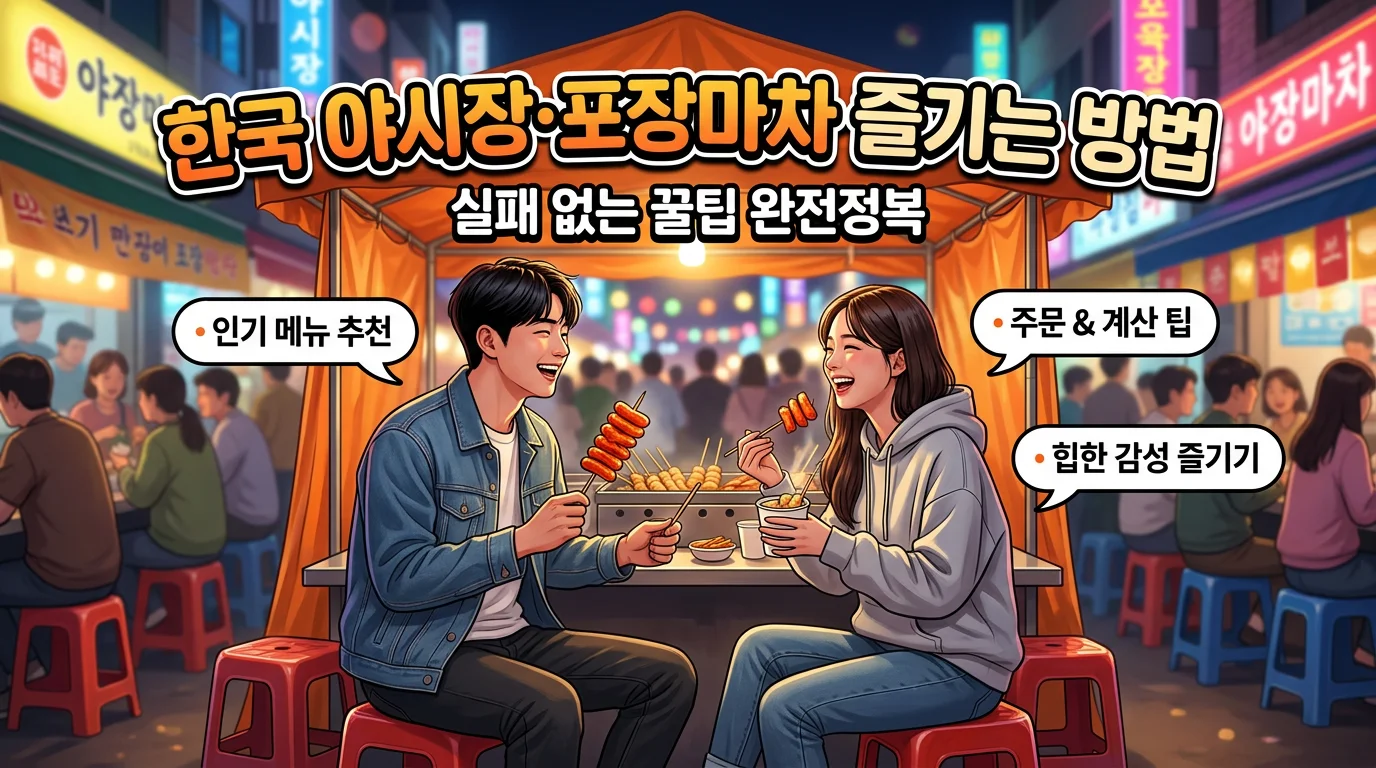
🏮 The Complete Guide to Enjoying Korean Night Markets & Pojangmacha
1. Night market vs. pojangmacha — what's the difference?
Night market / food alley (meokja-golmok): A place where many stalls gather in a market or street selling all kinds of food. The fun is browsing and picking!
Pojangmacha (pocha): A small tented stall. You sit down and enjoy anju (snacks/dishes) with drinks (soju, beer) — a Korean-style night culture. Think "street pub"!
💡 Both often require cash. More places take cards/mobile pay now, but having some small cash makes things easier.
2. Markets, food alleys & pocha streets worth visiting
Opening days/hours can vary by season and day of week, so check before you go.
Gwangjang Market (Seoul) — A traditional market with a food alley lively into the night. Famous for bindae-tteok (mung-bean pancake), "mayak gimbap," and yukhoe (beef tartare). (The food alley is generally open from morning until late at night, year-round.)
Myeongdong Street Food Street (Seoul) — Full of stalls in the evening. The most foreigner-friendly course.
Namdaemun Market / Tongin Market (Seoul) — Traditional-market food exploration.
Euljiro Nogari Alley / Jongno Pojangmacha Street (Seoul) — Pocha and old-shop alleys full of after-work, grown-up atmosphere.
Jeonju Nambu Market Night Market (Jeonju) — A signature night market open Fri & Sat, 17:00–23:00.
Busan Bupyeong Kkangtong Night Market (Busan) — Open daily 19:30–24:00, with street foods from around the world.
🌙 For extra nighttime mood, the night at Yeouido Han River Park is great too. A Han River picnic with convenience-store and delivery food is a treat.
3. Must-try menu 🍢
Classic street/market snacks
Tteokbokki — sweet-and-spicy national snack (some places are non-spicy)
Sundae / eomuk (oden, fish cake) — the eomuk broth is often served free with a purchase
Hotteok — filled with brown-sugar syrup inside (a winter treat)
Bungeo-ppang, gyeran-ppang, roasted sweet potato — winter street snacks
Gimbap, hot dogs, dumplings, dak-kkochi (chicken skewers) — easy to eat one-handed
Popular pojangmacha anju
Dak-bal (chicken feet), gopchang, golbaengi-muchim (spiced sea snails), gyeran-mari (rolled omelet), udon, ramyeon
With soju & beer! ("Somaek" is the soju + beer combo)
💡 If you're worried about spicy food, ask "Deol maepge hae juseyo" (Make it less spicy) or "An maeun geo isseoyo?" (Anything not spicy?).
4. Ordering & payment
Check the menu and prices first. (If there's no price tag, ask "Eolmayeyo?" — How much?)
Pointing with your finger to order is enough.
At a pojangmacha, you order at your seat and usually pay when leaving.
Payment: cash is safest; some places take cards/mobile pay.
🗣️ Handy ordering phrases: "Hana juseyo" (One, please) · "Eolmayeyo?" (How much?) · "Kadeu dwaeyo?" (Card okay?) · "Pojanghae juseyo" (To go, please) · "Deol maepge hae juseyo" (Less spicy, please).
5. Hygiene tips (enjoy with peace of mind)
Choosing stalls with high turnover, visible cooking, and price tags is safer.
If you're not used to street food, stick to freshly cooked, well-cooked items.
6. Manners & tips to know
Takeout: If you'll eat while walking, say "Pojanghae juseyo."
Seats/sharing tables: Pojangmacha are small, so you may share a table or turnover may be quick.
Trash: Keep your spot clean and help with sorting.
Drinking: Korea is relatively relaxed about drinking in some outdoor spaces, but there may be location-specific bans, and rowdy behavior should be avoided.
Buying alcohol: They may ask for your passport to confirm you're 19 or older.
👤 Solo-visit tip: If you're alone, market/traditional food alleys are easier to enjoy than pojangmacha, which lean more toward a drinking-party atmosphere.
7. When to go?
Evening to night is liveliest. Night markets usually get busy from around sunset.
Spring and autumn evenings have the best weather for it.
Pojangmacha have more mood in winter (warm broth and fish cake!).
On rainy days there may be fewer stalls, so keep that in mind.
✅ Quick checklist
Bring some small cash
Check market/night-market days & hours
Learn ordering phrases ("Hana juseyo / Eolmayeyo / Deol maepge hae juseyo")
Favor stalls with quick turnover and visible cooking (hygiene)
Tidy your trash & mind drinking manners
Reference
A roundup of the best night-market & pojangmacha streets in Korea, BEST 9: https://v.daum.net/v/4RJ4taIipC
🟦 A guide from the CultureHub team.
📅 Updated: 2026 · ⚠️ Markets' and stalls' days, hours, and payment methods vary by place and change often. Check before visiting.