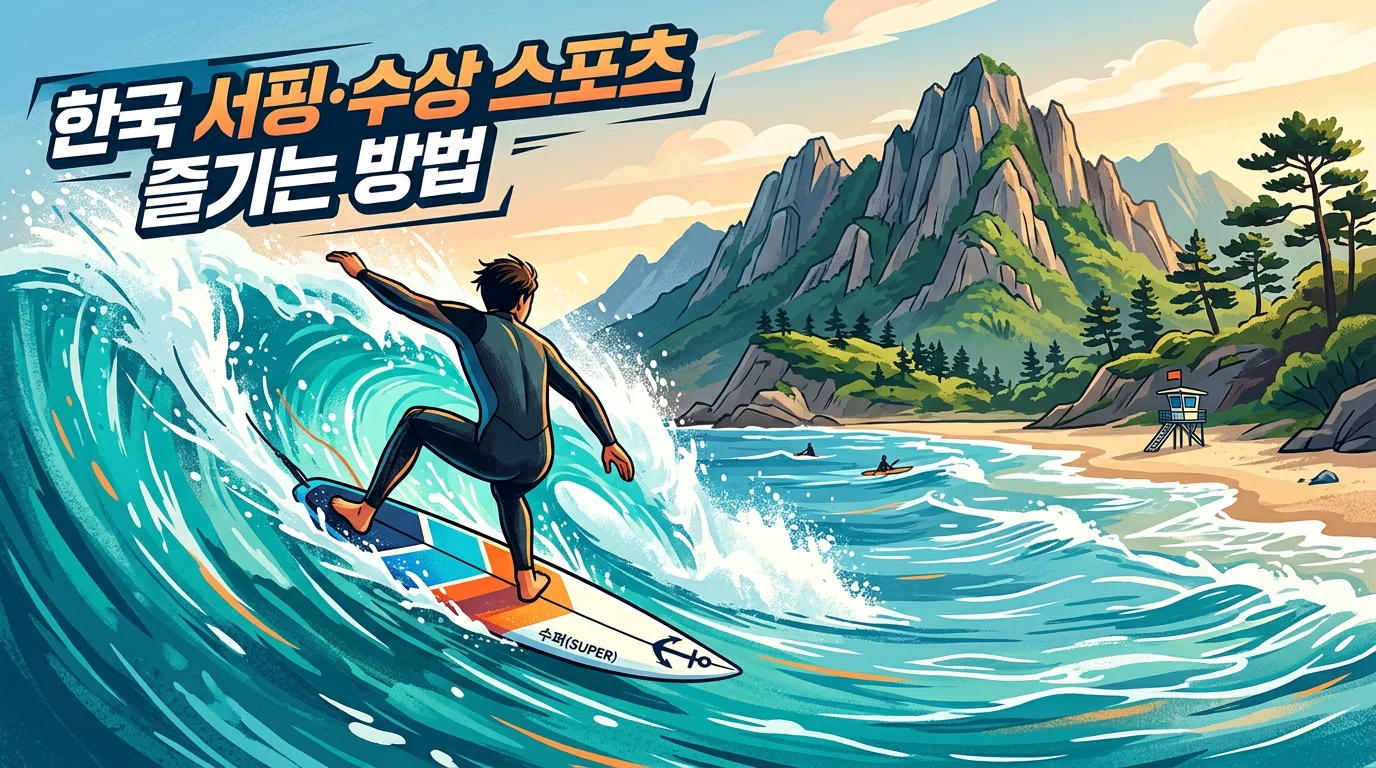
🏄 How to Enjoy Surfing & Water Sports in Korea
⏱️ 30-Second Summary — Where Should I Go?
🏄 Yangyang (Gangwon) → Korea's surf capital, the hippest vibe (near Seoul)
🌴 Jeju Jungmun → palms and exotic scenery, an iconic Korean surf spot
🌊 Busan Songjeong → mellow waves, a beginner's paradise (easy city access)
📅 Seasons → summer/spring = beginners / autumn/winter = often better for intermediate+
🧑🏫 Lessons → usually a 2-hour lesson + gear; book English lessons in advance!
1. 🗺️ Where to Surf? Comparing the Big Three
Yangyang (Gangwon-do): Korea's surf capital. About 210 km northeast of Seoul, so Seoulites flock here on weekends. Beaches like Surfyy Beach, Jukdo, Ingu, and Hajodae each have clusters of surf shops and beach bars — a hip atmosphere.
Jeju Jungmun (Saekdal Beach): One of Korea's iconic surf spots. Palm trees and a long sandy beach give it an exotic feel. A key trait: lesson times shift with the tides.
Busan Songjeong: A beginner's paradise. Relatively gentle ("mellow") waves make it great for learning. Close to central Busan, with a charming beach train and cafés.
💡 From Seoul (day trip/overnight), Yangyang; while traveling in Busan, Songjeong; while on Jeju, Jungmun — each fits naturally.
2. 🏄 Yangyang — Korea's Surf Capital
The most popular surf destination from Seoul. Each beach has its own character.
Surfyy Beach: One of the representative beaches run as a dedicated surfing zone. The surf zone is roped off, and in peak season lifeguards are often stationed, so you can catch your first waves relatively safely. Rattan parasols and beach bars give it a Bali feel.
Jukdo·Ingu beaches: Lined with surf shops and crowded with surfers. (Watch for accidents.)
Hajodae beach: A relatively beginner-friendly atmosphere.
Lessons·gear: A first visit usually means a 2-hour group lesson (board, wetsuit, rashguard included). Independent shops tend to be cheaper for board rentals.
English lessons: Larger spots like Surfyy Beach can offer lessons in English. Smaller independent shops are less reliable for English, so check in advance via Instagram DM or phone.
💡 Nearby Sokcho is a short drive away — great for raw fish and food after surfing.
3. 🌴 Jeju Jungmun — Palms and Exotic Scenery
Jungmun Saekdal Beach in Seogwipo, Jeju, has a resort-like feel with palm trees and blue water.
Character: One of Korea's iconic surf spots. There's even a long-running surf school run by a first-generation local surfer.
Lesson-time caution: At Jungmun, lesson times change daily with the tides. Lessons often run around low tide, when the water is shallower. Before booking, be sure to check that day's lesson time by website or phone.
Lesson structure: Usually theory 20 min → beach training 20 min → in-water training 50 min → free surfing, etc. (varies by shop).
Pair it with: A nice day outing on a Jeju trip, with Cheonjeyeon Falls and cafés nearby.
4. 🌊 Busan Songjeong — A Beginner's Paradise
The most beginner-friendly surf beach, close to central Busan.
Character: Relatively gentle ("mellow") waves make it easy even for first-timers. Knee-high waves are common, and lessons tend to run in waist-deep water.
Atmosphere: Surf shops and cafés line the beach, and the beach train adds an exotic touch. Surf by day, relax by the sea in the evening.
Access: Easy to combine as a half-day to full-day outing on a Busan trip (Haeundae·Songjeong area).
Year-round: Songjeong has large surf shops offering lessons in all seasons, so some people surf even in winter with proper wetsuits.
5. 🌐 Other Surf Destinations
Beyond the big three, there are more places to enjoy.
Taean Mallipo (Chungnam): A leading West Sea surf spot. Convenient from the capital area.
Pohang·Ulsan Jinha (Gyeongbuk·Ulsan): Yeongnam-region surf spots. Good to combine with Busan.
Gangneung·Goseong (Gangwon): Great extension courses for an East Sea surf trip.
6. 📅 When Should I Go? (Season Guide)
On Korea's east coast, waves vary greatly with season, wind, and swell. There's no "sure" season, but there are patterns.
Summer (Jun–Aug): Most crowded but smaller waves. Good for beginners. (Best for water play and intro lessons.)
Spring (Mar–May): Many calm-wave days — fine for beginners and practice.
Autumn·Winter (Sep–Feb): Waves can get bigger, so there are more days better suited to intermediate+ surfers. Autumn has relatively warmer water; winter brings the biggest, cleanest waves but is very cold, so a thick wetsuit is essential.
⚠️ Waves and water temperature change daily. Always check that day's conditions via surf shops or forecasts before heading out, and rent your wetsuit thickness to match the season.
7. 🌊 How to Check Wave & Weather Forecasts (Pre-Trip Routine)
With surfing, checking the day's conditions is half the battle. Before you go, check these.
Wave forecasts: Wind/swell forecasts like Windy, and surf forecasts in the Surfline·Magicseaweed family.
Surf-shop posts: That beach's surf-shop Instagram often posts the day's waves and lesson availability.
Official weather/marine info: Check wind, wave height, and temperature via the Korea Meteorological Administration and marine weather info.
Beach safety flags: Always check the on-site safety flags (safe to enter / caution / danger).
8. 🧑🏫 How to Take Lessons & Costs
Booking: Book via platforms like Klook, MyRealTrip, or KKday, or the surf shop's website. (Platforms are easier for foreigners.)
Cost range: Intro lessons are usually about ₩30,000–80,000 per person. Whether gear is included varies by shop, so confirm when booking. (Some products in Songjeong, etc., are sold as a 2-hour lesson + gear rental.)
English lessons: Available, but spots and times are limited. Confirm and book an English lesson in advance.
Lesson structure: Usually theory → beach (on the sand) → in-water → free surfing. A first-day lesson is typically around 2 hours.
Group size: Small-group lessons (often 4–6 people) are common, allowing relatively safe learning.
9. 🎒 What to Bring & Wear
Swimsuit: It's easier to wear your swimsuit underneath before the lesson. (Use the beach changing booths.)
Rashguard·wetsuit: Usually included or rented with the lesson — for sun and abrasion protection.
Sunscreen: The sea reflects sunlight, so you burn easily. Bring waterproof sunscreen in advance. (Beach shops can be pricey.)
Towel·change of clothes·sandals: To change into afterward.
Waterproof pouch·GoPro: For phone protection and filming. (Optional.)
Cash·card: Small independent shops may not take foreign cards, so bring cash too.
10. 🚤 Water Sports Besides Surfing
If surfing feels like a lot, there are many other activities.
SUP (paddleboard): A calm-water intro activity. Available in Yangyang, the Han River, Jeju, etc.
Snorkeling·freediving: Popular in clear waters like Jeju (Munseom, etc.) and Janghohang in Samcheok, Gangwon.
Jet ski·banana boat: Available in summer at beaches like Haeundae and Gwangalli.
Kayaking·surf yoga: Various programs around Yangyang.
Scuba diving: Certification courses and trial dives are active in Jeju's waters.
11. 🛡️ Safety Rules (Please Follow!)
Conditions beginners should avoid: Always avoid strong wind, typhoon swell, high waves, lightning/thunder, entering after drinking, and night entry. On bad-condition days, the right call is to rest.
Stay in designated zones: Keep to the surf/swim zones, and don't cross into the area for powered watercraft (jet skis, etc.).
Check safety flags: Check the beach's safety flags (safe/danger).
Wear a leash: Always wear the leash connecting the board to your ankle.
Rip-current response: If caught in a rip current that suddenly pulls you out to sea, don't swim straight back toward the beach; move parallel to the shoreline to escape the flow, then call for help.
Swimming ability: Lessons start in shallow water, but a wetsuit helps with warmth and gives slight buoyancy — it doesn't fully replace swimming. Basic comfort in water is needed.
Not alone: Beginners should go with a lesson or companions, and not push it when conditions are poor.
Watch for fishing boats: Some beaches have boats coming and going, so avoid their routes.
12. 🏖️ Note on Beach Open Seasons
Open vs. off-season: At Korean beaches, lifeguards, showers, and amenities may operate differently during the summer open season versus other times.
Tip: In the off-season, there may be no lifeguards or closed facilities, so check operations before visiting. (Some surf shops run year-round, but beach facilities are separate.)
13. Common Questions from Foreigners ❓
Can I do it as a beginner? → Yes! Songjeong, Surfyy Beach, and Jungmun all have good beginner lessons. Summer and spring are best for starting.
Are English lessons available? → Larger surf shops can, but they're limited. Book and confirm in advance.
What if I can't swim? → Lessons start in shallow water. But since a wetsuit doesn't replace swimming, basic water comfort and safety rules are needed.
How much does it cost? → Intro lessons are usually about ₩30,000–80,000 per person; gear inclusion varies by shop.
Do I need my own gear? → Lessons usually include a board and rashguard, and wetsuits are rented. Just bring a swimsuit and towel.
Can I day-trip from Seoul? → Yangyang is possible but tight. An overnight is recommended.
Do people surf in winter? → Yes! But a thick wetsuit is essential, and bigger waves mean many days are better for intermediate+ surfers.
✅ Quick Checklist
Pick a region (Yangyang = near Seoul / Jungmun = Jeju / Songjeong = Busan)
Check the season (summer/spring for beginners)
Check wave/weather forecasts (Windy, surf-shop Instagram, KMA)
Book a lesson (platform or surf shop), confirm English lessons ahead
For Jungmun, check the tide-based lesson time
Wear your swimsuit underneath + bring waterproof sunscreen
Rent wetsuit thickness to match the season
Bring cash (in case small shops don't take cards)
Know safety flags, rip-current response, and leash use
Avoid strong wind, typhoons, high waves, lightning, alcohol, and night entry
🟦 A guide put together by the CultureHub team.
📅 As of 2026 · ⚠️ Waves, water temperature, seasons, lesson times, fees, and beach operations can change daily with the weather and by surf shop. Always check surf shops, the KMA, and marine weather before visiting.