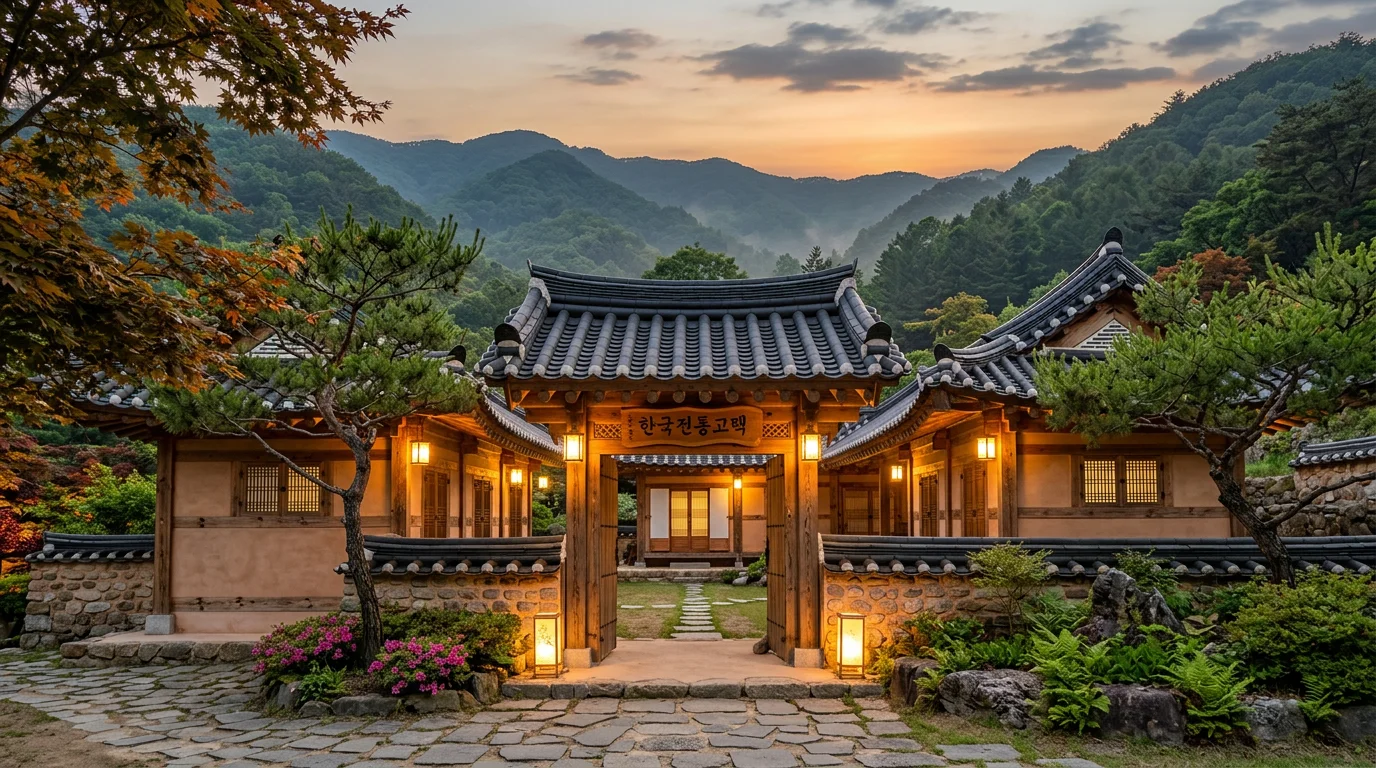
🏯 How to Experience Korea's Traditional Hanok & Old Houses
⚠️ Note: The booking channels, prices, and hours below vary by business, season, and policy. In particular, residential hanok villages like Bukchon have visiting-hour limits — check official channels for the latest info before you go.
⏱️ 30-Second Summary — Just Remember This!
🏘️ Just a stroll → free hanok village walk (Jeonju, Bukchon, Namsangol)
🌙 Stay overnight → a night in a hanok stay / old house (the ondol-room experience)
👘 Wear hanbok → rent a hanbok for photos in villages & palaces
📱 Booking → Stayfolio, WeHome, Airbnb, Visit Seoul Stay, etc.
🤫 Manners → in residential villages, be quiet & visit within allowed hours!
1. 🏯 Hanok, Old House, Hanok Stay — What's the Difference?
Let's sort out the easily confused terms first.
Hanok (한옥): A traditional Korean house of wooden pillars, earthen walls, and a tiled roof. Buildings are arranged around a courtyard.
Old house (고택 / gotaek): An old traditional house, usually a decades- to centuries-old noble or head-family home. Many are designated cultural properties.
Hanok Stay (한옥스테이): An overnight lodging experience in a hanok. Many operate as registered lodging or as "hanok experience businesses (한옥체험업)", and many are equipped with bathrooms and showers.
The quarters: A hanok is divided into the sarangchae (사랑채, men's quarters), anchae (안채, inner/women's quarters), and haengnangchae (행랑채, caretaker's quarters). The daecheong-maru (대청마루, wide wooden hall) is also a hanok essential.
💡 So "walking a hanok village" and "staying in a hanok" are different. You can just stroll, or spend the night.
2. 🧭 What Kind of Hanok Trip? (Pick a Style)
Your route depends on your goal.
① Light stroll & photos: Walk the alleys, tiled roofs, and cafés. It's free and half a day is enough. (Even better in hanbok.)
② Overnight stay: Sleep on an ondol floor and feel the courtyard's morning calm. Options range from city-center hanok stays (Bukchon, Jeonju) to rural old houses (Andong, Nonsan, etc.).
③ With cultural programs: Some places add tea ceremony (다도, dado), traditional crafts (hanji paper, knots), rice-cake pounding, and folk games. (Reserve in advance at old houses / experience centers.)
Tip: For access, city-center (Bukchon, Jeonju) wins; for tranquility and depth, rural old houses are best.
3. 🏘️ Signature Hanok Villages (Stroll & Photo Spots)
Korea's most iconic hanok villages.
🏘️ Jeonju Hanok Village (Jeollabuk-do): Korea's largest, with 700+ houses. Sights like Gyeonggijeon, Omokdae, Jeonju Hyanggyo, and Jeondong Cathedral plus hanbok, hanji, and Korean-food experiences make it a foreign favorite. Worth a full day. (About 1.5–2 hrs from Seoul by KTX from Yongsan.)
🏘️ Seoul Bukchon Hanok Village: 900+ houses on a hill between Gyeongbokgung and Changdeokgung — an actual residential area. The tiled-roof views from the alleys are beautiful. But there are visiting-hour limits (see section 9!).
🏘️ Seoul Namsangol Hanok Village: A free downtown hanok village. Traditional houses were relocated and restored here, with a traditional garden, a pavilion (Cheonugak), and folk-game experiences — easy for families and foreigners.
🏛️ Andong Hahoe Village / Gyeongju Yangdong Village: UNESCO World Heritage clan villages. They're living villages where people still reside, so you can see the original form of Korean tradition. Some old houses offer lodging.
4. 🏡 Old Houses & Hanok Stays (Where to Sleep)
Sleeping in a centuries-old house is a special experience.
Premium Old Houses (명품고택, Korea Tourism Organization): A program selecting hanok that are cultural properties or 70+ years old, managed directly by head-family descendants. Beyond just lodging, you can experience the family's traditions, food, and stories. (Check the KTO hanok site.)
Regional old houses (for reference): Head-family old-house stays exist in Andong, Nonsan, Gyeongju, etc. Capacity and rates differ by room, with options like whole-house rental or breakfast (local specialties).
City-center hanok stays: Jeonju Hanok Village, Seoul's Bukchon and Seochon have many stylish hanok with modern comforts (bathroom, heating/cooling) — easy for first-timers.
Municipal hanok lodging centers: Public hanok facilities run by local governments (Gimpo, Jeonju, etc.) tend to have clear booking/refund rules.
💡 Room layouts vary greatly by house. Before booking, confirm bathroom location (outside/inside), heating/cooling, and max capacity.
5. 📱 How to Book a Hanok Stay (by Channel)
Choose a channel by purpose and region.
Curation platforms: Sites like Stayfolio curate stylish stays where you can pick an atmospheric hanok.
Hanok specialists: Hanok/old-house platforms like WeHome (formerly Kozaza) let you book old houses nationwide. (Phone/email inquiries too.)
Seoul hanok: Check Visit Seoul Stay (Seoul Tourism Organization) and the Seoul Hanok Portal for registered Seoul hanok stays.
General OTAs: Airbnb, Yanolja, Yeogi-eottae, Naver booking — search "hanok (한옥)" and plenty come up.
Foreigner travel platforms: Klook, KKday, Creatrip offer hanbok experiences and hanok tour packages. (Check for English/Japanese-supported listings.)
💡 The same stay may appear at different prices across channels. Compare reviews, cancellation rules, and location before booking. CultureHub doesn't endorse specific businesses, so please cross-check official/verified channels with real reviews.
6. 📋 Check Before You Book (No-Fail Booking)
Hanok conditions differ a lot by house, so pre-booking checks matter.
Check-in / check-out times: Old houses and small hanok may have set check-in times, or need the host's guidance.
Breakfast included? Some serve a local-specialty breakfast, some none at all. Especially check for rural old houses with no nearby restaurants.
Bathroom: Confirm whether it's private or shared, inside the room or outside. Old houses may be shared/external.
Soundproofing: Walls and windows are thin and sound carries. If you want a quiet night, ask ahead.
Luggage storage: Thresholds and wooden-floor layouts can make large suitcases awkward. Check for storage space / luggage drop-off.
Heating/cooling & bedding: Confirm bed vs. floor-mat style and whether there's AC/heating.
7. 🛏️ Hanok Stay Facilities & Usage (Know Before You Go)
They differ from modern hotels, so knowing helps.
Ondol (floor heating) & floor bedding: Traditional hanok often have no beds — you sleep on a mat (요, yo) on the floor. (Confirm before booking if you want a bed.)
Maru & courtyard: Take off your shoes to step onto the maru. Time on the courtyard and veranda (툇마루, twinmaru) is a hanok highlight.
Bathroom/shower: In old houses, the bathroom may be outside (a separate building). Check the location in advance.
Heating/cooling: Many modern hanok stays have AC/heating, but traditional old houses may not.
No cooking / no smoking: Hanok are wooden and sensitive to fire and odors. In-room cooking, smoking, and candles are generally prohibited.
ID check: Some places check ID (passport) at check-in. Keep to the booked guest and headcount.
Sound: Walls and windows are thin, so sound carries. Please be quiet at night.
💡 Seasonal tip: In winter, the ondol floor can get very hot — ask how to adjust the temperature. In summer, hanok are close to nature, so insects may appear; it helps to check for window screens and repellent.
8. 👘 Hanbok Experience (Village Highlight)
Wearing hanbok while walking a hanok or palace makes for perfect photos.
Where: Many rental shops cluster in Jeonju Hanok Village and around Seoul's Gyeongbokgung, Changdeokgung, and Bukchon. Choose from hundreds to a thousand-plus outfits.
Price/time: Usually rented by the hour (2–4 hrs) or full-day. Hair, accessories, and bags may cost extra.
Free palace entry: Wearing a hanbok that meets the guidelines gives free entry to major palaces. Both traditional and modern-life hanbok qualify, but there are wearing standards (e.g., a proper top and bottom). (Confirm the criteria before your visit.)
Booking: In peak season and weekends, book ahead. On Klook/KKday, pick English/Japanese-supported listings for convenience.
Tip: CultureHub doesn't endorse specific shops. Search "Jeonju hanbok rental" or "Gyeongbokgung hanbok" and compare reviews, location, and price.
9. 🤫 Manners & Cautions (Bukchon Especially!)
Many hanok villages are neighborhoods where people actually live. Manners matter.
⛔ Bukchon visiting-hour limits (must check!): Part of Bukchon (the "Red Zone" around Bukchon-ro 11-gil) allows tourist visits only 10:00 AM–5:00 PM. Entering for tourism outside those hours can incur a fine (₩100,000), and it applies to foreigners too. (In effect since March 2025.)
🚌 Charter-bus restrictions: From 2026, tour-bus traffic and parking around Bukchon are tightened. You get off at designated drop-off points and explore on foot.
👣 Shoes & threshold manners: Take off your shoes on the maru and in rooms. And it's traditional etiquette not to sit on or step on the door threshold (문지방, munjibang).
🔇 Be quiet: In narrow alleys even small sounds carry. Avoid loud voices.
🚪 Respect private property: Don't open gates or enter courtyards. These are private homes.
🚭 Litter & smoking: Never drop cigarette butts or trash.
📸 Photos: Don't casually photograph residents or home interiors. Ask permission if someone's in frame.
10. Common Questions from Foreigners ❓
Do I pay to walk a hanok village? → Mostly free. Strolling the alleys has no entry fee. (Some paid facilities/experiences aside.)
Do I have to stay overnight? → No. Daytime strolling and hanbok alone are great. Lodging is optional.
No beds? → Traditional hanok often use floor mats. If you want a bed, confirm before booking.
Is the bathroom outside? → It can be in old houses. City-center hanok stays usually have it inside/nearby.
How do I reach rural old houses? → In Andong, Gyeongju, Nonsan, etc., public transit is often inconvenient. Factor in bus + taxi time and keep your schedule loose.
When should I visit Bukchon? → 10:00 AM–5:00 PM (Red Zone). Early morning and evening are restricted.
Can I book in English? → Airbnb, Klook, KKday, etc. have many English/Japanese listings. Individual old houses may need email/phone.
What's easiest? → For first-timers, Jeonju Hanok Village (sights + experiences packed) or a Seoul city-center hanok stay has the best access.
✅ Quick Checklist
Pick a style (stroll only / stay / with programs)
Pick a region (Jeonju, Seoul Bukchon/Namsangol, Andong, Gyeongju, etc.)
Before booking, check check-in time, breakfast, bathroom (shared/private), soundproofing, luggage storage, bedding/heating-cooling
Book after comparing reviews, cancellation rules, location
For rural old houses, factor in taxi travel time and keep the schedule loose
Check Bukchon hours (10–17)/fines; note bus traffic limits
Book hanbok ahead in peak season; a guideline-compliant hanbok gives free palace entry
No cooking/smoking/candles in the hanok; shoes off, don't step on the threshold
Ask how to adjust the ondol in winter; check screens/repellent in summer
In residential villages, be quiet, respect private property, no littering
🟦 A guide put together by the CultureHub team.
📅 As of 2026 · ⚠️ Booking channels, prices, hours, and visiting-restriction policies can vary by business, local government, and season. Check each stay's and local government's official channels for the latest info before your trip.