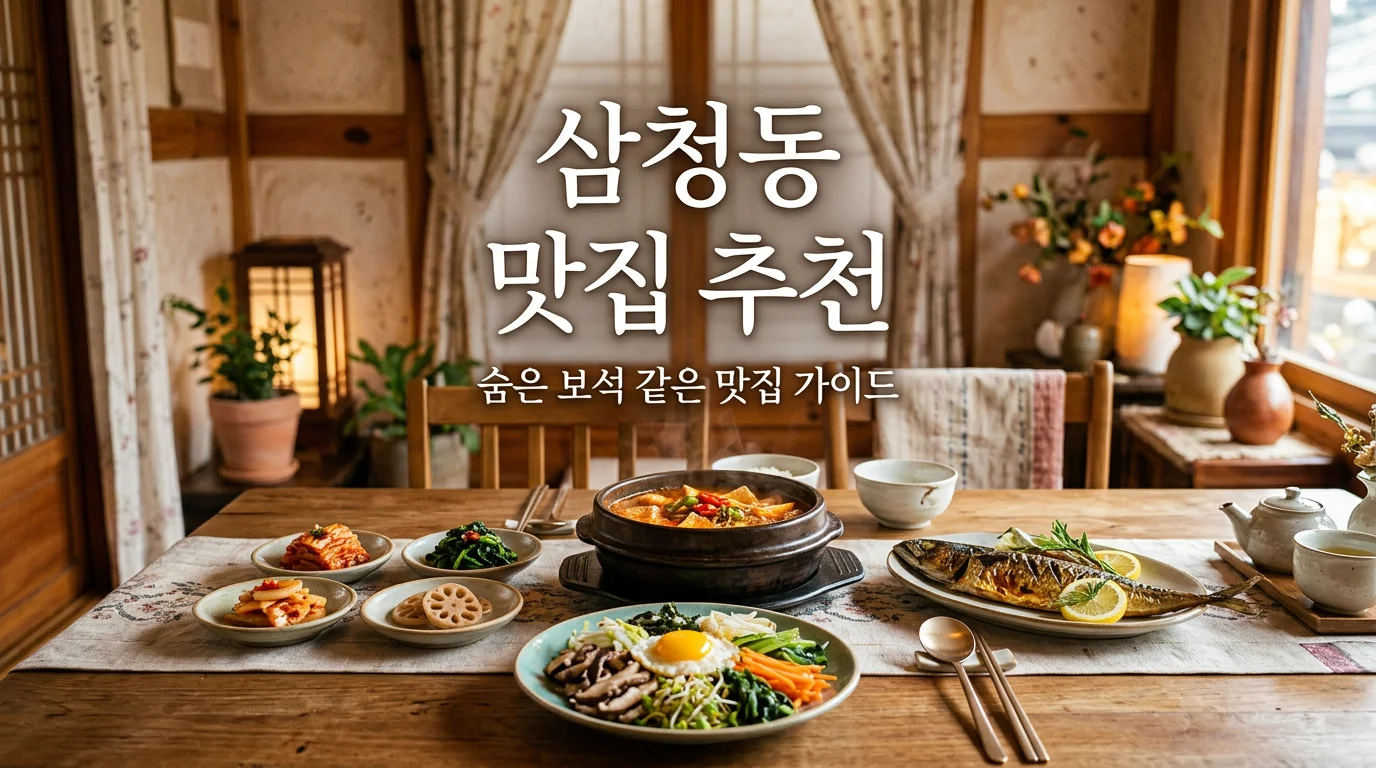
🍽️ The Ultimate Samcheong-dong Food Guide — From Soy-Marinated Crab to Traditional Tea Houses
⚠️ Note: Prices, English menus, opening hours, and days off vary by restaurant and change often. Before visiting, check the latest info on Naver Map / Kakao Map reviews or each venue's own channel. Michelin-listed and popular spots can have long waits, and some course restaurants operate on a 100% reservation basis.
⏱️ 30-Second Summary — Just Remember This!
🏘️ Location → Hanok & gallery alleys between Gyeongbokgung and Bukchon
🦀 Signature dishes → Soy-marinated crab, sujebi (dough soup) & more
🍚 Fine dining → Hanok course meals, many by reservation
🌶️ Vibe → Hanok charm meets trendy cafés
💰 Price range → From casual to high-end
📍 How to find → Search "Samcheong-dong restaurants" on Naver/Kakao Map
🏘️ What Kind of Neighborhood Is Samcheong-dong?
A great place to enjoy sightseeing and dining all at once.
Location: East of Gyeongbokgung Palace, connected to Bukchon Hanok Village. Easily reached on foot from Anguk Station (Line 3).
Atmosphere: Restaurants and tea houses in renovated old hanok mix with stylish cafés and galleries along every alley.
Pair it up: Combine with Gyeongbokgung, the National Museum of Modern and Contemporary Art, and a Bukchon walk for a perfect day out.
Tip: The streets are hilly with many alleys, so use a map app to check entrances and floor numbers as you go.
🦀 Must-Try Signature Dishes
The flavors that define this neighborhood.
Samcheongdong Sujebi (삼청동수제비): The neighborhood's icon! Famous for its hand-torn dough soup (sujebi) and potato pancakes. This old-school spot was named a Bib Gourmand in the 2026 MICHELIN Guide Seoul, so expect long lines at lunch and dinner. (Photography inside is restricted. Roughly 11:00–21:00; confirm before visiting.)
Keunkiwajip (큰기와집): A renowned soy-marinated crab house in the Samcheong-dong / Bukchon area. The crab-meat bibimbap enjoyed in a hanok setting is popular, and it's featured in the MICHELIN Guide. It's very popular, so expect a wait.
🍚 Hanok Fine Dining & Course Meals
A special meal — a course enjoyed inside a hanok.
Soseonjae (소선재): Enjoy soy-marinated crab plus tteokgalbi (grilled short-rib patties) in a beautiful hanok. On the pricier side, but praised for its fresh crab and tender meat.
Pyeonanhanjip (편안한집): A hanok course-style Korean set meal. Bulgogi, seafood-scallion pancake, and soy-marinated crab all appear, and there's parking, so coming by car is easy too.
Cheongsujeong (청수정): A cozy old-school spot with floor seating (shoes off). Its signatures are the mussel-rice (clam-rice) set and savory pancakes. With few tables, waits can occur.
Mokseokjung (목석정) 🆕: A newly opened seasonal Korean course restaurant on Palpan-dong alley. Named to the 2026 Blue Ribbon, it serves a chef's-choice (omakase-style) course built on seasonal ingredients. There are three tiers — Mok / Seok / Jeong (reference price approx. ₩48,000–₩98,000 per person, subject to change) — and it's 100% by reservation, so book ahead via CatchTable or Naver. Private rooms make it popular for family gatherings and special occasions.
🍜 Cozy Old-School & Home-Style Spots
Great for a hearty, no-fuss meal.
Nunnamujip (눈나무집) 🆕: An old-timer that's held its spot at the edge of Samcheong-dong for over 20 years. The signatures are kimchi-mari guksu (chilled noodles in kimchi broth topped with a thin layer of ice) and sweet-savory tteokgalbi. The mung-bean pancake is popular too, and the tangy kimchi broth is especially refreshing in hot weather. (Roughly 11:30–21:00; subject to change.)
Bong-ee-bab (봉이밥): Home-style Korean food served with a variety of side dishes. Well-liked for its easy prices and clean flavors.
🌶️ Popular Casual Spots
Great for a light, trendy bite.
Bongtak Bul-jjukkumi (봉탁 불쭈꾸미, Samcheong-dong): Spicy stir-fried baby octopus (bul-jjukkumi) is the signature. The owner kindly shows you how to grill it, and international reviews often praise the service.
Snack Seoul (스낵 서울): Pollack-roe tteokbokki, chicken rolls, and corn makgeolli are a popular combo. A tablet ordering system makes it easy for international visitors to order.
🥞 Brunch & Western
Great when you're craving something other than Korean food.
Dot Blanket (닷블랭킷, Samcheong Hanok branch): A healthy brunch café with hanok charm. Quiet and cozy — perfect for a relaxed time with friends or family.
Mangata (망가타): A Scandinavian restaurant in a Bukchon alley. Meatballs, duck steak, a reasonable wine list, and a romantic hanok atmosphere are its charms. (Check closing days before visiting.)
☕ Cafés, Traditional Tea Houses & Bars
Great for post-meal dessert or a drink.
Seoul-seo Duljjaero Jalhaneun Jip (서울서둘째로잘하는집) 🆕: A traditional dessert institution running since 1976 and designated a Seoul Future Heritage site. Its signatures are rich danpatjuk (sweet red-bean porridge) and ginger-jujube tea. A perfect warm-up finish after sightseeing. (Roughly 11:00–20:30; subject to change.)
Chatteul (차뜰): A traditional tea house in a 100-plus-year-old hanok. The central garden and mountain-and-tiled-roof view are beautiful, and traditional desserts like pumpkin rice cake and red-bean porridge are popular. (Closed Tuesdays.)
Tea Therapy (티테라피) 🆕: A hanok tea café known for its house-blended herbal and wellness teas. Choosing a tea to match how you feel, plus the calm atmosphere, makes it a unique experience for international visitors too.
Heon Cha Haus (헌차하우스): A cozy space for traditional teas like mugwort latte and omija, plus desserts. The owner's kind service earns rave reviews from international visitors.
fourstones coffee roasters: A stylish coffee roastery with a lovely garden and rooftop view. The open space and signature latte are popular.
The Queen's Bakery & Café: A European-style bakery café. Loved for its salt bread and variety of pastries.
Waoak (와옥): A whiskey and cocktail bar hidden in a hanok. A quiet atmosphere, a terrace, and a wide drinks selection are its appeal.
💰 Price Range & Reservations
Good to know in advance.
Price range: Casual spots like sujebi, tteokbokki, and kimchi-mari guksu are easy on the wallet, while soy-marinated crab and course meals run tens of thousands of won per person. Budget generously for crab and course dining.
Reservation note: Course-style restaurants like Mokseokjung run on a 100% reservation basis and may require a deposit. Check CatchTable / Naver reservations before visiting.
Minimum order: Many floor-seating set meals require a minimum order of two people.
Waits: Michelin and popular old-school spots (sujebi, soy crab) have long waits on weekends and at mealtimes. Visit right at opening or at off-hours.
Payment: Most places accept cards, but small old-school spots may need checking.
💡 Tips & Etiquette
Good to know for a pleasant visit.
🕐 Waits: Popular old-timers have lines. Early lunch (around 11:00) and late afternoon are relatively calm.
👟 Floor seating: Some Korean restaurants require removing your shoes and sitting on the floor. Comfortable clothing helps.
📸 Photo limits: Some old-school spots (like sujebi) prohibit interior photography. Please follow the signage.
🚇 Transport: Walkable from Anguk Station (Line 3). Alleys are narrow and hilly, so parking can be difficult and pricey.
🗺️ Wayfinding: Many spots are tucked inside hanok and alleys, so check entrances on Naver Map / Kakao Map.
🈶 English menus: English menus and service vary by venue. A translation app or a picture menu helps.
❓ Frequently Asked Questions (FAQ)
What should I eat? → Samcheong-dong's icons are soy-marinated crab and sujebi. For spicy, try bul-jjukkumi; for a refreshing broth, kimchi-mari guksu; for something light, tteokbokki or brunch.
Do I need a reservation? → Casual spots are usually fine as walk-ins on weekdays. But course restaurants like Mokseokjung are 100% reservation, and popular spots on weekends may have waits.
Can I dine solo? → Sujebi, noodles, tteokbokki, and cafés are fine solo. However, many crab and set-meal restaurants require two or more.
Are there English menus? → It varies by venue. Picture menus and translation apps make it easier.
Any vegetarian options? → Traditional Korean food often uses broth and seafood. Brunch cafés (like Dot Blanket) or tea houses may be easier for vegetarians.
How to combine with sightseeing? → Pair with Gyeongbokgung, Bukchon, and museum walks for a half-day to full-day course. Finish at a tea house (Chatteul, Tea Therapy, or the danpatjuk institution).
🗣️ Handy English Phrases On-Site
"Do you have an English menu?" (영어 메뉴 있나요?)
"Do I need a reservation?" (예약이 필요한가요?)
"How long is the wait?" (대기 얼마나 걸리나요?)
✅ Quick Checklist
Decide what you want to eat (soy crab, sujebi, kimchi-mari guksu, jjukkumi, etc.)
Check location, hours, and days off on a map app
Confirm reservations/waits for reservation-only (e.g., Mokseokjung) and popular spots
Check whether sets / set meals require two or more people
Check for floor-seating or photo-restricted venues
Plan your route with Gyeongbokgung / Bukchon sightseeing
Confirm alleys, floors, and entrances on Naver / Kakao Map
Finish with a café or traditional tea house (Chatteul, Tea Therapy, danpatjuk spot)
🟦 A guide compiled by the CultureHub team. 📅 As of 2026 · ⚠️ Prices, English support, menus, hours, and days off may vary by season and by store/branch. CultureHub does not endorse any specific business — always check the latest info on each venue's channel or a map app before visiting.