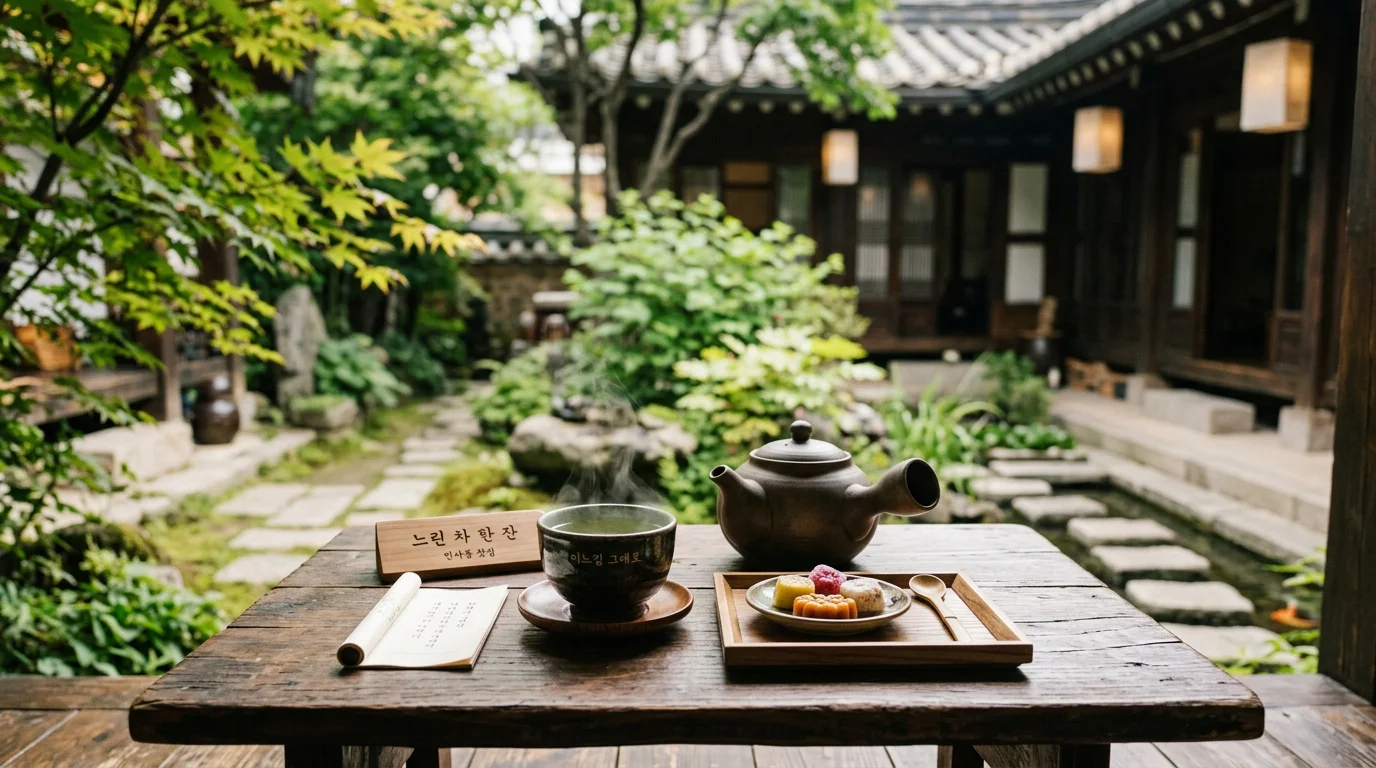
🍵 Insadong Traditional Tea Houses & Sweets — Old Seoul in a Single Cup
⚠️ Please note
The hours, closing days, prices, and ratings below were compiled as of 2026 and are for reference only — they change often depending on the venue. Seasonal items (like shaved ice), whether an English menu is offered, and whether cards are accepted all vary by shop. Before visiting, please double-check the latest details on Google Maps, Naver, or the venue's official channels. Popular tea houses can have a wait on weekend afternoons, so a weekday or early afternoon is more relaxed.
⏱️ 30-second summary — just remember this!
🍵 Concept → Korean traditional tea in a hanok-mood space
☕ Signature teas → jujube, ssanghwa, ginger, omija, quince (sweet to slightly bitter)
🥮 Sweets → yakgwa, hangwa, grilled rice cake, injeolmi, traditional shaved ice
💰 Price → about ₩8,000–12,000 per cup (approx. US$6–9, varies by shop, reference only)
🌍 For visitors → many places have English or photo menus (varies), just say your taste and you're set
🪑 Seating → many spots have both floor seats (shoes off) and table seats
📍 Location → all around Insadong-gil's alleys near Anguk Station, easy on foot
1. 🍵 What makes Insadong tea houses special
Insadong is Seoul's signature traditional-culture street, running about 700m between Anguk, Jongno 3-ga, and Jonggak stations. Down the narrow alleys branching off the main road you'll find galleries, antique shops, and old tea houses tucked away. Unlike a franchise café, a traditional tea house sells you tea brewed from house-made cheong (fruit or ginger cured in sugar), the scent of hanok wood, and the quiet time you spend with your cup. Think of it as "staying a while" rather than "a quick cup."
One thing to know: in Korea, "tea (cha)" refers not only to leaf-based drinks but broadly to traditional infusions of fruit, grains, flowers, and medicinal herbs. So jujube tea and ssanghwa tea — which contain no actual tea leaves — are all called "cha" too.
2. ☕ Types of tea & choosing by taste
Menus in Korean (and sometimes Chinese characters) can be unfamiliar, so let's sort by flavor. If you like it sweet and mild, jujube tea (rich and sweet), omija tea (sweet-and-tart, refreshing in summer), or citron tea are all safe bets. If you want something rich and warming, try ssanghwa tea (medicinal-herb base, deep and hearty, sometimes topped with nuts) or ginger tea (sharp and zesty). If you prefer light and clean, green tea, white tea, or quince tea work well. One tip — just tell the staff "sweet and mild" or "something rich and warming" and they'll pick a good one for you.
3. 🥮 Traditional sweets to enjoy with your tea
The real charm of a tea house is the sweets that come with the tea. Many places serve a few pieces of hangwa (traditional confections like yakgwa, dasik, and gangjeong) for free when you order tea. The highlights: yakgwa (a chewy, sweet honey-and-oil cookie — "yakgwa tours" are trending), grilled garae-tteok (chewy rice cake, grilled and dipped in rice syrup or honey), injeolmi (bean-powder rice cake, sometimes in a black-sesame version), and the summer favorite traditional bingsu (shaved ice with red bean + injeolmi, or green tea / omija / black tea). A cup of tea plus one sweet makes a light dessert course.
4. 🏆 6 tea houses worth visiting (trending + classic)
⭐ The ratings, prices, and hours below are rough figures drawn from public sources like DiningCode and Google, and change often. Please confirm the latest info and wait times via a map app or CatchTable before you go.
🔥 Trending now (buzzing on social & with waits)
① Tteulgwa Dawon 🌿
Location: 34 Insadong-gil, Jongno-gu · Hours: daily 10:00–22:00 (last order 21:50), open year-round (reference)
Highlights: The beautiful inner courtyard you see when you open the gate is the signature. A regular on the "Jongno hanok outing" course lately, it has tablet ordering at each table — traditional mood with modern convenience. Patbingsu and mugwort garae-tteok-gui (dipped in rice syrup) are the favorites.
Great for: First-timers or families who want hanok-courtyard mood plus easy ordering
② TOVE 🍋
Location: 62-4 Insadong-gil, 3F, Jongno-gu (toward Anguk Station Exit 6) · Hours: Mon–Thu 12:00–20:00 / Fri–Sun 12:00–21:00, 90-min seating (reference)
Highlights: More a modern tea café than a traditional tea house — an Anguk hotspot that made the Blue Ribbon list. It serves a variety of teas (white tea, pu-erh, and more) in pretty teaware, and its signature lemon jelly and summer corn bingsu are well known. The space is small and there's often a wait even on weekdays, so a CatchTable reservation helps (the sign is tiny and easy to miss).
Great for: Those who want a trendy tea café with photos and dessert
③ T&I 1010 🫖
Location: 10 Insadong 10-gil, 2F, Jongno-gu · Hours: daily 11:00–19:00 (closed Tue or limited hours, reference)
Highlights: A dedicated tea café with a wide range — from Korean teas of Boseong and Hadong to Assam black tea and Chinese pu-erh. The bright hanok view makes it popular for dates. Tea from ₩8,000 (approx. US$6, reference).
Great for: Those who want to pick from many teas and enjoy a hanok view
🌾 Long-loved classics
④ Gyeongin Museum Traditional Tea Garden (Jeontong Dawon) 🏛️
Location: 11-4 Insadong 10-gil, Jongno-gu (inside Gyeongin Museum) · Hours: daily 11:00–21:20 (closed New Year's Day, Lunar New Year, Chuseok, reference)
Highlights: A hanok courtyard tea house inside a museum converted from the mansion of Joseon reformist Park Yeong-hyo. Lush trees give it a forest-like feel, and among its 15 traditional teas, jujube tea is especially popular. Great with an assorted rice-cake plate and hangwa, and you can see exhibits too — a favorite with international guests.
Reference price: jujube / omija tea about ₩8,000, ssanghwa tea around ₩11,000 (reference)
Great for: First-timers who want to feel all of Insadong's atmosphere at once
⑤ Beautiful Tea Museum (Areumdaun Cha Bakmulgwan) 🍵
Location: 19-11 Insadong-gil, Jongno-gu · Hours: daily approx. 11:30–20:00 (reference, please confirm)
Highlights: Just as the name says, a tea museum and tea house in one. You can browse — and buy — over 100 teas from around the world. The glass-roofed courtyard is lovely (especially on snowy or rainy days), and the green tea / matcha / black tea bingsu and black-sesame injeolmi are famous. Entry is free, but café use is usually one order per person.
Great for: Those who want a proper tea-ceremony (dado) atmosphere
⑥ Gwicheon (歸天) 📖
Location: 14 Insadong 14-gil, Jongno-gu
Highlights: A tea house deeply tied to poet Cheon Sang-byeong, famous for the poem "Gwicheon" (opened 1985, now run by his family · a Seoul Future Heritage site). His traces remain throughout the cozy space, and the house-made quince and ssanghwa teas are favorites. A warm-hearted spot that serves hangwa by the number of guests.
Great for: Those curious about the mood and story of an "old-style" tea house rather than a modern café
➕ Bonus · walkable from Anguk/Bukchon — OSULLOC Tea House, Bukchon (45 Bukchon-ro, Jongno-gu, about 450m from Anguk Station Exit 2). Not Insadong proper, but close enough on foot to pair up. A premium tea house run by Amorepacific, with a three-floor space in a restored 1960s house and lovely Bukchon hanok views. Its Hallasan matcha bingsu, matcha desserts, tea courses, and tea classes are well known (weekend waits ↑ · hours Mon–Thu 11:00–20:00 / Fri–Sun 11:00–21:00, reference).
🥮 By the way, the yakgwa-tour favorite Dochaebi-do Banhan Chatjip (45 Insadong-gil, 2F Indeok Building) and the old-house-mood Sin-yet Chatjip (omija & traditional patbingsu) are also nice to add depending on your taste.
5. 💰 Prices & payment tips
A cup of traditional tea is generally in the ₩8,000–12,000 range (approx. US$6–9; bingsu and grilled rice cake are extra, and it varies by shop/menu). It can feel a bit pricier than a franchise café, but that includes the atmosphere and the space. These days most tourist-area venues in Seoul accept cards (the Beautiful Tea Museum, Gyeongin Museum Traditional Tea Garden, etc. take cards too). Still, it's reassuring to keep a little cash (around ₩10,000) in case of a small shop or a temporary terminal issue. Some places take payment upfront (you pay when ordering), so don't be surprised.
6. 🧭 Etiquette & good-to-know tips
Many tea houses have floor seats where you take off your shoes (table seats are usually available too, so pick whatever's comfortable). It's a quiet space for enjoying tea, so keeping your voice down a notch is nice; photos are generally fine, but be considerate not to catch other guests in the frame. Hot tea usually comes with free hot-water refills, and some places will give you ice on request. At museum-style tea houses, remember that one order per person is the norm.
7. 🗓️ When to go & getting there
The nearest station is Anguk Station on Line 3 (about a 5-minute walk to Insadong-gil). Most of the tea houses here are just a few steps into an alley off the main street, so getting around on foot is easy. For galleries and antiques, quieter weekdays are better; for street performances and stalls, weekends are livelier (but popular tea houses get busier ↑). Spring (March–May) is especially pretty, and in summer, go for the traditional bingsu.
❓ Frequently asked questions
Q. Is there an English menu? A. Many places have an English or photo menu, but it varies by shop. Even without one, just say "sweet" or "rich" and the staff will make a recommendation.
Q. Do they serve coffee? A. Some tea houses have americano and the like, but traditional tea is the main event. When in Rome — go for the traditional tea!
Q. Can I pay by card? A. Cards are accepted at most places. Still, it's reassuring to carry a little cash in case of a small shop or a terminal issue.
Q. Do I have to take off my shoes? A. You take off your shoes at floor seats. Many places also have table seats, so pick whatever's comfortable.
Q. Do I have to order sweets separately? A. Many places serve hangwa for free when you order tea. But items like bingsu and grilled rice cake are usually ordered separately.
Q. Do I need a reservation? A. Most places are walk-in. Popular spots can have a wait on weekend afternoons.
🗣️ Handy Korean phrases for on the spot
(Korean phrase → pronunciation → meaning)
순하고 달콤한 차로 추천해 주세요. → Sunhago dalkomhan cha-ro chucheonhae juseyo. → Please recommend a mild, sweet tea.
영어 메뉴 있나요? → Yeong-eo menyu innayo? → Do you have an English menu?
차에 다과도 같이 나오나요? → Cha-e dagwa-do gachi naonayo? → Does the tea come with any snacks?
✅ Quick checklist
Check hours/closing days on Google Maps or official channels before going
Bring a little cash (around ₩10,000)
Decide in advance whether you prefer floor or table seating
Consider weekdays / early afternoon for popular spots
Note the "one order per person" / pay-upfront rules
Bingsu may be seasonal — check ahead
🟦 A guide compiled by the CultureHub team. 📅 Compiled: 2026 · ⚠️ Prices, English support, details, and hours may vary by season, venue, and branch. We don't endorse any specific business — please confirm the latest info via each venue's channels and map apps before visiting.