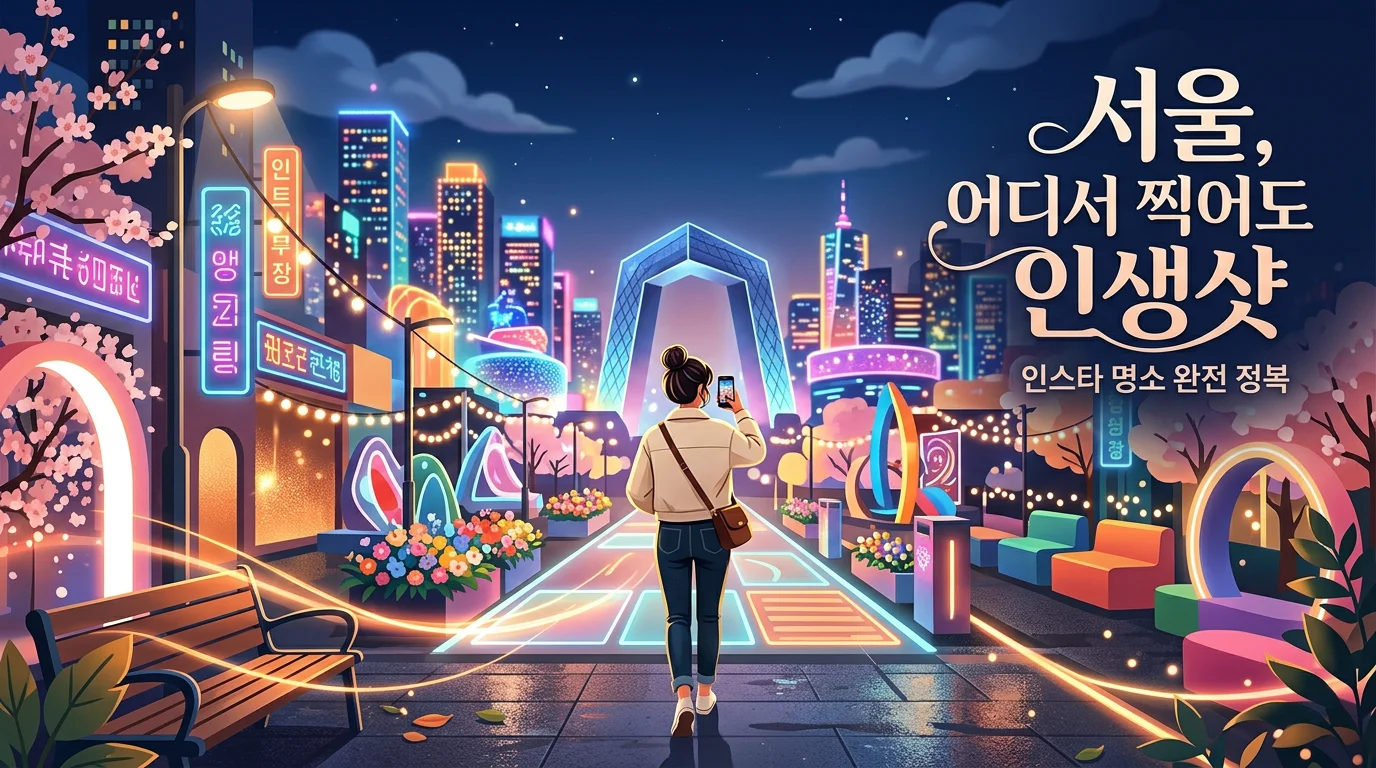
📸 8 Insta-Worthy Photo Spots in Seoul — A Guide to Level Up Your Feed
⚠️ Note
The fees, opening hours, and closing days below are for reference only and change often by branch, location, and season. Always check each place's official channels or a map app before visiting. Popular spots like Gyeongbokgung and the observation decks get long waits and crowds on weekends and in peak season, so give yourself extra time.
⏱️ 30-Second Recap — Just Remember This!
🏯 Hanok vibes → Traditional backdrops in Bukchon & Ikseon-dong alleys 👑 Hanbok shot → Gyeongbokgung; free entry if you wear hanbok ☕ Trendy mood → Seongsu-dong café street & Daelim Changgo 🌳 Green backdrop → Seoul Forest & Yeonnam-dong "Yeontral Park" 🏙️ Night & skyline → Namsan Tower & Seoul Sky (Lotte World Tower) 🎨 Futuristic architecture → DDP curves & night lighting 🍜 Local mood → Gwangjang Market street-market feel ⏰ Pro tip → Golden hour (dusk) & weekday mornings are quietest
1. 🏯 Traditional Hanok Alleys — Bukchon Hanok Village & Ikseon-dong
Tiled roofs and narrow lanes make the most "quintessentially Korean" backdrop. These are long-loved traditional photo zones in Seoul.
Bukchon Hanok Village: From the Gyedong-gil and Gahoe-dong hills, the signature shot layers the city skyline behind the tiled roofs. It's a real residential neighborhood, so please be considerate. In particular, the busiest area (the "Red Zone" around Bukchon-ro 11-gil) restricts tourist entry to 10:00 AM–5:00 PM. Taking photos or videos outside those hours can result in a fine for both Korean and foreign visitors, so check the latest notices before you go. Keep quiet and respect residents' privacy. The streets themselves are free.
Ikseon-dong Hanok Street: 1920s hanok converted into cafés and bars line every alley. It's right next to Jongno 3-ga Station, and the lantern-lit evening feels more atmospheric than daytime. A very popular photo spot.
💡 The two are within walking distance, so they pair well in one day.
2. 👑 Palace & Hanbok Shots — Gyeongbokgung
The main royal palace of the Joseon dynasty. Wear a hanbok and shoot against Geunjeongjeon Hall or Gyeonghoeru Pavilion for a "time-travel" photo.
Signature photo zones: The courtyard in front of Geunjeongjeon, Gyeonghoeru reflected in the water, and the small Hyangwonjeong pavilion.
Fees (reference): About ₩3,000 for adults / about ₩1,500 for ages 7–18. Free for ages 6 and under and 64 and over. Wear hanbok and both Koreans and foreigners enter free — renting a hanbok at a nearby shop saves the fee and makes your photos more special. (To qualify, the hanbok must follow the guidelines, with a jeogori top and a skirt or trousers.)
Closed: Tuesdays. Double-check the day of your visit.
Hours (reference): Entry generally starts at 9:00 AM, with closing times varying by season. Spring and fall night openings require separate paid reservations.
🙏 Tripods and drones may be restricted, so follow on-site guidance.
3. ☕ Trendy Café Street — Seongsu-dong
An industrial mood from repurposed old factories and warehouses. This is Seoul's most "of-the-moment" café neighborhood.
Daelim Changgo: A large café built inside a red-brick warehouse. Natural light pouring through the tall windows and high ceilings makes it a popular photo backdrop. Drinks and bakery items run a bit pricey.
Seongsu-dong Café Street: Dessert shops and select stores line every alley, so almost any angle makes a picture. It gets very crowded on weekend afternoons, though.
💡 Check the shop's policy before shooting inside, and be mindful not to catch other guests in frame.
4. 🌳 Green in the City — Seoul Forest & Yeonnam-dong "Yeontral Park"
When you crave some green amid the concrete. Two great spots for natural-light portraits.
Seoul Forest: An urban park several football fields in size. Spring cherry blossoms and tulip gardens, a deer enclosure, and tree tunnels are seasonal photo zones. The park is open 24 hours, but some ecological and exhibition facilities — like the insect-plant conservatory and the butterfly garden — have their own hours, so check ahead.
Yeonnam-dong Yeontral Park: A long, narrow walking path made from the old Gyeongui rail line. The nickname blends "Yeonnam-dong" and "Central Park." It's near Hongdae, so it pairs well with café-hopping.
5. 🏙️ Skyline & Night Views — Namsan Seoul Tower & Seoul Sky
For all of Seoul in one frame. Golden hour, running from sunset into the night view, is best.
Namsan Seoul Tower: Reach it by cable car or on foot. The "love locks" zone and city views at the tower's base are free, while the observation deck is paid.
Seoul Sky (Lotte World Tower): Korea's highest observation deck. Floor-to-ceiling glass and a glass floor capture the Han River and skyline wide open. The deck is paid — check fees and booking on the official site.
💡 A clear day makes for better photos, so check the weather before you go.
6. 🎨 Futuristic Architecture & Art — DDP (Dongdaemun Design Plaza)
A silver, curving building designed by world-renowned architect Zaha Hadid. Both its minimal daytime lines and its nighttime lighting make great photos.
Signature: The smooth, flowing silver curves and passageways, plus the night lighting that switches on after dark, are the standout photo spots.
Fees & hours (reference): The exterior and main areas are free to explore, while some exhibitions are paid. It generally runs about 10:00 AM–8:00 PM, but this varies by exhibition.
7. 🍜 Local Market Mood — Gwangjang Market
The raw, lively mood of a traditional market. The food, the old signs, and everyday scenes all become photos.
Old-shop signs for bindae-tteok (mung-bean pancakes), mayak gimbap, and sundae, plus the narrow market lanes, make a retro backdrop. Some shops became famous through TV and Netflix, so it's popular with visitors.
It gets very crowded, so watch your belongings, and it's polite to ask before taking close-up shots of vendors or their food.
8. 📸 Perfect-Shot Tips & Visiting Manners
The same place can look completely different depending on timing and attitude.
Golden hour (just after sunrise, just before sunset) gives soft light that flatters portraits.
Weekday mornings have fewer people, so backgrounds stay clean. Expect weekend waits and crowds at popular spots.
In residential areas like Bukchon and inside shops, keep noise down and respect privacy.
Tripods and drones may be banned in some places, so check the rules first.
❓ FAQ for International Visitors
Q. Do many places charge admission? A. Most streets, parks, and markets are free. Gyeongbokgung (about ₩3,000 for adults, free with hanbok) and the observation decks (Namsan Tower, Seoul Sky) charge admission. Prices can change, so check official channels.
Q. Will English work? A. Tourist sites, observation decks, and large cafés generally have English signage. Traditional markets and small alley shops may be limited, so a map app and a few phrases help.
Q. Where do I rent hanbok? A. There are many rental shops around Gyeongbokgung and Bukchon. Rentals are usually by the hour, so note your return time; free palace entry applies only to hanbok that meets the guidelines.
Q. When do photos turn out best? A. We recommend golden hour (dusk), with its soft natural light, and weekday mornings with fewer people. For seasonal spots like cherry blossoms or fall foliage, check the timing in advance.
Q. What should I watch out for when taking photos? A. In residential areas like Bukchon, stay quiet; inside shops, check whether photos are allowed; at markets, ask before photographing vendors or food. Also check tripod and drone restrictions ahead of time.
Q. How many spots can I do in a day? A. Grouping nearby places is efficient. For example, Bukchon + Ikseon-dong + Gyeongbokgung + Gwangjang Market are in the Jongno area, and Seongsu-dong + Seoul Forest are in the Seongsu area. Don't overdo it — 2 to 4 spots a day is comfortable.
Q. Is it still good for photos on a rainy day? A. Yes. The hanok alleys of Ikseon-dong and Bukchon, DDP, and the Seongsu cafés keep a lovely mood in the rain and can even make for more atmospheric shots. That said, observation decks and night-view spots look much clearer on a clear day.
📍 Recommended Routes by Area
Grouping nearby spots lets you make the most of a day.
Traditional course: Gyeongbokgung → Bukchon Hanok Village → Ikseon-dong → Gwangjang Market (mostly connected on foot or with short hops; visit Bukchon within the 10 AM–5 PM window).
Trendy Seoul course: Seoul Forest → Seongsu-dong Café Street → Daelim Changgo (nature and cafés together in the Seongsu area).
Night-view course: Namsan Seoul Tower → DDP (great to string together from dusk into the night).
🗣️ Handy Korean Phrases for On-Site
At photo spots, a little Korean goes a long way. (Pronunciation guide in brackets.)
"사진 좀 찍어주시겠어요?" [sa-jin jom jji-geo-ju-si-ge-sseo-yo?] — Could you take a photo of us?
"여기서 사진 찍어도 될까요?" [yeo-gi-seo sa-jin jji-geo-do doel-kka-yo?] — Is it okay to take photos here?
"한 장 더 부탁해요!" [han jang deo bu-ta-kae-yo!] — One more, please!
✅ Quick Checklist
Check the day's hours and closing days (Gyeongbokgung is closed Tuesdays)
For Bukchon, check the Red Zone tourist hours (10:00 AM–5:00 PM)
Check the weather (clear days are best for decks and outdoor spots)
Note hanbok rental booking and return times (confirm free-entry guidelines for the palace)
Factor in waits and crowds at popular spots; aim for weekday mornings and golden hour
Bring a power bank and some cash (for markets and small shops)
🟦 A guide put together by the CultureHub team.
📅 As of: 2026 · ⚠️ Fees, English support, information, and operations may vary by season, store, and branch.
We don't endorse any specific business; please check each place's official channels and map apps for the latest information before visiting.