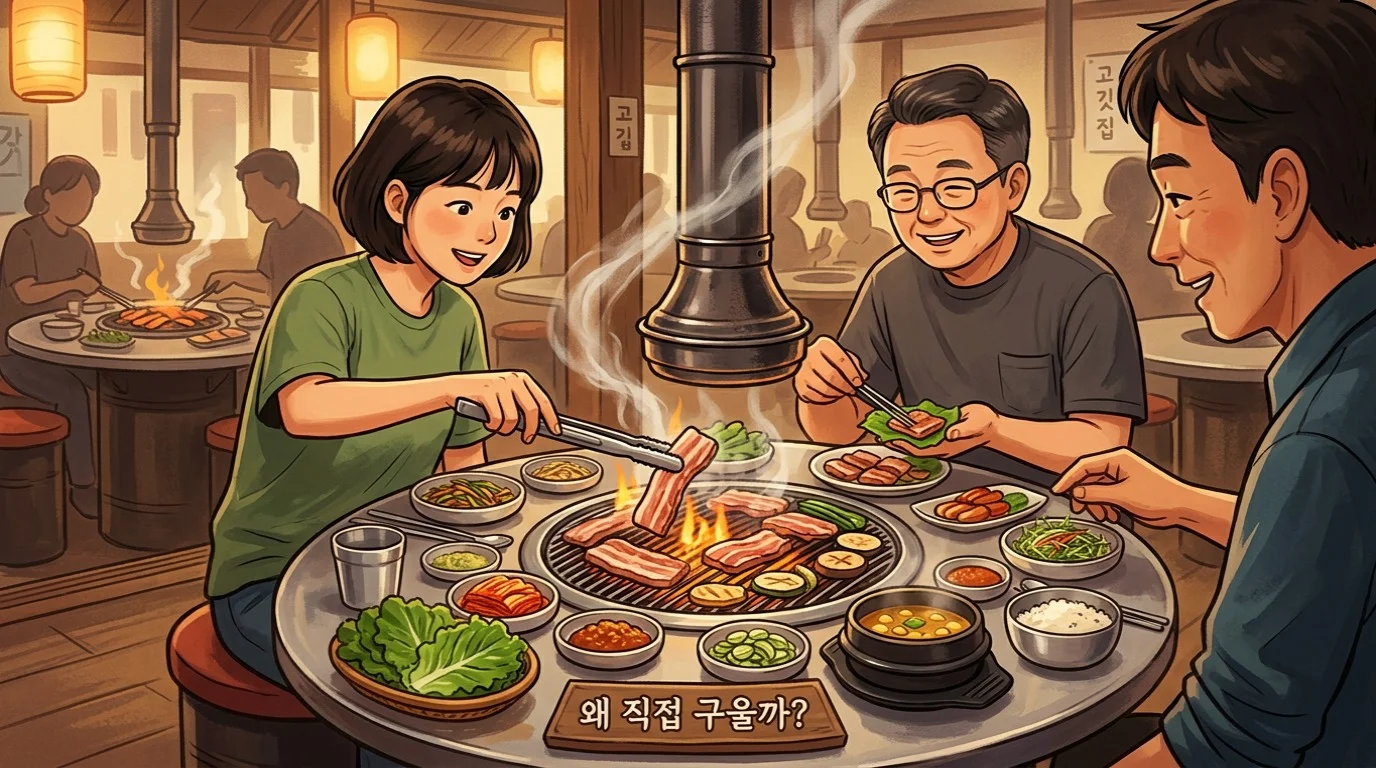
🔥 Why You Grill Your Own Meat at Korean BBQ — A Foreigner's Guide
⚠️ Please note: The grilling style (self vs. staff-grilled), grill type, prices, minimum orders, English support, and side-dish refills all vary by restaurant and branch, and change often. Popular spots can have long waits in the evening or on weekends, so check official channels or a map app for hours, reservations, and whether solo diners are welcome before visiting. The history, cuts, and pricing below are general context and may differ from place to place.
⏱️ 30-Second Summary — Just Remember This!
🔥 Concept → Guests grill meat on a tabletop grill
🕰️ History → Old grilling tradition → restaurant-style grilling spread from the 1970s
🥩 Star → Pork like samgyeopsal is the national favorite
🍽️ Today → Many places grill for you now (varies by restaurant!)
🤝 Charm → Grilling and sharing together makes it social
🔒 Safety → Cook pork and offal thoroughly
🌍 Foreigners → Check the grilling style first and you'll be fine!
1. 🔥 The Basics — "Grilling Can Be Part of the Meal"
A defining feature of Korean BBQ is that every table has its own grill. When the server brings a plate of raw meat, in many cases the grilling is up to you. This is often called "self-grilling." At many ordinary restaurants the kitchen sends out finished meat on a plate, but at Korean BBQ places grilling at the table is especially common — the cooking itself is treated as part of the experience. That's why Koreans often say they're going to "grill meat" rather than "eat meat." Still, as noted below, plenty of restaurants grill for you, so once you sit down it helps to gently check which style it is.
2. 🕰️ History — From an Old Grilling Tradition to Modern BBQ
Cooking meat over fire has a long history in Korea. Old Joseon-era cookbooks record various grilling methods, such as skewering meat or wrapping it in paper or clay to cook it. But these weren't quite the same as today's style, where guests grill for themselves on a tabletop grill.
The samgyeopsal grilling culture we know today is better understood as spreading mainly from the 1970s onward, as pork production and urban dining culture grew. From the late 1960s, pig farming expanded to make up for beef shortages, and through the 1970s–80s, improved pig breeds and modernized farming raised both the supply and quality of pork.
Samgyeopsal restaurants began appearing in the late 1970s, and by the 1980s "samgyeopsal alleys" had formed in cities like Seoul, cementing it as a popular dining-out dish. As after-work gatherings and pork consumption grew, grilling at the table became one of Korea's signature dining scenes.
3. 💡 Why "Guests" Grill — A Few Reasons
Several reasons overlap here. First, freshly grilled meat tastes best. Eating it hot, straight off the grill, is central to the Korean style, so meat pre-cooked in the kitchen tends to lose flavor and texture. Second, everyone likes their meat done differently — some prefer it well-charred, others barely cooked — so it's easier for each person to adjust. Third, it's about how restaurants operate. When guests grill at the table, the kitchen doesn't have to finish every piece, and each table can eat at its own pace. That said, this doesn't necessarily mean lower prices or faster table turnover. Fourth, and above all, grilling and sharing together is simply fun.
4. 🤝 The Joy of Grilling Together — A Social Culture
In Korea, BBQ restaurants are often seen not just as places to fill up, but as spaces to connect with others. Someone flips the meat, cuts it with scissors when it's done and shares it around, and people even wrap pieces for each other. Many say this shared cooking and caring naturally builds warmth (jeong). For office workers especially, an after-work BBQ "hoesik" (company dinner) has long been a classic gathering. Of course, not everyone always finds these dinners comfortable — feelings differ. Even so, the very setup of sitting around a single grill fits the spirit of eating together.
5. 🥩 The Samgyeopsal Story — How It Became a Favorite
Korea's most-loved cut is, without question, pork belly (samgyeopsal). Named for its layered "three-layer" look of meat and fat, it has just enough fat to bring out a rich, savory flavor on the grill. Interestingly, it's a relatively cheap cut on the global market, yet it's so popular in Korea that it isn't cheap here. From the late 1960s, amid beef shortages and rising prices, the government and private sector expanded pig farming, and through the 1970s–80s pig breeds and farming methods improved. As pork supply grew and urban dining culture expanded, samgyeopsal restaurants gradually became mainstream. Today it's beloved enough that March 3 is even called "Samgyeopsal Day."
6. 🍳 The World of Grills — Types and Heat
Korean BBQ grills come in more varieties than you'd expect. By heat source, there's charcoal for great aroma and smokiness, gas for easy heat control, and induction/electric for gentle grilling. Grills also vary in shape and material: round grills angled so the fat runs off to one side, stone plates, and even ones shaped like an upturned cauldron lid. Cast iron is the most common material, though stone and brass are used too.
How hot should it be? The grill should be hot enough that meat sizzles lightly when it goes on. But if there's heavy smoke or the meat blackens instantly, the heat may be too high. The right heat depends on the grill material and thickness of the meat, so if you're unsure, just ask the staff to adjust it.
7. 🐷🐮 What to Grill — A Map of Popular Cuts
Beyond samgyeopsal, popular pork cuts include neck (moksal — lean and mild), jowl (hangjeongsal), gabrisal, and skirt (galmaegisal). Hangjeongsal comes from between the pig's neck and front leg; it has evenly marbled fat and a crisp, chewy texture. At beef BBQ places, common options are grilling cuts like sirloin and tenderloin, unseasoned raw ribs (saengalbi), and sweet-savory marinated ribs (yangnyeom galbi). Woo-samgyeop is thinly sliced beef belly sold to resemble samgyeopsal — it's fatty and cooks fast (but it isn't the same anatomical cut as pork belly). Offal dishes like gopchang and makchang are mainly sold at specialty shops, and the cut and preparation differ between beef and pork; some places pre-grill it or grill it for you, so cook offal thoroughly and don't handle it yourself where staff do the grilling. If it's your first time, start with an easy, hard-to-mess-up cut like samgyeopsal or neck.
8. 🍚 After Grilling — Wraps and a Finishing Dish
The real charm of Korean-style meat is the "ssam" (wrap). Place the cooked meat on a lettuce or perilla leaf, add garlic, ssamjang (seasoned paste), grilled kimchi, or scallion salad, and eat it in one bite. Pairing it with soybean-paste stew or cold noodles is also common. To finish, some samgyeopsal or gopchang places let you order fried rice cooked right on the grill after the meat — but charcoal-grill spots and rib specialists may not offer it, so check the menu. If it's available, sharing one bowl among the group is a nice experience.
9. 🍽️ Today's Trend — Many Places Grill for You
Recently, not only upscale beef restaurants but also dry-aged pork specialists, some franchises, and rib or offal specialists often have staff grill the meat for you. It's convenient if you're unsure about grilling, dislike smoke smell on your clothes, or want to focus on conversation. On the other hand, self-grilling places are still common, and even a pricey restaurant might be self-grill. So it depends more on how a place is run than on price — which is why it's best to check whether staff will grill before you put meat on. This matters especially for foreigners: at a staff-grilled restaurant, touching the meat first can disrupt the server's grilling sequence.
10. 🧑🍳 First Time? — How to Grill Safely
First, check whether it's a restaurant where staff grill for you. If a server has picked up the tongs and started grilling, it's best to leave it to them rather than jump in. At a self-grill place, wait until the grill is hot, then lay the meat out without overlapping.
Flip the meat once one side is cooked, then keep an eye on it and flip as needed so it doesn't burn — you don't have to flip only once or twice to keep it juicy. For thick samgyeopsal or neck, sear the surface, cut it into bite-size pieces with scissors, and let the cut sides touch the grill too so it cooks evenly through.
Pork and offal should be cooked thoroughly. Don't eat it just because the outside looks browned — for thick cuts, cut in and check that the inside is done. When in doubt, asking the staff is the safest choice. Where possible, separate the tongs you use for raw meat from the tools you use to move cooked meat. If the grill blackens or meat keeps sticking, just ask staff to adjust the heat or swap the grill.
👉 Want step-by-step grilling tips for each cut? Check out this guide too — The Complete Guide to Grilling Korean Meat — Samgyeopsal, Beef, and Marinated Ribs, Foolproof Even for Foreigners!
11. 🙆 Good-to-Know Manners & Tips
Korean BBQ has a few small customs. When eating in a group, one person may keep grilling, but these days people often take turns or leave it to the staff — there's no official rule that a specific person must grill. For hygiene, try to separate the tongs used for raw meat from the tools used to move cooked meat; if tongs that touched raw meat touch cooked meat or your plate, cross-contamination can occur. If there aren't separate tongs, just ask the staff. Also, clothes and hair pick up the smell easily, so avoid it before important appointments, or use the deodorizing spray or clothing covers often provided at the entrance. Side dishes (kimchi, wrap veggies, garlic, etc.) are frequently refilled for free, but it varies by restaurant, so ask staff. Finally, grills and flames are very hot — always be careful of burns.
❓ Frequently Asked by Foreigners (FAQ)
Q. Do I really have to grill it myself? Is the service just bad? Not at all! At many Korean BBQ places, guests grilling their own meat is the standard, so it's perfectly normal. That said, plenty of places grill for you, so gently check which style it is once you sit down.
Q. How do I tell staff-grill from self-grill? It depends on how the place is run more than on price. If a server picks up the tongs and starts grilling, leave it to them; otherwise it's self-grill. If unsure, just ask, "Should I grill this myself?"
Q. What if I burn the meat? It's fine. Everyone's clumsy at first. If the heat's too high, ask staff to adjust it or swap the grill. No need to stress.
Q. Can I go alone and still grill? More places allow it, but some take orders only from two portions, so check in advance whether solo diners are welcome and whether there's a minimum order.
Q. Are there English menus? Tourist-area and downtown spots often have English or photo menus, but neighborhood BBQ places may not. Map-app photos or a translation app help a lot.
Q. I'm not sure which cut to order first. For a first visit, try an easy, hard-to-mess-up cut like samgyeopsal or neck. Once you're used to it, branch out to jowl, ribs, offal, and more.
Q. I'm vegetarian — can I still come along? You can come, but options may be quite limited. Soybean stew, cold noodles, kimchi, and seasonings often contain meat or seafood stock, and the same grill and utensils may be used. If you're strictly vegetarian or have allergies, check ingredients, preparation, and minimum-order rules with the restaurant before visiting.
✅ Quick Checklist
🔎 Before putting meat on, check whether staff grill for you
🌡️ Wait until the grill is hot, then flip as needed so it doesn't burn
✂️ Cut thick meat into bite-size pieces to cook it through
🔒 Cook pork and offal thoroughly (ask staff if unsure)
🧊 Use separate tongs for raw meat and tools for cooked meat
🥬 Wrap in lettuce/perilla with ssamjang and garlic
🍚 Finish with fried rice or cold noodles if on the menu
🗣️ Feel free to ask staff to adjust heat or swap the grill
👕 Prep for the smell (use entrance spray / clothing covers)
📱 Check English menus, solo dining, minimum orders, and prices before going
🟦 A guide put together by the JoyStoria team.
📅 Written in: 2026 · ⚠️ Prices, English support, grilling service, and hours may vary by season, restaurant, and branch.
JoyStoria does not endorse any specific business. Please check each restaurant's official channels and map apps for the latest information before visiting or ordering. Grills and open flames are hot, so please be careful of burns; pork and offal should be cooked thoroughly; and take extra care with children and elderly guests.