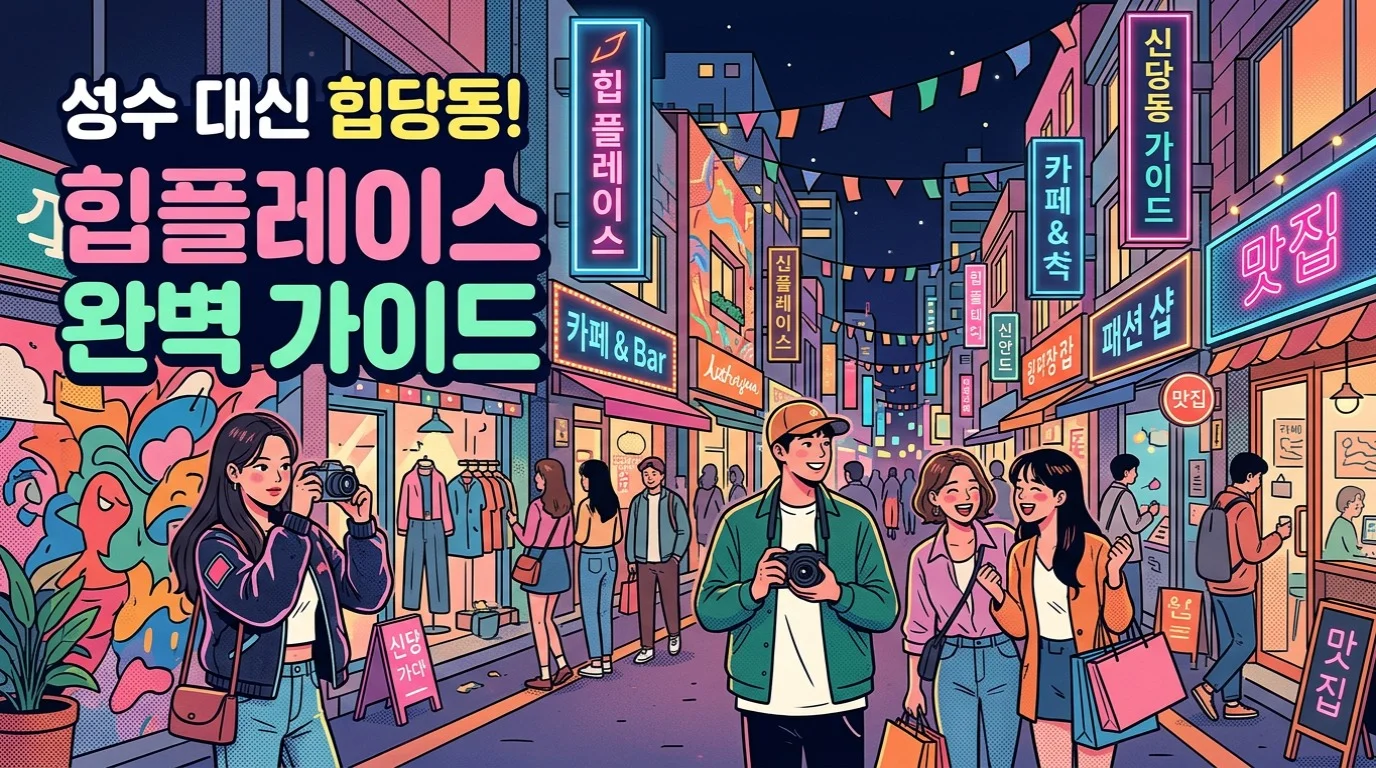
📸 Sindang-dong: Seoul's New 'Hip-dang' — Cafés, Market, Bars & Photos
⚠️ Please Note
Prices, hours, days off, and English support in this guide change often. Sindang has many small, independently run shops, so places may suddenly close for the day, switch to reservations or limited seating, or shut down for good. Before visiting, check whether a place is open and how to book on Naver Map, KakaoMap, or each shop's official Instagram. Popular cafés (like Simsejeong), market eateries (like Okgyeongine Geonseonseon), and small bars (like Jusindang) can have long waits on weekends and evenings, so aim for right after opening or an early hour. (For easy map searches, we use the official name 'Seoul Central Market'; locals sometimes call it 'Sindang Central Market.')
⏱️ 30-Second Summary — Just Remember This!
🚇 Getting there → Sindang Stn (Lines 2 & 6). Seoul Central Market: Exit 1–2; Tteokbokki Town: Exit 7
🏚️ Vibe → Old market, grain warehouses, and faded signs mixed with stylish new shops
☕ Cafés → Bakery café 'Simsejeong,' Korean-flavored 'Mosphere'
🎧 Music → Vinyl record shop-café 'Mosaic'
🍸 Night → Zodiac cocktail bar 'Jusindang,' café-and-wine 'Hippie Flat'
🦑 Local eats → Tteokbokki Town, plus dried-fish, chicken & meat spots in Seoul Central Market
🎨 Experiences → Lab Pottery class, Sosu Bookshop, Cecile & Cedric, PHYPS MART
📸 Photos → Old warehouses & signs on Ssajeon St, market alleys, shop lights at dusk
💳 Payment → Cards are standard, but bring some cash in case a foreign card fails
1. 🧭 Why Sindang Is on the Rise (How Is It Different from Seongsu?)
Sindang is a neighborhood with layers of story. Its name is said to come from the many shrines (sindang, 神堂) that once stood outside Gwanghuimun Gate; the Chinese characters later changed to today's 新堂 around the Gabo Reform, but traces of that shamanic heritage remain. Later, Seoul Central Market grew here into a large grain market that once handled a big share of the city's rice — and today's Ssajeon (rice-dealers') Street and warehouse buildings still show those roots.
🏙️ A new district emerges: As rents rose in established areas like Seongsu and Hannam, young restaurateurs and creators began opening new spaces in Sindang, where older buildings and small storefronts remained.
🏚️ Raw charm: These aren't newly built, polished blocks — many places reuse old buildings as they were, so Sindang keeps a more "unpolished," local kind of cool than Seongsu.
🧭 Fun to explore: Many shops hide down small alleys rather than main roads, so wandering with a map feels like a treasure hunt.
💡 In one line: Sindang is a smaller, more local-feeling scene than Seongsu — but its famous cafés and market eateries can still get busy on weekends and evenings.
2. 🚇 Getting There & Suggested Routes (Split into Two Areas)
🚇 Base: Sindang Station is a transfer point for Seoul Subway Lines 2 and 6. But the nearest exit differs by destination. Seoul Central Market and Ssajeon Street: Exits 1–2; Sindang Tteokbokki Town: Exit 7; Simsejeong and some alley shops: toward Exit 12; and Hippie Flat and Sosu Bookshop are closer to Yaksu Station, so it's best to group them separately.
🚶 Pair with Seongsu: It's just a few stops by subway from Seongsu, so an "morning in Seongsu + afternoon/evening in Sindang" combo works well.
🗺️ Route A — Sindang Stn / Seoul Central Market Simsejeong (bakery café) → Ssajeon Street → Seoul Central Market → Mosaic (record shop-café) → Cecile & Cedric (lifestyle shop) → Gyeryugwan or Okgyeongine Geonseonseon (meal) → Jusindang (cocktail bar)
🗺️ Route B — Tteokbokki / Yaksu Sindang Tteokbokki Town → Lab Pottery (pottery class) or nearby alleys → Sosu Bookshop (indie bookstore) → Hippie Flat (café & wine bar)
The Sindang Station and Seoul Central Market area is walkable, but adding Sosu Bookshop and Hippie Flat means longer walks. Check each spot on a map app and consider splitting your day into two areas.
3. ☕ Sindang Cafés — When a Warehouse Becomes a Café
The real charm of Sindang's cafés is the space. Many keep the bones of old buildings, so photos come out beautifully. (Check the current menu board for prices.)
☕ Simsejeong: A large bakery café in a building from the old grain-market alleys — a great "first stop" in Sindang. It offers a range of European-style bakes like croissants, baguettes, and tarts, and its high ceilings and vintage walls make it a popular photo spot.
🍵 Mosphere: A Korean-style dessert café created by a tableware brand. Drinks like a nurungji (scorched-rice) salt-cream latte are served in pretty ceramic ware — great for a "shot of the whole cup."
🥞 Crepe Sunjeong: A sunny alley café with big windows, serving both dessert crepes and savory meal crepes — easy to grab and enjoy on a stroll.
🍰 Musuhi: A pâtisserie café that changes its menu each season with seasonal ingredients. Worth a stop if you love classic French desserts like gâteaux and mousse cakes.
🆕 PIPO: A new bakery café from 'Cond et Pépé,' a brunch café in Jangchung-dong. It's near Cheonggu Station (94 Cheonggu-ro, Jung-gu), linked to the Sindang area. A semicircular, hotel-like entrance, weathered European plasterwork, and vintage furniture give it the mood of a European backstreet. Expect sandwiches, coffee, soups and brunch dishes, plus croissants and other breads. As a brand-new spot (it opened after a soft launch in July 2026), its hours, menu, and prices may still be settling in, so check its official Instagram (@pi.po.seoul) before visiting.
4. 🍸 Sindang Bars & Nights — Alleys That Look Even Better After Dark
When the sun sets, Sindang shows another face. Many bars have a clear concept, and some people come specifically "for the drinks."
🔮 Jusindang: Sindang's signature bar. Playing on the neighborhood name 'sindang (神堂, shrine),' its dreamy space is decorated with talismans and sacred ropes, and it serves twelve signature cocktails themed on the twelve zodiac animals. Experiencing Korea's zodiac culture through cocktails makes it intriguing for foreign travelers, too. Seating is limited, so there may be a wait; check prices and booking on official channels before you go.
🍷 Hippie Flat: A dual space — café by day, wine bar by night. It serves chai (Indian milk tea), open sandwiches, pasta and more, so you can linger by day and slide into a glass of wine at night. It's closer to Yaksu Station, so it's best grouped apart from the Sindang Station route.
5. 🍢 Local Eats & Seoul Central Market — The Real Backbone
It's not all trendy new shops. Sindang's real strength lies in its old establishments and market — and lately that "old" feels even hipper to younger crowds.
🌶️ Tteokbokki Town: The birthplace of instant tteokbokki, over 60 years old. The classic move is to add ramen noodles, egg, and chewy jjolmyeon, then finish with fried rice. If you're worried about spice, ask before ordering — "Deol maepge ganeunghaeyo? (Can you make it less spicy?)" — though shops with pre-mixed sauce may not be able to adjust it.
🦑 Okgyeongine Geonseonseon: A well-known eatery inside Seoul Central Market serving semi-dried cuttlefish and various dried-fish dishes. Prices vary by fish type, size, and preparation, so check the menu before ordering. It can get a wait in the evening, so an earlier visit is best.
🥩 Muhak (Branch 2): Famous for fresh pork ribs grilled over strong charcoal heat. Add cheonggukjang (fermented soybean stew) for a full "Korean grill-house" experience.
🍗 Gyeryugwan · Balladak: Distinctive chicken spots hide in the alleys too — wood-fired whole chicken (Gyeryugwan) and an '80s-supermarket-themed chicken shop (Balladak).
6. 🎨 Music, Books & Crafts — The Fun of Buying, Listening & Making
Between eating and drinking, what younger visitors truly love in Sindang is the "experience."
🎧 Mosaic: A vinyl record shop and café. Browse a range of records while enjoying coffee and music. Check its official SNS for new stock and events.
🛍️ Cecile & Cedric: A lifestyle shop curated with a French-vintage sensibility. Browse candles, room sprays, living goods, plants, and gardening items — a nice spot for gifts or souvenirs.
📚 Sosu Bookshop: An indie literary bookstore that hosts poetry critiques, film discussions, author talks, and more. As its motto "staying is always free" suggests, it's a cozy hideout where you can sit quietly even without buying a book. (It's closer to Yaksu Station than central Sindang.)
🏺 Lab Pottery: A pottery studio with a "clay lab" concept. It offers one-day classes suitable for foreigners, where you can make your own bowl or object. Note that pottery needs drying and firing, so you can't take it home the same day — ask before booking about how long completion takes, pickup or shipping options, and whether foreign-language (English) classes are available.
🧢 PHYPS MART: A brand-experience store evoking an American vintage market, with apparel, lifestyle goods, and various events — fun even just to browse.
7. 📸 Photo Spots & Alley-Walk Tips
🏚️ Old-sign alleys: The mix of old hardware- and grain-shop signs beside stylish new shops is Sindang's "signature shot." A film-camera look suits it even better.
🧱 Warehouse interiors: Café interiors that keep high ceilings and old walls, like Simsejeong, photograph like a magazine spread from any angle.
🌆 Golden hour: As lights come on in the alleys at dusk, the mood transforms completely from daytime — perfect for an evening stroll and photos.
📷 Manners: Photos of the space are usually fine, but ask staff before shooting other guests or shop interiors. In narrow residential alleys, be considerate of residents.
8. 💡 Tips & Etiquette for Visitors
🗣️ Language: Some cafés and bars have English menus, but not every place can serve you in English. Save a photo or the Korean name of what you want to order, and keep a translation app handy.
💳 Payment: Most places take cards, but a foreign-issued card may not be recognized, and payment methods vary by shop. Keep some small cash for emergencies.
🗺️ Map apps: Check hours and locations on Naver Map and KakaoMap together with a shop's official Instagram. Use Google Maps as a secondary reference.
📅 Reservations: For bars with limited seats or pottery classes, it's best to book ahead via Instagram DM or Naver reservation.
🤫 Noise: Hip shops and residents' homes are mixed together. Keep your voice down, especially in the alleys at night.
❓ Frequently Asked Questions (FAQ)
Q. How is it different from Seongsu-dong? A. If Seongsu is a polished, "finished" district, Sindang has the raw feel of old alleys mixed with new shops. It's smaller in scale and more local.
Q. Is half a day enough? A. Focus on one area (say, the Sindang Stn / Seoul Central Market route) and half a day is plenty. To include the Yaksu side too, plan for a full day.
Q. Is it good for a couple's date? A. Very much so. Cafés, lifestyle shops, and a pottery class by day, then an atmospheric bar like Jusindang at night — a popular date course.
Q. Can I order in English? A. Newer cafés and bars may have English menus, but not every place serves in English. A translation app and menu photos help.
Q. Is it a good place for photos? A. Yes — in Sindang, "the streets themselves are photo spots." Old signs, warehouse-style café interiors, and evening alley lights are especially pretty.
Q. Is it okay to bring kids? A. Daytime cafés, the market, the tteokbokki alley, and pottery classes are family-friendly. Bars (like Jusindang) are adult, evening spaces.
Q. When is it busiest? A. Friday and Saturday evenings and weekend afternoons are busiest. For a relaxed visit, aim for weekdays or right after opening.
✅ Quick Checklist
🚇 Checked the right Sindang Stn exit per destination? (Market: 1–2, Tteokbokki: 7, Simsejeong: 12, Yaksu side: separate)
📱 Searched shop names on a map app and checked hours, days off, and booking?
💵 Brought small cash for foreign-card errors and market eateries?
⏰ Planned an early visit to beat waits at popular cafés and eateries?
🌶️ Learned how to ask for milder spice ("Deol maepge ganeunghaeyo? / Can you make it less spicy?")?
🔮 Checked booking and opening times for bars (e.g., Jusindang) and pottery classes?
📸 Phone/camera charged? (Lots of photo spots!)
🟦 A guide put together by the JoyStoria team.
📅 Based on: 2026 · ⚠️ Prices, English support, information, and hours may vary by season, business, and branch.
JoyStoria does not endorse any specific business; before visiting or booking, please confirm the latest details on each shop's official channels and map apps. Sindang sees many shops open and close, so check that a place is operating in advance — and since residents and long-standing shops share these alleys and markets, please mind noise and photo etiquette as you enjoy your visit.