The Alphabet a King Made for His People
⚠️ Before you read
Dates and events here are based on materials from institutions like the National Institute of Korean History and the Korea Heritage Service, but scholars still debate some details — where they do, I say so in the text. Museum hours and closures change often, so please check official websites and map apps before visiting. In particular, the National Hangeul Museum has announced it will remain closed until the second half of 2028. Around Hangul Day (October 9), expect special events and bigger crowds.
⏱️ 30-Second Summary — Just Remember This!
👑 Created → by King Sejong in 1443, proclaimed as Hunminjeongeum in 1446
📖 Meaning → Hunminjeongeum = "correct sounds to teach the people"
🔬 Design → consonants mirror the speech organs; vowels mirror sky, earth, human
🔢 Letters → 28 at creation, 24 today (14 consonants + 10 vowels)
🕯️ Trials → sidelined by Classical Chinese, banned by a tyrant, suppressed under colonial rule
🏛️ Elevation → 1894 Gabo Reform made it the base script for official documents
✍️ Name → "Hangul" was coined by scholar Ju Si-gyeong's circle
🌍 World → the Haerye manuscript became UNESCO Memory of the World in 1997
🎉 Holiday → October 9 is Hangul Day, a public holiday in Korea
1. 🏯 A Language Without Its Own Script
Korean has been spoken since ancient times, but until the 15th century there was no native script to write it. Writing meant borrowing Chinese characters — a system built for Chinese, a language with completely different grammar and word order. Imagine trying to write English sentences using only Chinese characters, and you get the idea.
Chinese characters also took enormous time to learn. Reading everyday texts required knowing thousands of characters, and real literacy took years or decades of study. Only the yangban aristocracy and a few professionally educated groups could afford that, so for most ordinary people the barrier to literacy was simply too high. They struggled to read official notices, and even a person wronged by injustice could hardly write a petition. Workaround systems like Idu and Hyangchal, which bent Chinese characters to record Korean, existed from ancient times — but you still had to know Chinese characters to use them.
To be fair, borrowing a neighboring civilization's script and gradually adapting it is a common story — Japan did it with kana, Vietnam with chữ Nôm. What makes Korea unusual is that it solved the problem not by modifying an existing script but by inventing an entirely new one. That's where this story begins.
2. 👑 Winter 1443: King Sejong's Decision
Sejong (r. 1418–1450), the fourth king of the Joseon dynasty, is the most revered figure in Korean history — his portrait is on the 10,000-won bill. His reign produced rain gauges, sundials, reformed court music, and new farming manuals, but his greatest achievement is, by common consent, the alphabet.
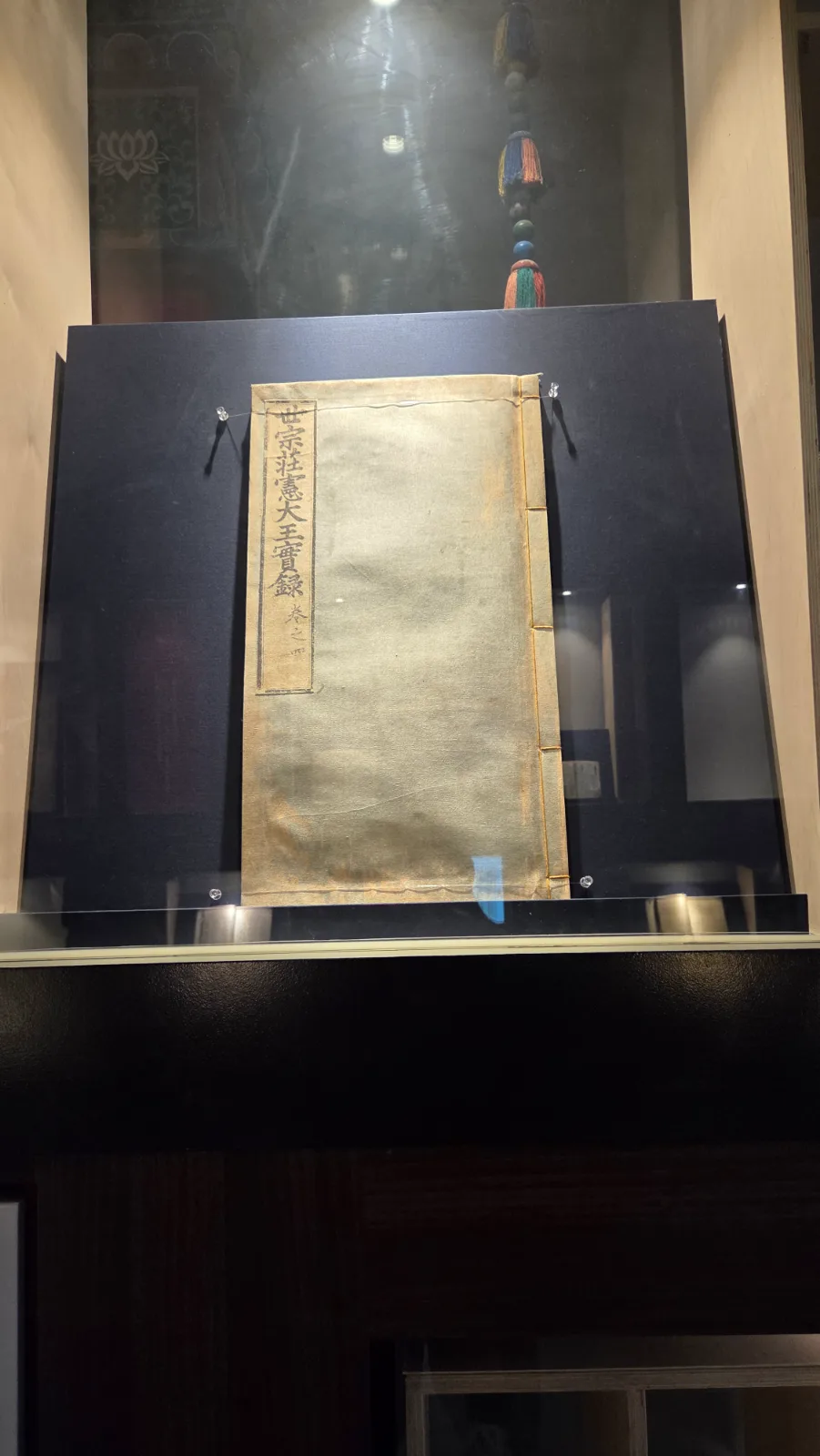
In the twelfth lunar month of 1443, a short entry appears in the Annals of the Joseon Dynasty: "The King has personally created twenty-eight letters of Eonmun." Curiously, almost no records describe the creation process itself, so we still don't know exactly when Sejong started, with whom, or how. The original alphabet had 28 letters — 17 consonants and 11 vowels. Four of them later fell out of use as the sounds changed, leaving today's 24.
The proclamation's stated purpose still moves people today. In modern paraphrase: "The speech of our country differs from Chinese, so the written characters do not match it. Many simple people, though they have something to say, cannot express it in the end. Taking pity on this, I have newly made twenty-eight letters, wishing only that everyone may learn them easily and use them comfortably every day." A king citing compassion for his people as the reason — in a rigidly hierarchical 15th-century society, deliberately breaking the elite's monopoly on writing was radical, arguably even dangerous.
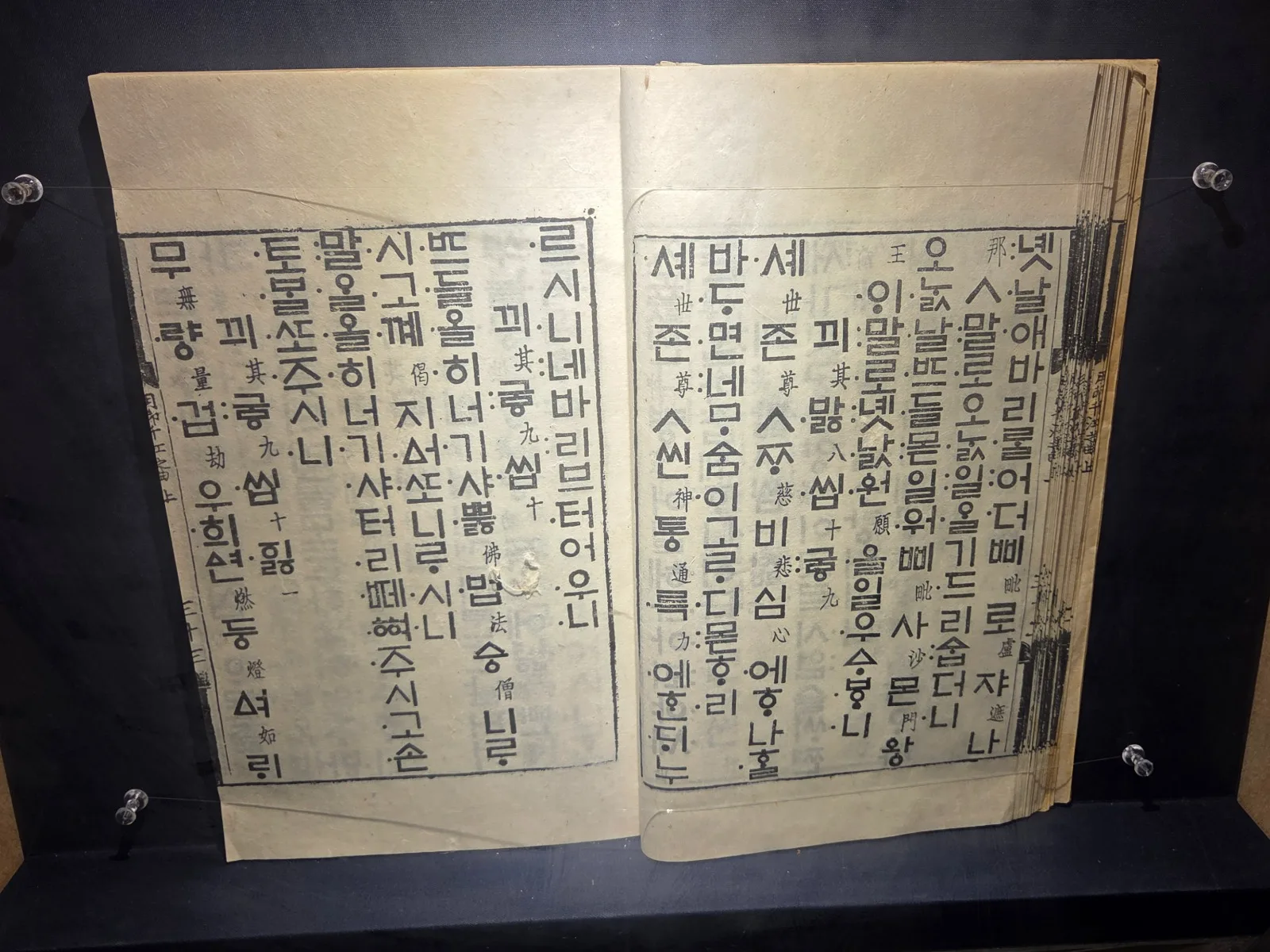
The three years after creation were spent refining the spelling and completing the explanations through real use. The dynastic epic Yongbieocheonga was composed in this period (one of the earliest major works written in Hangul), and a dedicated office called the Eonmuncheong was set up in the palace. Then, in the ninth lunar month of 1446, the new script was officially proclaimed together with its explanatory book, the Hunminjeongeum (the Haerye edition). Eight Hall of Worthies scholars, including Jeong In-ji, Sin Suk-ju, and Seong Sam-mun, are recorded as contributors to the commentary.
💡 Four names worth knowing — Hunminjeongeum (the official name at the 1446 proclamation), Eonmun (the everyday name in the Joseon era), Gukmun ("national script," gained in 1894 when it became the base script for official documents), and Hangul (the modern name, from the 1910s). All four refer to the same alphabet.
3. 🔬 The Blueprint Is Built Into the Letters
Hangul's reputation as a "scientific" script comes from how the letters look. According to the Haerye — the alphabet's own explanatory book — the shapes weren't arbitrary: they draw the way each sound is produced.
The five basic consonants depict the inside of your mouth at the moment of speaking. ㄱ is the root of the tongue blocking the throat; ㄴ is the tongue tip touching the upper gums; ㅁ is closed lips; ㅅ is a tooth; ㅇ is the round throat. After learning this I actually tried it in front of a mirror, and the resemblance genuinely gave me goosebumps. Add a stroke and you get a stronger sound at the same position: ㄴ→ㄷ→ㅌ, ㅁ→ㅂ→ㅍ, and so on (some historical chains include letters no longer used, like ㆆ). Learn five letters and you can infer the rest. In modern Hangul, doubling ㄱ·ㄷ·ㅂ·ㅅ·ㅈ gives you the tense sounds ㄲ·ㄸ·ㅃ·ㅆ·ㅉ.
Vowels are even simpler: a round dot for sky (·), a flat line for earth (ㅡ), a standing line for human (ㅣ) — every vowel is a combination of these three, reflecting East Asian cosmology. And instead of stringing letters in a line, Hangul stacks them into square syllable blocks ("moa-sseugi"). Syllables appearing as neat square units is one of Hangul's most distinctive visual features.
All of this design intent is spelled out point by point in the Haerye. A writing system whose blueprint survives as a book — that is truly rare. Jeong In-ji's preface even boasts (in modern paraphrase): "A wise man can master these letters before the morning is out; even a slow one can learn them in ten days." Foreign learners who pick up Hangul reading in a few days are, in a way, proving him right centuries later.
4. 📣 Not Everyone Applauded
Fierce opposition erupted at court even before the proclamation. The most famous document is the 1444 protest memorial by Choe Man-ri and six other senior scholars. Their argument had three parts: creating a script different from China's strays from the path of civilization; if people learn only easy letters, they will neglect serious (Classical Chinese) scholarship; and a matter this grave should not be rushed without full deliberation. It shows how, for the educated elite of the time, Chinese characters weren't just a script — they were civilization itself.
Sejong didn't back down. The Annals record him challenging the scholars' own expertise — "Do you even know phonology?" — a passage often cited as evidence that the king himself was a phonologist of real ability. The court then demonstrated the new script in action: Yongbieocheonga, Seokbosangjeol, and Worincheongangjigok (a hymn cycle Sejong composed himself) were published in Hangul, and Hunminjeongeum was even included in exams for hiring lower-level clerks. Projects translating Buddhist and Confucian classics into Hangul (eonhae) followed.
After Sejong's death, however, official documents returned to the world of Classical Chinese. Hangul's real survival story starts here.
5. 🕯️ The Age of "Eonmun" — Surviving Joseon Society
Throughout the Joseon era, Hangul was commonly called "Eonmun" (諺文). In a society whose official written life centered on Classical Chinese, it was often regarded as a script of lower standing — the civil service exams and official documents remained firmly in Chinese.
There was even a brush with extinction. In 1504, the tyrannical King Yeonsangun, enraged by anonymous Hangul posters criticizing him, banned the use and teaching of Hangul and ordered some Eonmun books burned. He did exempt eonhae translations of Chinese texts, so it was not an attempt to destroy every Hangul book, and the ban fizzled out after he was deposed. But the episode reveals something: an easy script was the script of public opinion, and that made it inconvenient for power.
Here's the interesting part: even suppressed from above, Hangul kept spreading from below. Women, excluded from Chinese-character education, became its most devoted users — letters, household records, cookbooks like Eumsikdimibang, and a genre of women's poetry called naebang gasa were all written in Hangul. Queens and dowagers issued royal edicts in it, and affectionate Hangul letters from kings to their daughters survive. Storytelling flourished even more: novels like Hong Gildong jeon (widely called the first Hangul novel, though scholars debate this), Chunhyangjeon, and Simcheongjeon circulated widely. By late Joseon there were book-rental shops (sechaekjeom) and even professional street readers (jeongisu) who read novels aloud for a fee. Court memoirs like Hanjungnok are counted among the masterpieces of Hangul prose. Land deeds, contracts, and public notices absorbed Hangul too.
Never the mainstream in a Chinese-character society, but continuously alive in letters, literature, and everyday documents — to me, that long stretch of history proves a simple rule: the easier script wins in the end.
6. 🏛️ 1894: Becoming the Nation's Script
At the end of the 19th century, as Joseon transformed into a modern state, Hangul's fortunes turned. The Gabo Reform of 1894 included a provision in Royal Edict No. 1 that "laws and decrees shall take the national script (gukmun) as their base, with Classical Chinese translation attached or a mixed script permitted." With official documents now anchored to the national script, Hangul's standing rose dramatically — about 450 years after its creation. Even the name changed: from "Eonmun" to "Gukmun," the national script.
Two years later, in 1896, Seo Jae-pil founded The Independent (Dongnip Sinmun), Korea's first privately run newspaper. Its Korean edition was printed entirely in Hangul — the inaugural editorial explicitly explained the choice — and it aggressively used word spacing, which was novel at the time. Much of modern Hangul orthography traces back to this newspaper. Protestant missionaries' all-Hangul Bible translations expanded the reading public around the same period, and in 1907 the government established the Gukmun Yeonguso (National Script Research Institute), making spelling research a matter of state for the first time.
If this era has one hero, it's the linguist Ju Si-gyeong (1876–1914). Nicknamed "Ju Bottari" ("Ju the bundle-carrier") for hauling books around the country to teach, he organized Hangul grammar and orthography into a modern discipline. In the 1910s he and his students began using a new name in place of "Eonmun": Hangul. It stuck. As for what "han" means — "great," "one," or "Korean" — several interpretations coexist.
7. 🕊️ Colonial Era — A Script Defended at the Cost of Lives
From 1910 to 1945, under Japanese colonial rule, Hangul faced extinction again. In the final years, Korean-language classes effectively disappeared from schools, Japanese was enforced, and Korean newspapers were shut down. The people who protected the script were scholars.
The Korean Language Research Society — founded in 1921 by Ju Si-gyeong's students and renamed the Korean Language Society (Joseoneo Hakhoe) in 1931 — became the center of resistance. In 1926 it created "Gagyanal," a day commemorating the 480th anniversary of the proclamation (the name came from "ga-gya-geo-gyeo," the first syllables beginners recite); that day later became Hangul Day. In 1933 the society published the Unified Hangul Orthography, the direct ancestor of today's spelling rules, and in 1936 it standardized the vocabulary. A stateless people, setting the standards of their own language by hand.
Then, in 1942, the colonial authorities branded the society "an independence movement disguised as an academic organization" and arrested 33 scholars who had been compiling a Korean dictionary. Under brutal interrogation, two of them — Lee Yun-jae and Han Jing — died in prison. The dictionary manuscript was confiscated. And then, in September 1945, just after liberation, the manuscript — some 26,000 pages believed lost — was discovered in a storage room at Seoul Station, where it had been abandoned in transit as trial evidence. From those pages, the six-volume Keunsajeon (Great Dictionary) was completed in 1957. Reading this part of the story, I spent a long time imagining how the scholars felt the moment they found those pages.
The Hunminjeongeum Haerye returned in this era too. Lost for centuries, it surfaced in Andong in 1940, and the collector Jeon Hyeong-pil (Gansong) paid a fortune to acquire it, reportedly keeping it close through the war years. Thanks to that book, the alphabet's design principles were fully confirmed. It was designated a National Treasure in 1962 and inscribed in UNESCO's Memory of the World register in 1997. If you ever wonder why Koreans treat Hangul as an identity they defended rather than merely a script, the answer is in this period.
8. 🌍 After Liberation — Everyone's Script, and the World's
With liberation in 1945, Hangul finally became the script of the whole nation. Many Koreans could not read in the immediate postwar years, but massive literacy campaigns and compulsory education raised literacy dramatically within a generation — a success often credited to how easy the alphabet is to learn. Chinese characters gradually vanished from newspapers and books, and everyday documents today are almost entirely in Hangul.
The alphabet also turned out to be a natural fit for machines. Starting with the practical Hangul typewriter developed in 1949 by the ophthalmologist Gong Byung-woo, Hangul computerization advanced steadily; Unicode now encodes all 11,172 syllable blocks composable in modern Hangul. The "Cheonjiin" phone keypad enters every vowel with just three buttons — sky, earth, human — a 15th-century design principle reborn as 21st-century technology. I also learned while writing this that UNESCO's literacy prize is named the King Sejong Literacy Prize (awarded since 1990) — the creation's spirit, recognized internationally.
These days, K-pop lyrics and Korean dramas have drawn a wave of foreign learners to Hangul. In 2009, the Cia-Cia people of Indonesia made headlines by experimentally borrowing Hangul to write their previously unwritten language — though assessments differ on how consistently that education continued, and it does not mean Hangul became another country's official script. An alphabet created for poor commoners, now learned by people around the world some 580 years after its proclamation — to me, that's the best possible ending to this story.
9. 🎉 Hangul Day, and Places Worth Visiting
Hangul Day has had a turbulent history of its own. It began as "Gagyanal" in 1926, was renamed Hangul Day in 1928, and settled on October 9 just after liberation, once the 1940 discovery of the Haerye confirmed the proclamation happened in "the first ten days of the ninth lunar month." It became a public holiday in 1946, was dropped from the holiday calendar in 1990 (effective 1991), was elevated to a national commemoration day in 2005 after persistent public campaigns, and returned as a public holiday from 2013. Very few countries give their alphabet a national holiday. One caveat: October 9 is a date converted from old records to the modern calendar — the exact day of the 1446 proclamation is not actually known.
If you want to walk through this history, start at Gwanghwamun. Beneath the golden statue of King Sejong in Gwanghwamun Square is an exhibition hall called The Story of King Sejong, and you can continue on foot to Gyeongbokgung Palace (including the area where the Hall of Worthies once stood). Follow Hangul Gaon-gil near the Sejong Center to find traces of the modern-era defenders, including Ju Si-gyeong Plaza. The Kansong Art Museum in Seongbuk-gu, which holds the original Haerye, usually shows it only during special exhibitions — check schedules in advance. Outside Seoul, Yeongneung — King Sejong's royal tomb in Yeoju — makes an easy day trip. The National Hangeul Museum in Yongsan has announced closure until the second half of 2028 for fire restoration and expansion, though outdoor and traveling exhibitions may still run — check the official site.
❓ Questions Foreigners Often Ask (FAQ)
Q. Did King Sejong invent it alone, or did scholars do it? A. The Annals say the king created it "personally," and the prevailing scholarly view supports Sejong-led creation. The Hall of Worthies scholars are credited with the explanatory book and follow-up publications.
Q. Are "Hangul" and "Korean" the same thing? A. No. Korean is the language; Hangul is the writing system used to write it — like the relationship between English and the Latin alphabet. The Korean language is far older than Hangul; before 1443, the same language was written with borrowed Chinese characters.
Q. Why 24 letters now if there were originally 28? A. Four of the original letters (ㆍ, ㅿ, ㆆ, ㆁ) fell out of use naturally as their sounds disappeared or merged. Modern Hangul has 14 consonants and 10 vowels.
Q. Where can I see the Hunminjeongeum Haerye today? A. The original (Gansong copy) belongs to the Kansong Art Museum and is usually displayed only during special exhibitions. Another copy that surfaced in Sangju in 2008 is reportedly unaccounted for amid an ownership dispute. Check official channels for exhibition schedules.
Q. Is Hangul really "the most scientific writing system in the world"? A. Many linguists have praised its systematic design, but there is no official ranking. What's accurate: its creation principles and purpose survive in contemporary records, and its letters model the speech organs — both genuinely rare in the history of writing.
Q. Does North Korea use the same alphabet? A. Yes, the same letters — though they call it "Chosongul," and spelling, vocabulary, and dictionary ordering differ. Their commemoration day is January 15, based on the creation date rather than the proclamation. How large the North–South language gap really is in practice is something I'd like to study more myself — if you have first-hand experience, please share it in the comments.
✅ Quick Checklist
Three key years — 1443 created · 1446 proclaimed · 1997 UNESCO
The meaning of Hunminjeongeum — "correct sounds to teach the people"
The name timeline — Eonmun (Joseon) → Gukmun (1894) → Hangul (1910s)
Plan a walking route: Sejong statue → Story of King Sejong → Gyeongbokgung
Search Kansong Art Museum's schedule for Haerye exhibitions
Check the National Hangeul Museum's closure updates on its official site
Traveling around October 9? Check Hangul Day events and crowds
Try pronouncing ㅁ in front of a mirror — a 3-second taste of the design
Find out how to write your own name in Hangul
🟦 This guide was put together by the JoyStoria team.
📅 Written in 2026 · ⚠️ Prices, English support, schedules, and operations may vary by season, operator, and location.
JoyStoria does not endorse any specific business or institution. Please confirm the latest information on each institution's official channels and map apps before visiting or booking. The history here is condensed for readability — for deeper study, we recommend materials from authoritative institutions such as the National Institute of Korean History and the National Institute of Korean Language.