🌳 The Complete Guide to Seoul Forest — The Huge Urban Forest Next to Seongsu-dong, and How Foreigners Can Easily Walk and Rest There
⚠️ Note: The park itself is open 24 hours for free, but individual facilities like the Insect & Botanical Garden, Butterfly Garden, and Deer Enclosure have their own hours and closing days that change by season. During the 2026 Seoul International Garden Show (May 1 – October 27), garden viewing hours and programs run on a separate schedule, and weekends and public holidays get very crowded. Nearby Seongsu-dong cafes and restaurants, especially the popular ones, have long waits and their closing days and hours change often, so check the official Seoul Forest website (https://parks.seoul.go.kr/mini/seoulforest/main.do) and a map app before you go. All figures and information in this post are for reference and may change.
⏱️ 30-Second Summary — Just Remember This!
🌳 What it is → Seoul's flagship urban park, about 480,000㎡, opened in 2005, the "Central Park of Seoul"
📍 Location → 273 Ttukseom-ro, Seongdong-gu, Seoul, between the Seongsu-dong cafe street and the Han River
🚇 Getting there → Seoul Forest Station (Suin-Bundang Line) exits 3·4·5, about 2–5 min walk; Ttukseom Station (Line 2), about 10 min; Seongsu Station, about 15 min
🎫 Admission → Park is free and open 24 hours. Insect & Botanical Garden, Butterfly Garden, and Deer Enclosure are also free (separate hours)
🦌 Deer → See sika deer for free at the Deer Enclosure in the Ecological Forest. Feed sales stopped in 2020; human food is prohibited
🌸 2026 → Seoul International Garden Show runs until October 27 across Seoul Forest and the Seongsu area (free admission)
📸 Photos → Apartment reflections in the Mirror Pond, ginkgo tunnel, metasequoia path, deer pedestrian bridge 🚲 Bikes → Since March 2026, about 22.7 km of core paths are pedestrian-only. Dismount and walk your bike; fines for riding. Riding allowed only on some sections toward the Han River
🚫 Prohibited → Cooking, open flames, tents, sunshades, excessive drinking and disorderly behavior (designated alcohol-restricted zone)
🥪 Picnic → Mats and lunchboxes on the lawn are fine. For meals, head to Seongsu-dong or the Seoul Forest Station area; on the Han River side, try convenience-store ramyeon
🍁 Seasons → Spring cherry blossoms and tulips, summer metasequoia shade, autumn ginkgo forest (late Oct–Nov)
1. 🏙️ What Is Seoul Forest?
For Koreans, Seoul Forest is both "the big park by the Han River" and "the final stop on a Seongsu-dong date." Here's the background worth knowing as a foreigner.
It opened in June 2005 and covers about 480,994㎡. That's more than 60 soccer fields, so seeing it all in one visit is nearly impossible. The site was originally a royal hunting ground in the Joseon Dynasty, and later held a horse racetrack, a golf course, and a water treatment plant before being turned into a public park.
It gets compared to New York's Central Park and London's Hyde Park not just for its size but because it's "a park used every day in the middle of the city." On weekday afternoons nearby office workers walk here after lunch, in the evening people jog, and on weekends families picnic.
Seongsu-dong is right next to the park. Old factories and warehouses have been converted into cafes and pop-up stores, earning it the name "the hippest neighborhood in Seoul," so Seoul Forest and Seongsu-dong are usually enjoyed as one package.
On the other side, the park connects to the Han River. The pedestrian bridge inside the park leads down to the Han River waterfront, and the riverside path continues toward the Han River bike path and Ttukseom Hangang Park.
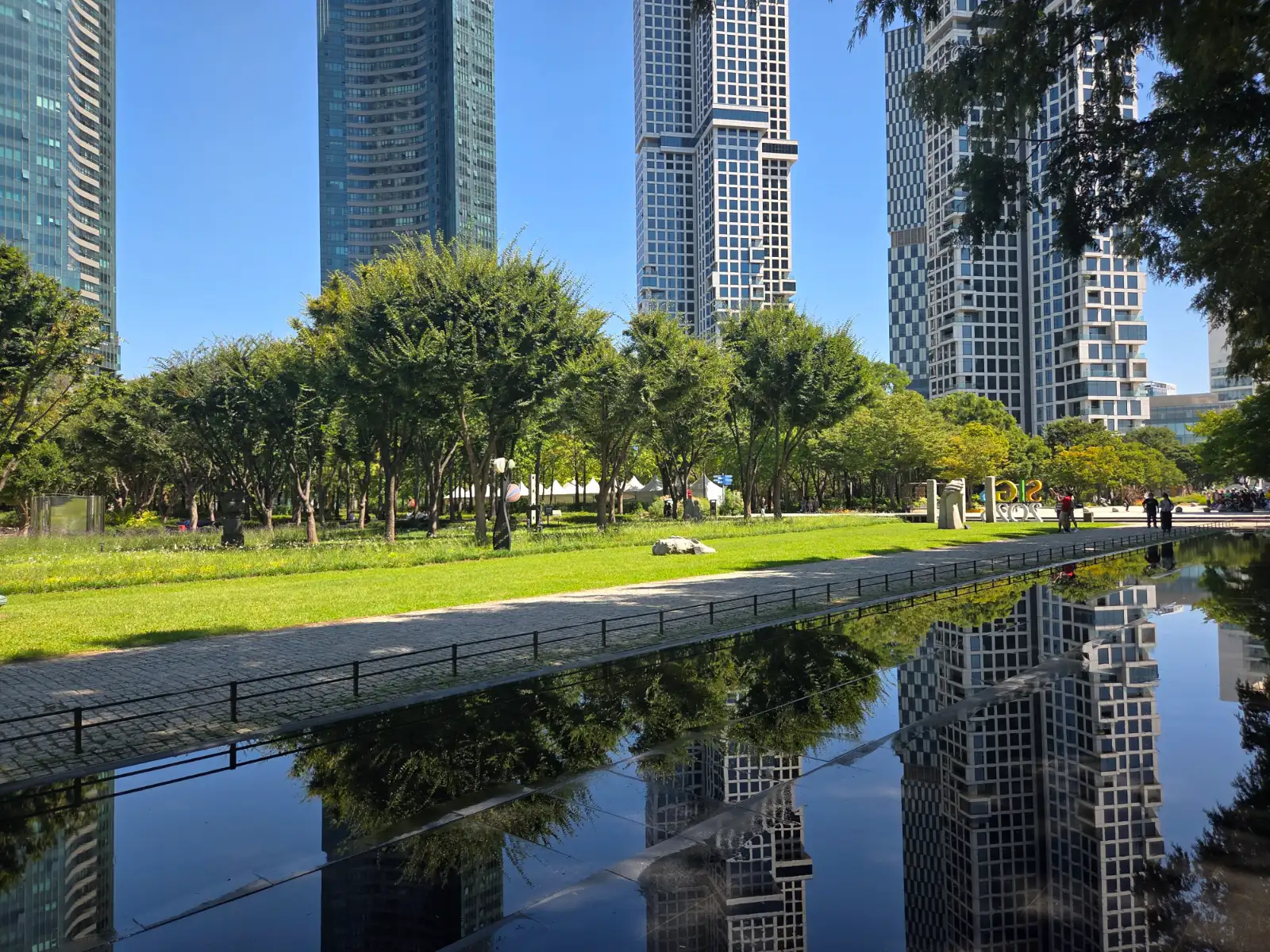
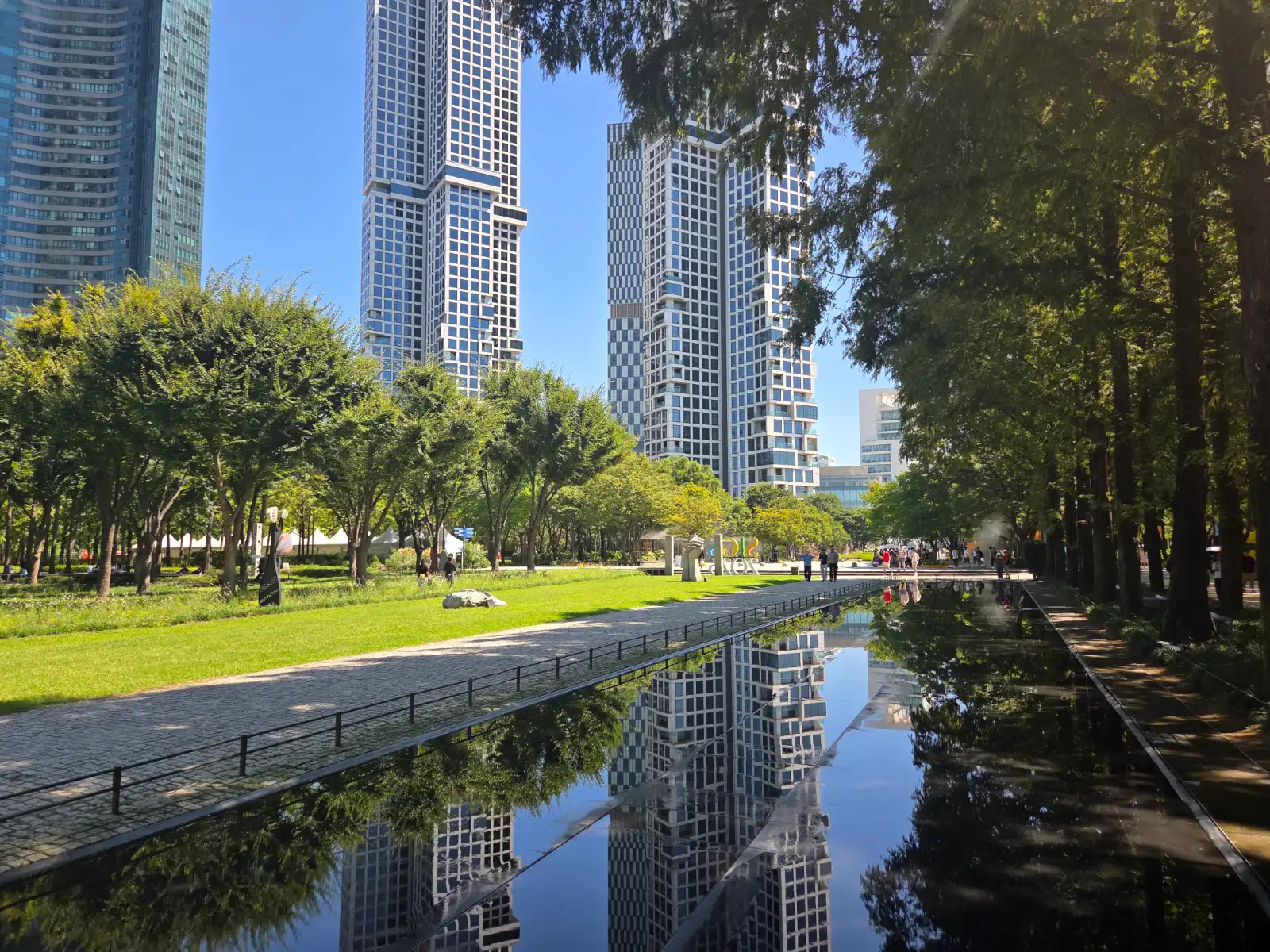
The high-rise apartments on the east side of the park (the ones reflected in the Mirror Pond) are known as some of Seoul's most expensive residential complexes. When Koreans see that skyline, they immediately think "ah, that's Seoul Forest."
2. 🚇 How to Get There — Which Station?
Seoul Forest has several entrances, so pick your station based on where you're starting from.
Fastest way: Seoul Forest Station (Suin-Bundang Line), exits 3·4·5. You come out right by the main entrance, a 2–5 minute walk. Search "Seoul Forest" in your map app.
Using Line 2: About a 10-minute walk from Ttukseom Station exit 8. If you're coming on Line 2 from Hongdae or Gangnam, this station is convenient.
If you want to combine it with Seongsu-dong: Get off at Seongsu Station (Line 2) and walk about 15–20 minutes to Seoul Forest through cafe alleys like Yeonmujang-gil and Atelier-gil. This is the route we recommend in this post (see section 8).
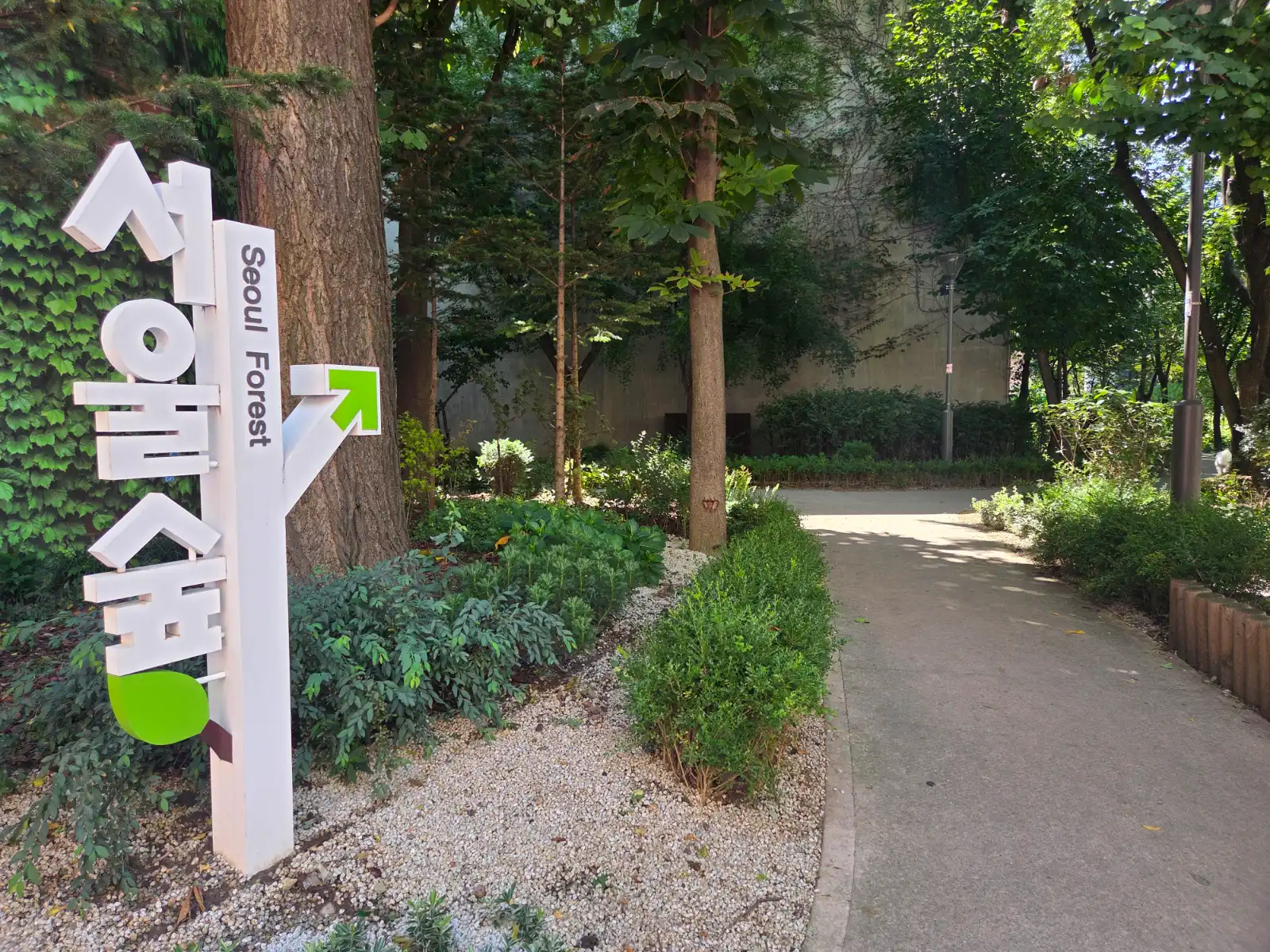
The streets around Seoul Forest Station are well signposted. When you see the white tree-shaped sign (서울숲 / Seoul Forest) like the one in the photo, just follow the arrow.
For the subway, use a T-money card or a foreigner-friendly option like the Climate Card or WOWPASS. Both Seoul Forest Station and Seongsu Station have good English signage.
Driving is not recommended. The park lot has 211 spaces at 200 won per 5 minutes for small cars (for reference, may change), but it fills up often on weekends and parking in the Seongsu-dong alleys is very difficult.
Dogs are allowed on a leash, but some facilities like the Deer Enclosure and Insect & Botanical Garden may restrict entry.
3. 🗺️ Four Theme Zones — Why You Can Walk Without a Destination
Seoul Forest is broadly divided into four zones: Culture & Arts Park, Ecological Forest, Nature Experience Center, and Wetland Ecological Park. (The city's Seoul Parks guide lists these four main areas, while Seongdong-gu materials sometimes add the Han River Waterside Park for five themes. Either way it's the same park, so don't get confused.) You don't need to memorize the names, though. As you walk, the atmosphere shifts and you naturally cross into the next zone.
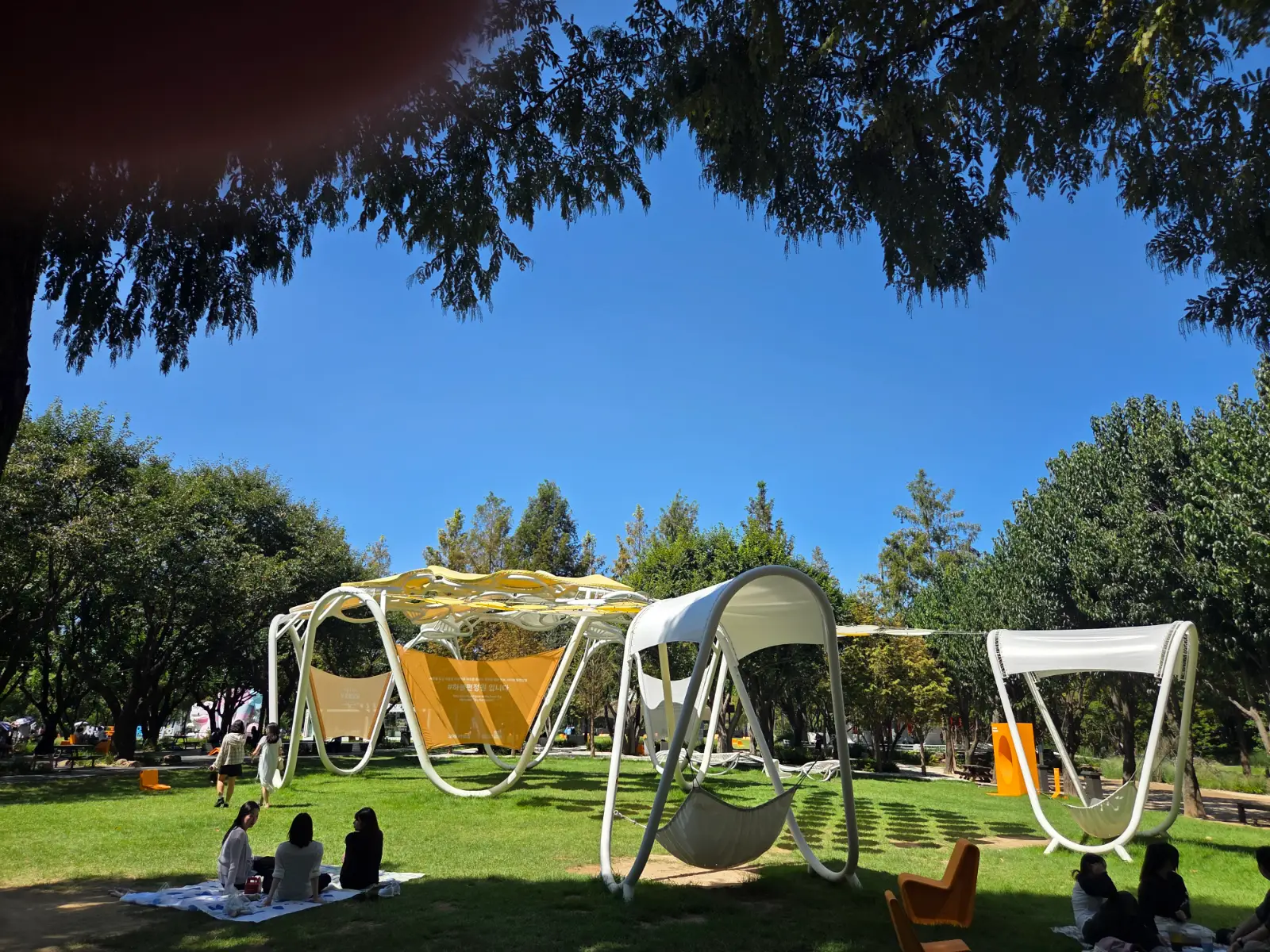
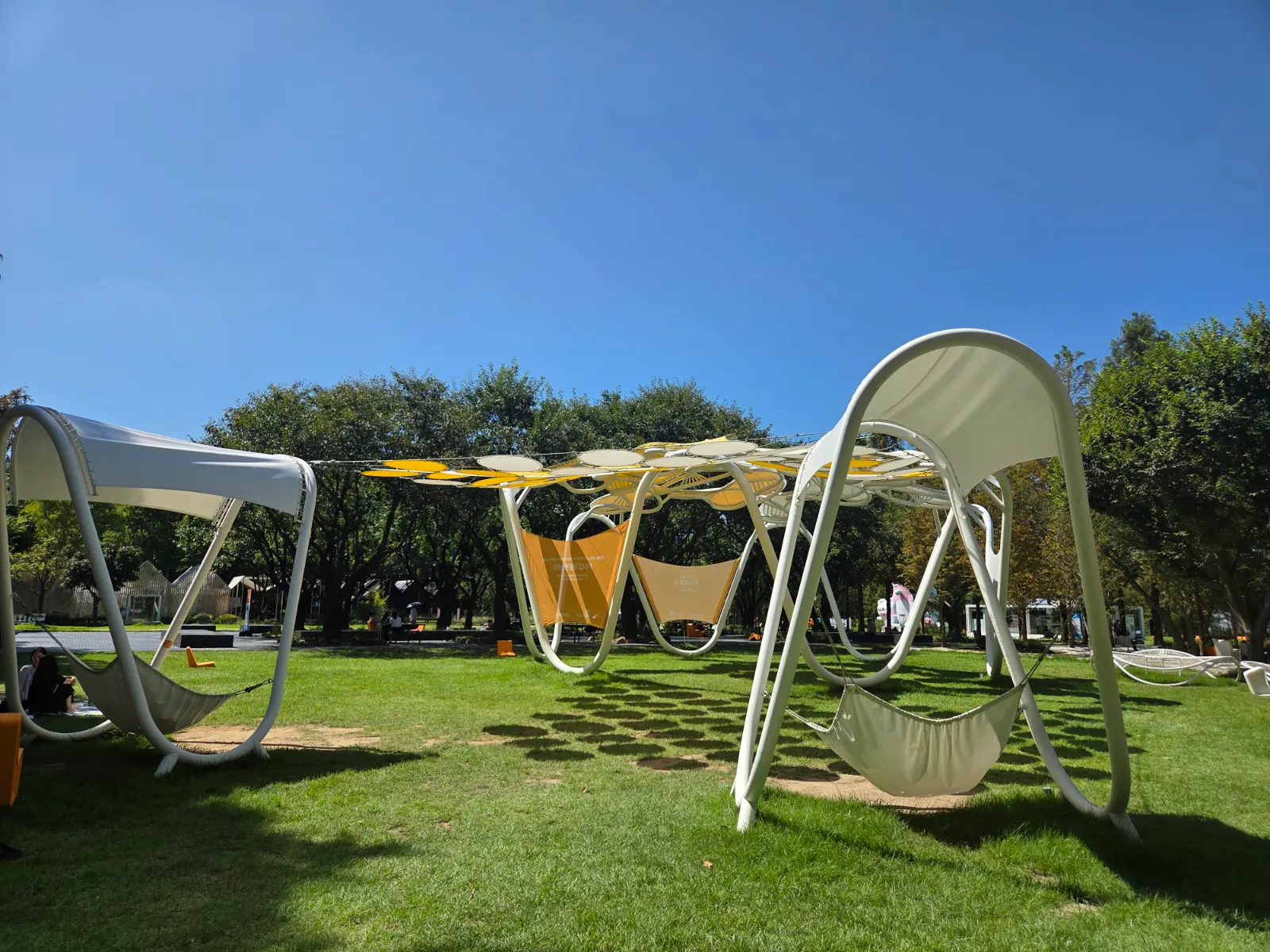
Culture & Arts Park (main entrance side): The heart of Seoul Forest. The big lawn, Mirror Pond, floor fountain (May–Oct), outdoor stage, and visitor center are here. There's a rest area with hammocks and shaded chairs on the lawn, so this is where you'll catch your breath when you first arrive.
Ecological Forest (inner area): Where the Deer Enclosure is. It's built to be close to nature rather than artificial, so there are lots of birds and insects. You can look down at the deer from the pedestrian bridge that passes over the forest.
Nature Experience Center: Built by reusing the old water treatment facilities, this is where the Insect & Botanical Garden, Butterfly Garden (May–Oct), and wildflower garden are. The most popular zone if you're with kids.
Wetland Ecological Park: The innermost part toward the Han River. With wetlands and a bird observatory, it's the quietest area, and crossing the pedestrian bridge from here takes you to the river.
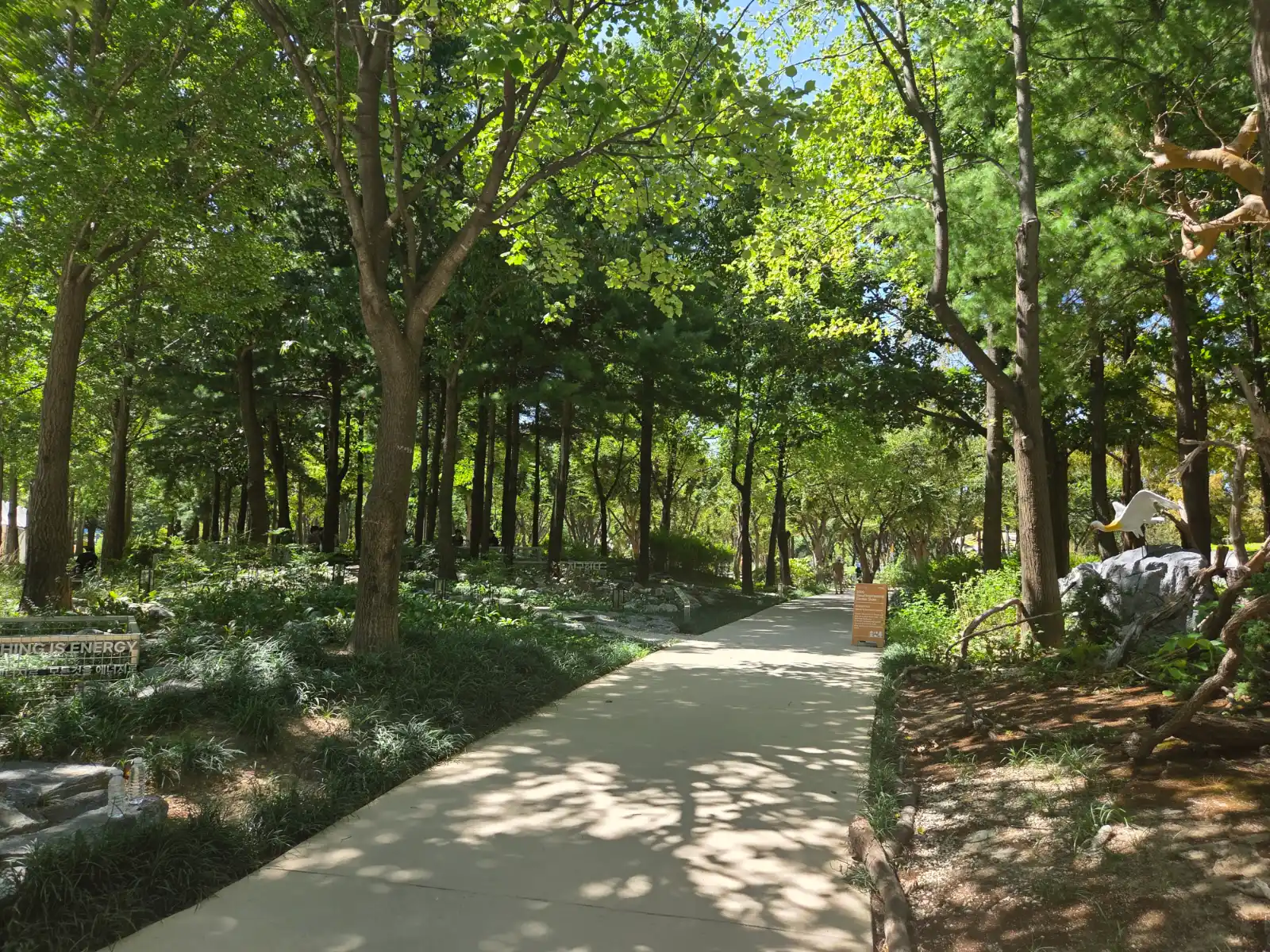
Tip: Starting from the main entrance, a clockwise loop of lawn → metasequoia path → Deer Enclosure → Insect & Botanical Garden takes about 1.5–2 hours. If you get tired, just sit on any bench. Seoul Forest really has a lot of places to sit.
4. 🦌 The Deer Enclosure and Insect & Botanical Garden — Free Things to See
"Deer live in the middle of Seoul?" This is what surprises foreigners the most.
Deer Enclosure (Ecological Forest): A herd of sika deer roams freely in a large enclosure. Hours are 05:30–21:30 year-round, but may change with the season or conditions. You used to be able to buy feed, but feed sales stopped in January 2020. Giving them human food or snacks is prohibited, so just watch and take photos.
In early summer (May–June) you can see the stags' new antlers growing in "velvet," and by autumn the antlers harden into their full form. Go early in the morning and the deer are often near the fence by the path.
Insect & Botanical Garden: Renovated 20 years after its 2005 opening and reopened in January 2025. You can see around 100 species of tropical plants like banana and papaya, plus about 30 species of living creatures including rhinoceros beetles, stag beetles, and turtles. Summer season 10:00–17:00, winter (Nov–Feb) 11:00–16:00, last entry 30 minutes before closing, closed Mondays, free admission (for reference, may change).
Butterfly Garden: Normally open only May–October, but in 2026 it opened early in April and runs until the end of October. 10:00–17:00 (last entry 16:30), closed Mondays (for reference; check the official site right before visiting). If your timing is right, butterflies flutter right in front of you.
Mirror Pond & floor fountain: The shallow pond beside the lawn reflects the high-rise apartments across the way, making it Seoul Forest's signature photo spot. The floor fountain usually runs May–Oct, for 30 minutes starting on the hour during the daytime, with regular maintenance on Mondays. Times and the season's end date change with the weather and park conditions, so check the official website before you go.
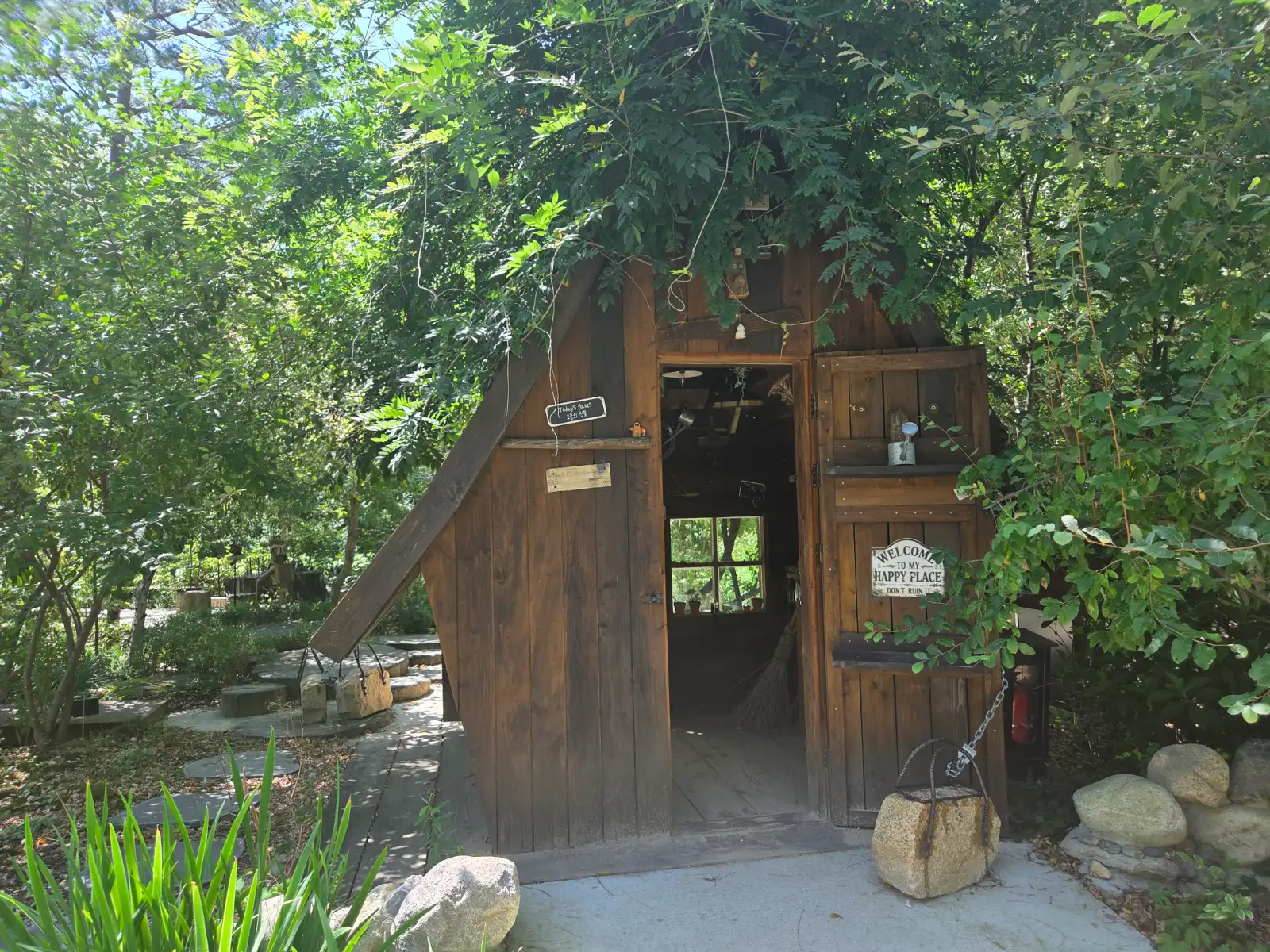
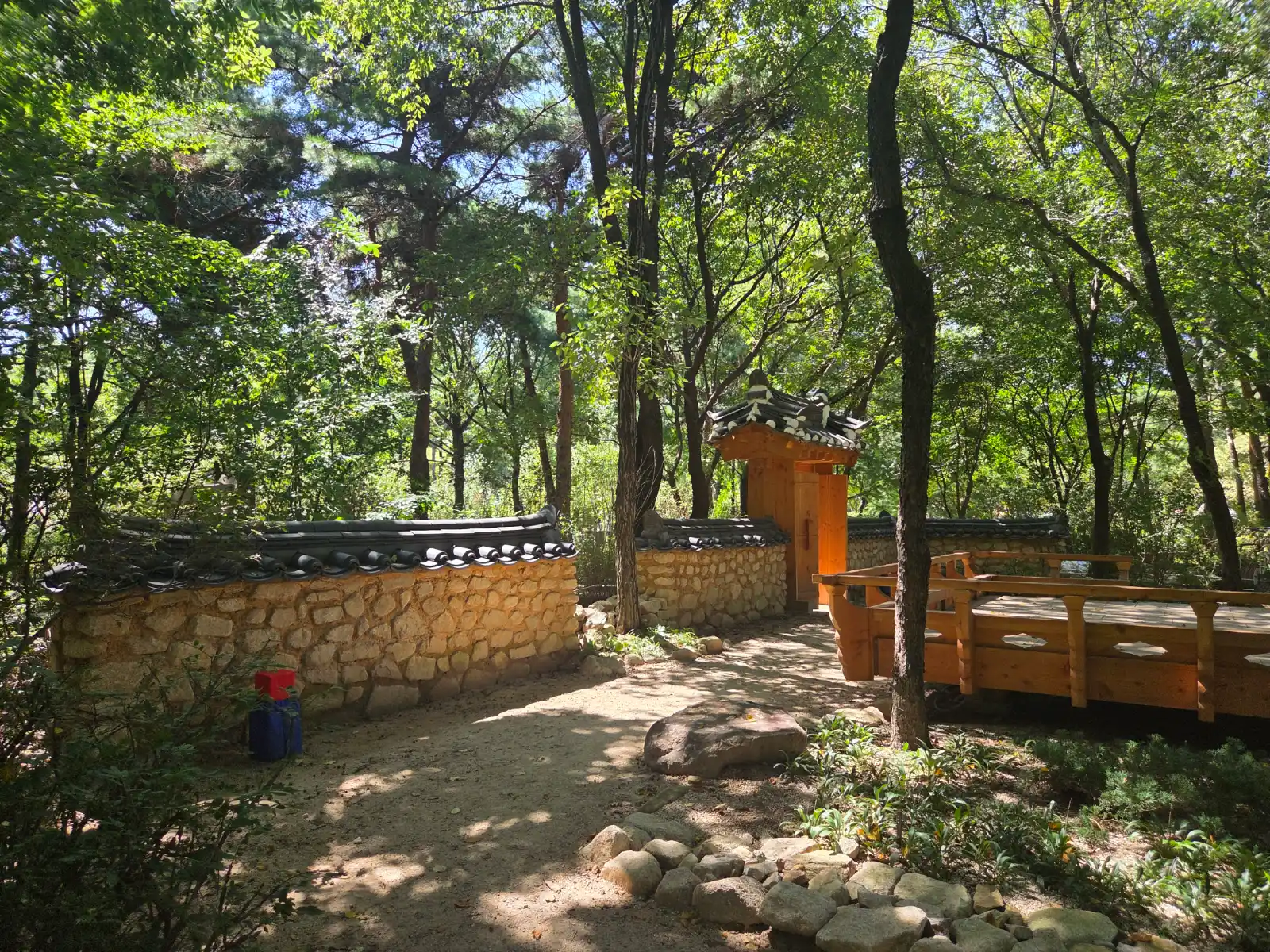
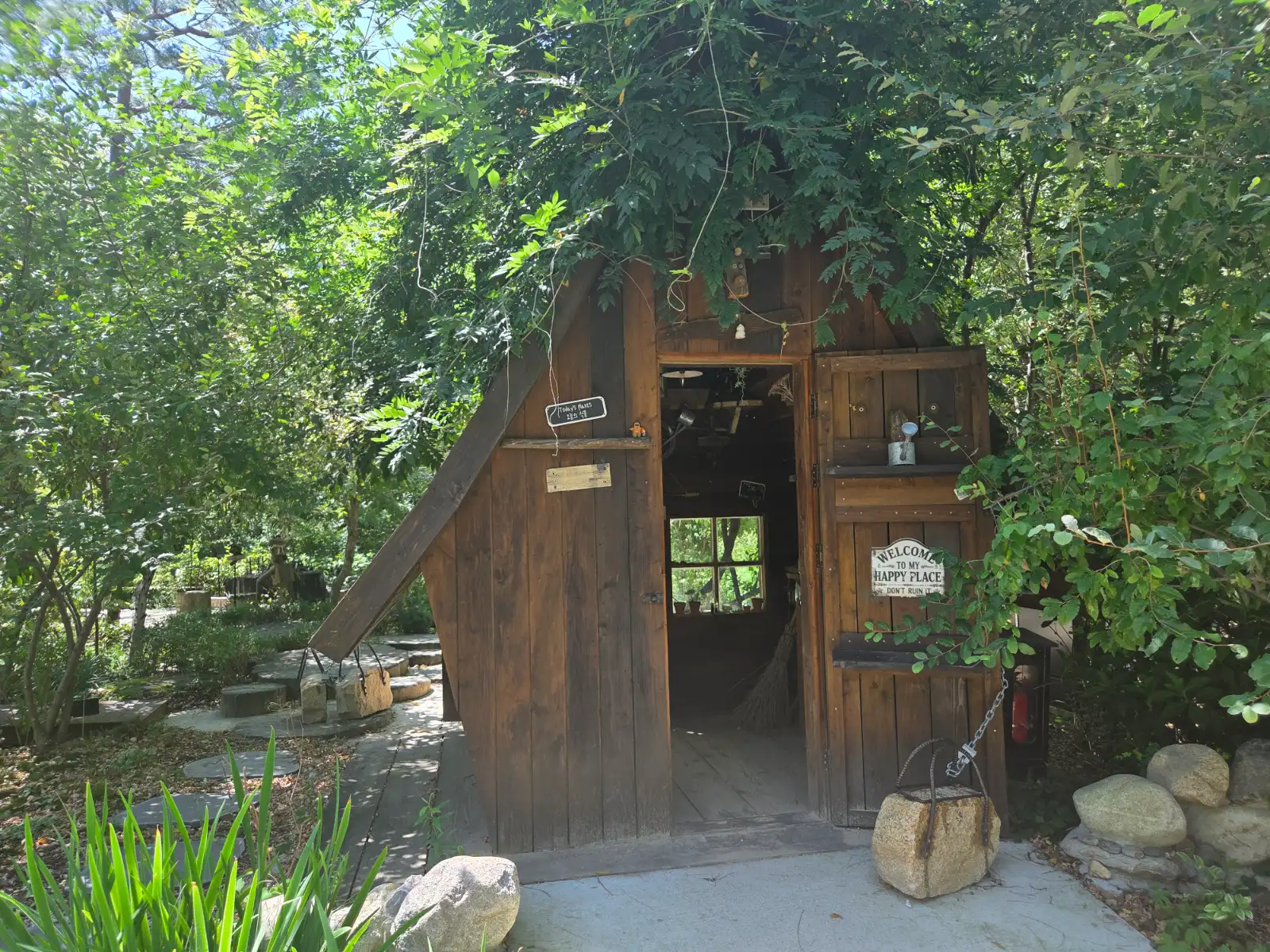
Wooden cabins and small gardens: Along the paths you'll find hidden spots like a wooden cabin with a "Today's plants" chalkboard, or a small traditional garden with hanok tile walls and a wooden gate. The signs are small, which makes stumbling upon them part of the fun.
5. 🌸 2026 Seoul International Garden Show — Why Now Is Even Better
Seoul Forest is special in 2026. From May 1 to October 27, the Seoul International Garden Show is taking place across Seoul Forest and the Seongsu-dong area.
The garden area alone is about 90,000㎡, the largest ever. There are 131 gardens inside Seoul Forest, and 167 in total when you include the surrounding Han River, Seongsu, and Gwangjin areas.
Admission is free (some hands-on programs are paid). The outdoor gardens can be seen freely at any time while walking through Seoul Forest. The show's official operating hours, however, are 12:00–19:00 (14:00–21:00 in July–August), so hands-on activities, performances, guided tours, and booths follow those hours and their own reservation rules.
Some of the artist gardens selected through international competition and the invited garden by a French master gardener may remain in Seoul Forest after the show ends. However, the corporate gardens, pop-ups, and food trucks will be removed, so go before October 27 if you want to see the whole thing.
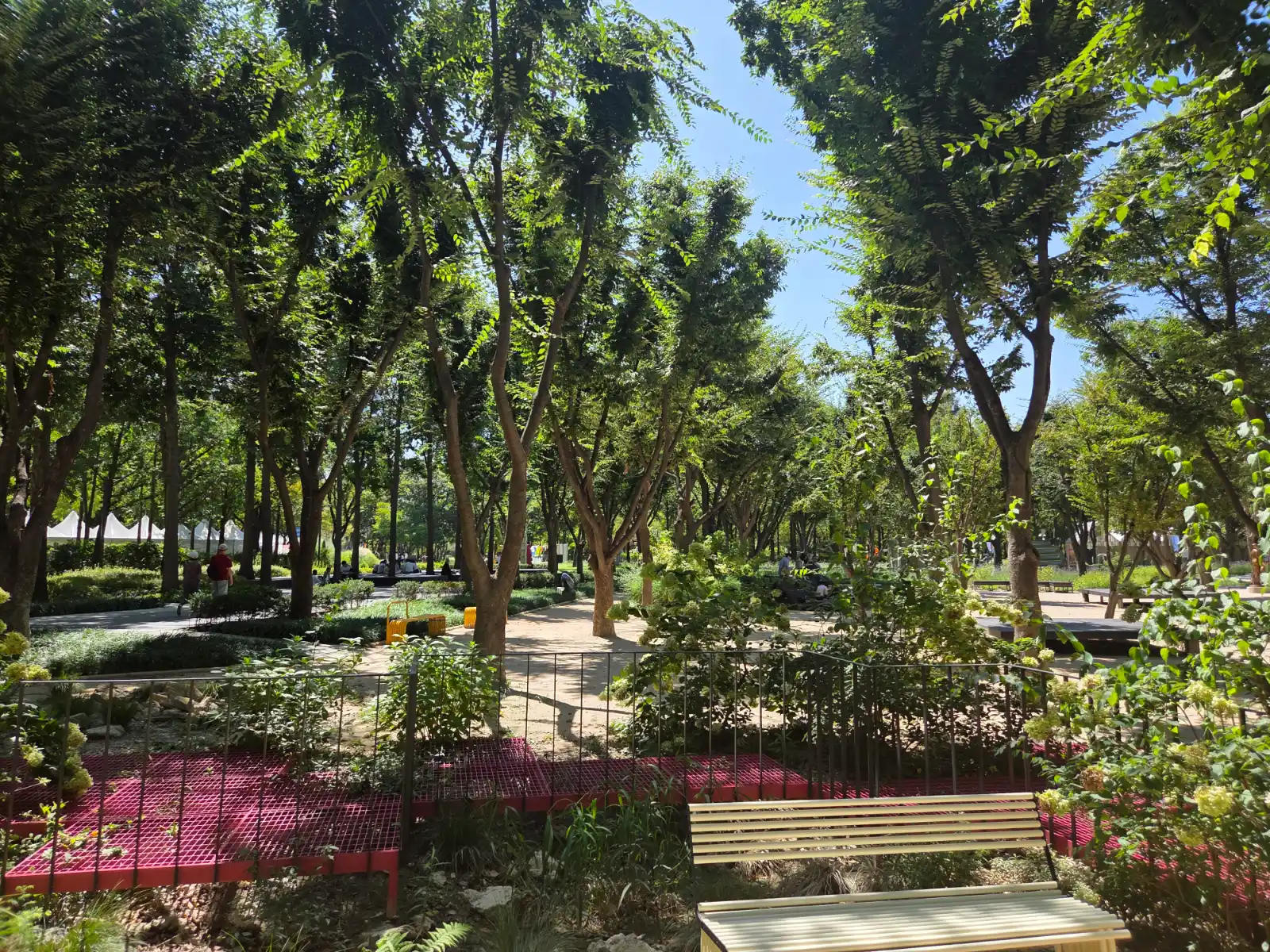
Many gardens were created by companies and organizations. Small themed gardens are scattered everywhere, like the hammock and shade installation "#하늘편정원 (Sky Letter Garden)" in the photo, a hanok-walled garden, and a garden with stone lanterns, so new scenery keeps appearing as you walk.
Seasonal programs continue through September and October, including book talks, an autumn-night garden theater, runs, busking, and markets, and October brings an autumn garden culture festival linked with Maeheon Citizens' Forest. Check the detailed schedule on the official site (seoul.go.kr/festa/garden).
Tip: Weekends during the show are extremely crowded. If you want to see the gardens at a relaxed pace, aim for a weekday morning to lunchtime.
6. 👀 Everyday Scenes at Seoul Forest That Fascinate Foreigners
The real charm of Seoul Forest is that it isn't a "tourist attraction" but a place where you can see "how Seoul people actually live." Keep an eye out for these scenes.
Office workers in suits out for a walk: On weekdays between 12:00 and 13:30, you'll often see people from nearby offices walking briskly with a coffee in hand. Taking a short walk after lunch is a familiar habit for Korean office workers, so at this hour Seoul Forest feels like an "urban walking track." Some people even nap on the benches.
Picnic mat culture: On weekends the lawn is covered in colorful mats. Spreading out gimbap, fried chicken, and fruit and sitting for hours is the Korean way to picnic. Tents aren't allowed, but mats and low chairs are fine.
Wedding, graduation, and profile shoots: You'll often see couples and families in dresses or hanbok taking photos on the ginkgo path or in front of the Mirror Pond. Watching is fine as long as you don't get in the way.
Running crews and dogs: In the evening, running crews in bright matching outfits jog through, and many people push dogs around in pet strollers. If you're curious about Korea's dog culture, this is the place.
Benches and trees gifted by fans: On benches and trees along the paths you may notice small plaques engraved with idol names and fan club names. Korean fandoms have a culture of donating park benches and trees for an idol's birthday or debut anniversary, and Seoul Forest is one of the best-known spots for it. Which benches are there changes over time, so enjoy discovering them by chance.
Apartment skyline: Look up from the lawn and glass high-rises tower above the trees. It's a single view that captures Seoul's residential culture of "expensive apartments beside a park," and Koreans half-jokingly say "I want to live there" all the time.
7. 📸 Best Photo Spots — Where and When to Shoot
Seoul Forest is full of social-media-worthy spots. Time it right and they get even better.
Mirror Pond (beside the main lawn): On a windless morning or in the late afternoon, the high-rises reflect upside down in the water. Shoot low, close to the surface like in the photo, for a sharper reflection.
Ginkgo tunnel (late October – mid November): Seoul Forest's signature scene. Yellow ginkgo leaves cover the path and the sky at once. Weekend afternoons are too crowded, so a weekday morning around 9–10 is best.
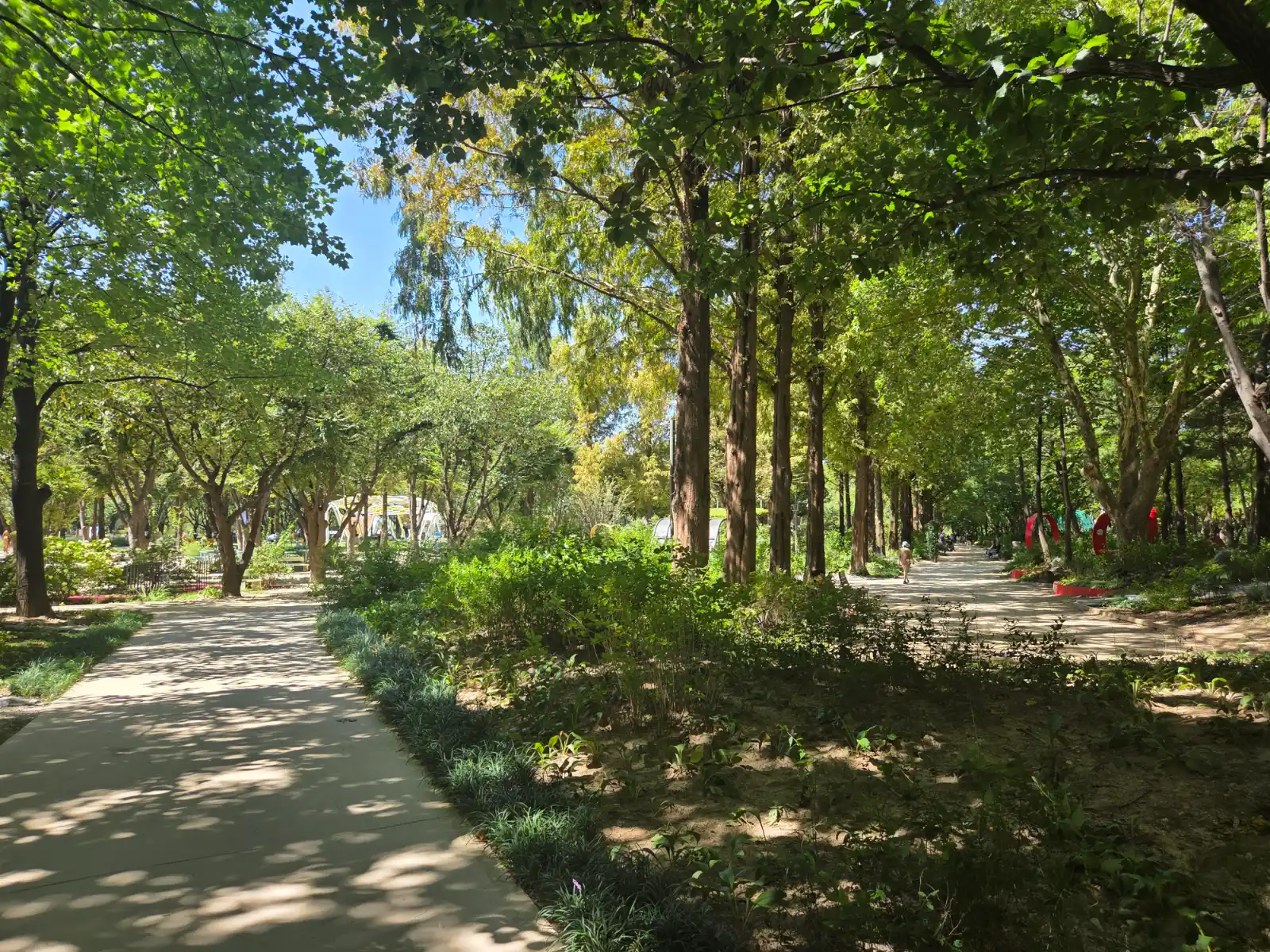
Metasequoia path: Straight, tall trees line both sides and it's picture-perfect in every season. Summer shade, red autumn leaves, and snow-covered winter each have their own charm.
Deer Enclosure pedestrian bridge: From the bridge above the forest you get an angle looking down at the deer. Bring a telephoto lens or use your phone's zoom.
Garden Show gardens (2026): Each garden is a photo zone in itself, like the white curved structure with hammocks (#하늘편정원), the hanok tile wall with a wooden gate, and the garden with stone lanterns and purple flowers.
Wooden cabin: The little cabin with the "WELCOME TO MY HAPPY PLACE" sign makes for fairy-tale photos. Inside are old farming tools and small potted plants.
Seoul Forest sign: The white tree-shaped "서울숲 / Seoul Forest" sign near Seoul Forest Station is your "I was here" shot.
On the Han River pedestrian bridge: From the bridge at the end of the Wetland Ecological Park, the Han River and the skyline across it come into view all at once. Prettiest around sunset.
8. ☕ Recommended Route — Walk from Seongsu Station to Seoul Forest, Unwind, and Eat Well
The way to enjoy Seoul Forest 100% is to combine it with Seongsu-dong. Half a day is enough.
Step 1 · Start at Seongsu Station (11:00): Take exit 3 or 4 of Seongsu Station (Line 2) and walk toward Yeonmujang-gil. Every alley has cafes converted from old factories, pop-up stores, and select shops. A good time for brunch or a coffee.
Step 2 · Head to Seoul Forest (12:30): From the Seongsu-dong alleys to the park's main entrance is a 15–20 minute walk. Around Seoul Forest Station there's an area called "Seoul Forest Cafe Street," so you can have lunch here too. Popular places have long weekend waits and their closing days and hours change often, so check a map app first.
Step 3 · Walk Seoul Forest (13:00–15:00): Catch your breath on the lawn → metasequoia path → Deer Enclosure → Insect & Botanical Garden → Garden Show gardens, walking slowly. On a weekday, mingling with office workers out after lunch is the real everyday-Seoul experience.
Step 4 · Wrap up (15:00~): Rest at a cafe near Seoul Forest Station, or if you have energy left, cross the pedestrian bridge from the Wetland Ecological Park and walk to Ttukseom Hangang Park. In the evening, head back to Seongsu-dong for dinner.
Tip: There are almost no restaurants inside Seoul Forest. Eat in Seongsu-dong or around Seoul Forest Station, and bring only snacks and drinks into the park.
9. 🧭 Nearby Spots Worth Combining
Places that go well with Seoul Forest. Most are free or easy on the wallet.
Under Stand Avenue (in front of Seoul Forest Station exit 3): A cultural complex made from 116 stacked shipping containers. It gathers social enterprise and young brand shops, cafes, and exhibitions, and during the Garden Show it connects to the Seongsu-side gardens.
Waterworks Museum (beside the park): Korea's first modern water treatment plant turned into a museum. The 100-plus-year-old red brick building is a sight in itself. Free admission, Tue–Sun 9:00–18:00, closed Mondays and on January 1, Seollal, and Chuseok (for reference). A quick look takes 30 minutes; allow about an hour if you join the guided tour (about 40 minutes).
Ttukseom Hangang Park (connected by pedestrian bridge): Cross the pedestrian bridge inside Seoul Forest and you're on the Han River waterfront, which leads along the river to Ttukseom Hangang Park. "Hangang ramyeon," cooking instant noodles at a Han River convenience store, is a famous experience even among foreigners. Sit by the river for the night view, then head home from Ttukseom Resort Station (Line 7).
Seongsu-dong pop-ups and cafes: Factory-conversion cafes like Daelim Changgo and Onion Seongsu, plus brand pop-up stores that change weekly, are the heart of Seongsu-dong. Instagram search is the fastest way to find pop-up info.
Ttukdo Market: Seongsu-dong's main traditional market. It's a neighborhood market rather than a tourist spot, so it's great for a local feel, and recently more shops run by young owners have opened.
Eungbongsan: A low mountain about a 20-minute walk from Seoul Forest. It turns yellow with forsythia in spring, and from the octagonal pavilion at the top you can see the Han River and Seoul Forest, and Seoul's night view in the evening.
10. 🪑 Places to Sit, Rest, and Facilities — Why Seoul Forest Is So Comfortable
Seoul Forest's real strength isn't "things to see" but "being a good place to stay."
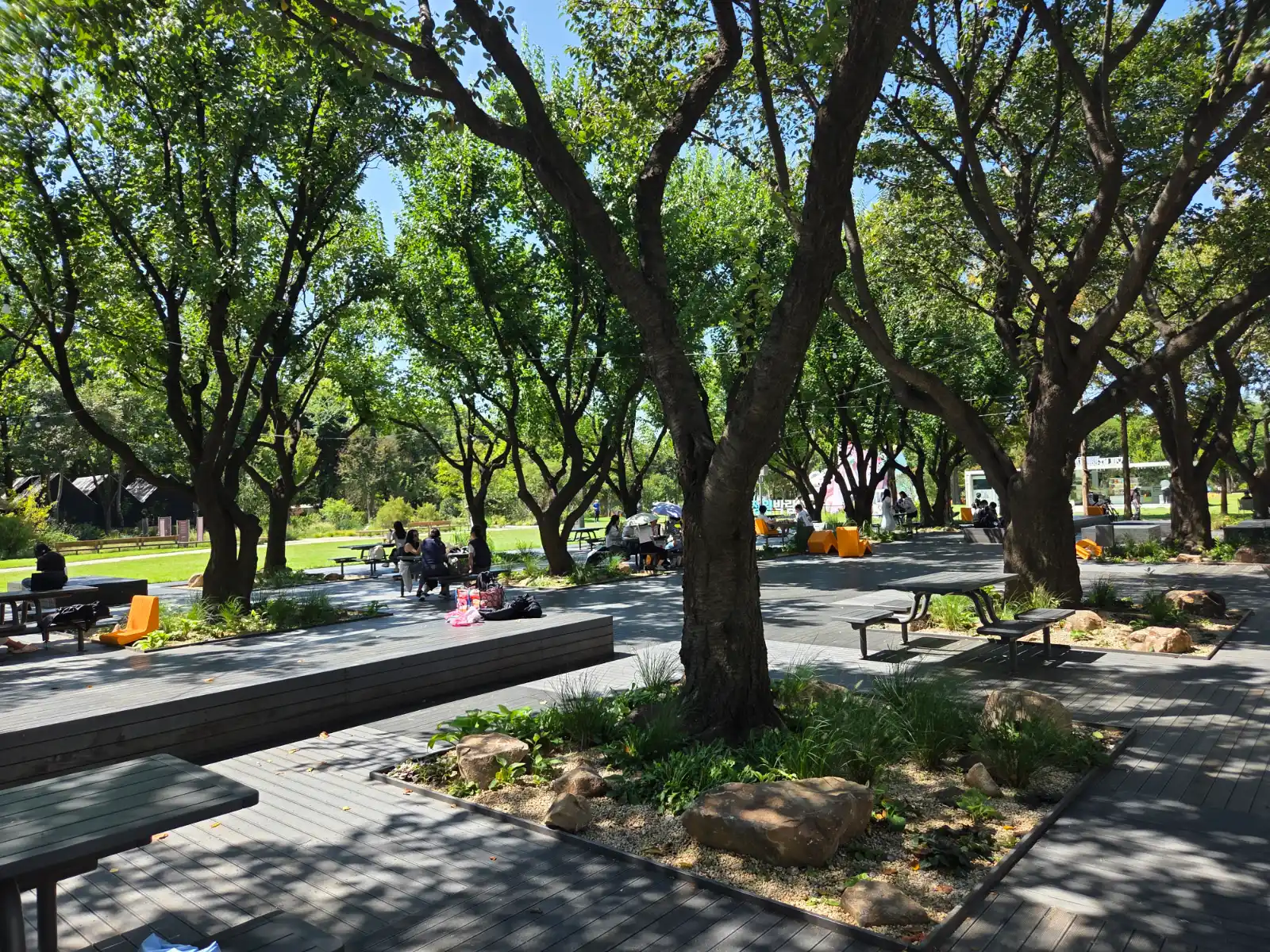
Benches, wooden platforms, hammocks: There are benches along every path, and the lawn has hammocks, shaded chairs, and wooden deck platforms. On weekday afternoons office workers even take short naps here after lunch.
Picnic: Spreading a mat on the lawn and eating a lunchbox is free to do. Mats cost a few thousand won at a nearby convenience store or Daiso, and on weekends rental stalls sometimes set up. Open flames, cooking, tents, and sunshades are prohibited, though.
Visitor Center (main entrance side, 10:00–18:00, until 17:00 Nov–Feb): Get maps and information, and by leaving an ID you can borrow a wheelchair or stroller for free for up to 2 hours (for reference, may change). Most of the park's paths are flat, so strollers and wheelchairs move easily.
Restrooms and water: There are restrooms at the main entrance, the visitor center, and each main zone, plus drinking fountains. Restrooms are scarce in the inner wetland area, so stop by beforehand.
Cafes and kiosks: There's a cafe and kiosk near the main entrance, and a food truck zone sometimes operates during the show. Still, a proper meal is best had outside the park.
Luggage: Don't count on anywhere to store bags inside the park. Leave large bags in the lockers at Seoul Forest Station or Seongsu Station.
Night: Open 24 hours, so evening walks and jogging are possible. The main paths are lit, but some inner forest trails are dark, so at night stick to big paths like the lawn and metasequoia path.
Rainy days: There are indoor refuges like the Insect & Botanical Garden, visitor center, Under Stand Avenue, and the Waterworks Museum, and the metasequoia path after rain actually has a lovely atmosphere.
11. 📅 Year-Round Calendar — Different Every Time You Go
Late March – early April: Cherry blossoms. A great spot to walk among spring flowers in the city.
Mid to late April: Tulips and apple blossoms. The flower beds in the Culture & Arts Park fill with color, and lawn picnic season really begins.
May – October: In 2026, the Seoul International Garden Show (until October 27). The Butterfly Garden and floor fountain also generally run only during this period (in 2026 the Butterfly Garden opened early in April).
June – August: Hydrangeas, peonies, poppies, and the shady metasequoia path. It's hot, so morning or evening is best, and the show also had nighttime viewing programs.
September – October: The best time for cool weather and autumn gardens. The show's autumn garden culture festival is scheduled for October, and the Butterfly Garden and floor fountain wrap up their season in October.
Late October – mid November: Seoul Forest's best season, when the ginkgo forest turns yellow. It's one of the most famous ginkgo photo spots in Seoul, so weekends get very crowded.
December – February: Fewer people mean quiet walks, and the snow-covered metasequoia path is beautiful. The Insect & Botanical Garden is warm, making it a good winter indoor refuge (winter hours 11:00–16:00, closed Mondays).
12. 🙏 Etiquette and Things to Know Before You Go
Bicycles: Since March 26, 2026, about 22.7 km of Seoul Forest's core paths and trails have been designated pedestrian-only. You cannot ride bicycles or e-bikes on these sections; you can only dismount and walk them. Violations may be fined. Only the section from the Ttukseom Water Purification Center to the Han River still allows bike traffic as before. The same goes for electric scooters and other e-mobility. If you came on a Ttareungi (Seoul public bike), park it at a rental station near the entrance and walk in.
Cooking, open flames, tents, and sunshades are prohibited.
Seoul Forest is a designated alcohol-restricted zone. Drinking isn't flatly banned, but excessive drinking, disorderly behavior, and anything that makes others uncomfortable is restricted, so hold back.
Take your trash with you or use the designated bins. Leaving trash on the lawn earns you glares.
No human food for the deer, and don't put your hands into the enclosure.
When taking photos on the pedestrian bridges and decks, be careful not to block the way. At weekday lunchtime these are sections where office workers walk fast.
Ball games that damage the lawn (soccer, etc.) are restricted.
Drones: Seoul Forest is a no-fly zone for drones. Flying requires prior flight approval, and aerial photography approval is separate. It's safest to assume you can't casually fly one while traveling.
English is included on signs at major facilities and on directional signage. You can get a map at the visitor center.
❓ Frequently Asked Questions from Foreigners (FAQ)
Q. Is there an admission fee? Do I need a reservation? A. The park, Deer Enclosure, Insect & Botanical Garden, and Butterfly Garden are all free with no reservation needed. The Garden Show is also free to enter. Only some hands-on programs are paid and reservation-based.
Q. How many hours is enough? A. About 1.5–2 hours for the highlights, half a day if combined with Seongsu-dong. If you walk to the Han River, it can fill a whole day.
Q. Which station is best to get off at? A. If you're only going to the park, Seoul Forest Station on the Suin-Bundang Line. If you're combining it with the Seongsu-dong cafe street, walk from Seongsu Station on Line 2.
Q. Can I eat a meal inside the park? A. Just the cafe and kiosk near the main entrance, and food trucks during the show. Eat in Seongsu-dong or around Seoul Forest Station, and in the park we recommend a lunchbox and snack picnic. Cross over to the Han River side and there's convenience-store ramyeon too.
Q. Can I rent a bike and ride around? A. The park's core paths (about 22.7 km) have been pedestrian-only since March 2026, so you can't ride. Dismounting and walking your bike is fine, but riding is subject to a fine. Bikes are allowed only on the Ttukseom Water Purification Center to Han River section, so the right answer is to enjoy Seoul Forest on foot and ride on the Han River bike path.
Q. Can I feed the deer? A. No. Feed sales stopped in 2020, and you must never give them human food. Watching and taking photos from the pedestrian bridge is plenty of fun.
Q. Can I go at night? A. Yes, it's open 24 hours. The main paths are lit, but some inner forest trails are dark, so at night stick to the lawn and the big paths.
Q. Is it okay with kids? A. Seoul Forest is ideal for kids. The Insect & Botanical Garden, Butterfly Garden, Deer Enclosure, and floor fountain are all free, and the paths are flat so strollers are easy. You can also borrow a stroller at the visitor center.
✅ Quick Checklist
Have you chosen your starting point: Seoul Forest Station (main entrance) or Seongsu Station (via the cafe street)?
Have you checked the closing day (Monday) and hours for the Insect & Botanical Garden and Butterfly Garden?
If you're interested in Garden Show activities or performances, have you checked the day's schedule and operating hours (regular 12:00–19:00)?
Are you wearing sneakers comfortable for dirt paths and a long walk?
If you're planning a picnic, have you brought a mat and snacks, and remembered that fire and tents aren't allowed?
Do you know the core paths are pedestrian-only, so bikes and scooters must be walked?
Have you checked the closing days and wait times of Seongsu-dong cafes and restaurants on a map app?
Have you left large luggage in a subway station locker?
Water and a hat if it's summer, and the ginkgo forest timing if it's autumn?
📷 Images: Scenes of Seoul Forest photographed by the JoyStoria team on a weekday afternoon in September 2026. The gardens and installations in the photos are from the Seoul International Garden Show period and may differ depending on when you visit.
🟦 This guide was put together by the JoyStoria team. 📅 Written as of 2026 · ⚠️ Facility hours, programs, events, and nearby shop information may change by season, park circumstances, and business. JoyStoria does not endorse any specific business. Before visiting, be sure to check the official Seoul Forest website, the official Seoul International Garden Show site, and a map app for the latest information. Inside the park, please follow the rules such as the pedestrian-only paths and the ban on cooking and open flames so everyone can relax comfortably.